In Indica THC 17-23% CBD 0.1-0.1%

Granddaddy Purple


Overview:

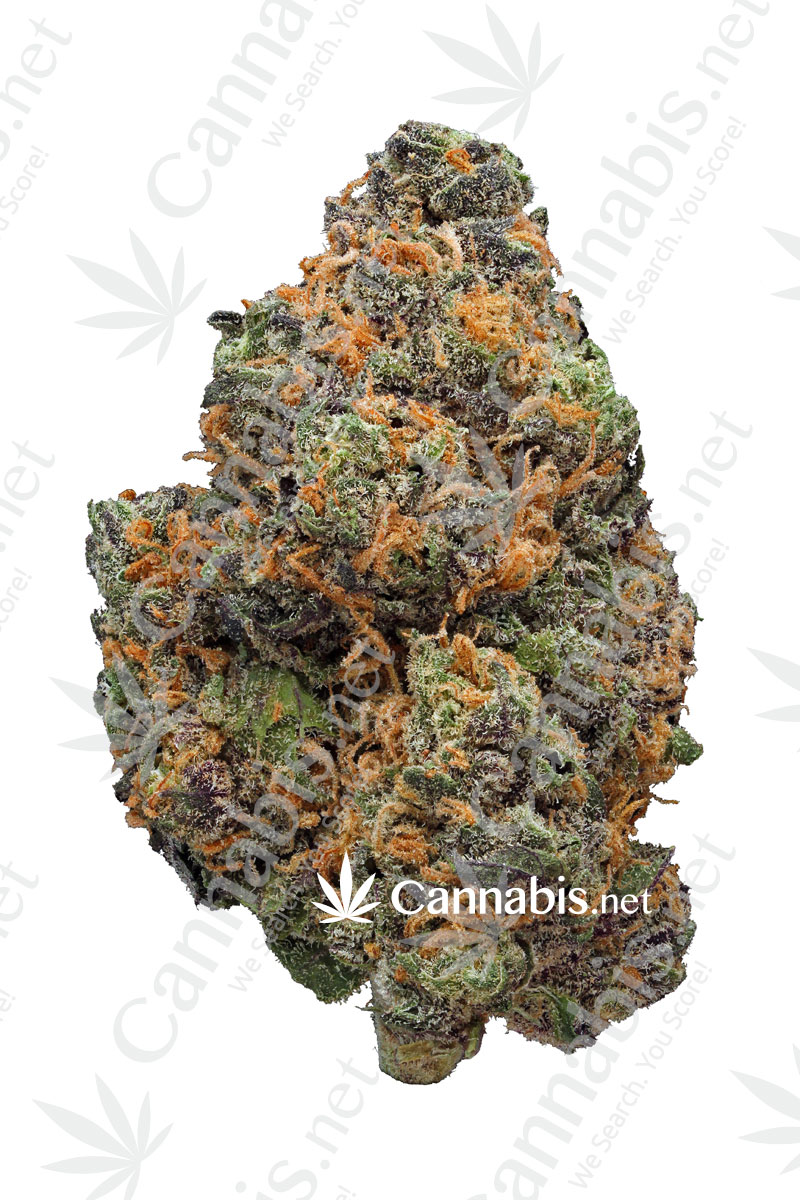
GDP as it is known as, or Granddady Purple is a famous indica cross between Purple Urkle and Big Bud. Born in California this main stay inherits a mixture of grape and berry aromas from its Purple Urkle parent, while Big Bud gives it its huge, yet dense bud structure. GDP flowers bloom in shades of deep purple, a backdrop for its snow-like dusting of white crystal resin on the outer leaves. GDP has psychoactive effects that work into a great mind body experience, delivering a fusion of intense euphoria and full body release and comfort. Similar to other deep indica varieties, Granddaddy Purple is usually purchased to treat pain, stress, insomnia, appetite loss, and muscle spasms. GDP rewards most growers with titanic commercial yields which are ready for harvest 60 days after flowering.

Strain Attributes:

Effects

Euphoric

Happy

Hungry

Relaxed

Sleepy

Euphoric

Happy

Hungry

Relaxed

Sleepy

Medical Uses

Depression

Insomnia

Lack of Appetite

Pain

Stress

Depression

Insomnia

Lack of Appetite

Pain

Stress

Negatives

Dizzy

Dry Eyes

Dry Mouth

Headache

Paranoid

Dizzy

Dry Eyes

Dry Mouth

Headache

Paranoid


Rate this Strain!

SPONSORS


FROM OUR BLOG


Medical

When Can Doctors Prescribe Medical Cannabis? (And When They Can't)

Doctors who provide medical cannabis recommendations must be registered with their state's medical marijuana program and adhere to strict guidelines. They must ensure that the patient has a qualifying medical condition and that medical cannabis is an appropriate treatment option for that condition. They offer follow-up care to ensure that the patient is responding well to the treatment.
News

Did This Chemist Just Solve the Marijuana Breathalyzer Problem?

By removing a molecule of hydrogen from the THC – the researchers are inducing “oxidation” which then leads to a color change of the molecule because it changes the waveform of the molecule. The structure of THC includes a unit called a phenol. When chemists oxidize a phenol, the oxidation produces a member of a class of organic compounds called quinones. “We know how to oxidize a phenol into a quinone,” Garg said. THC and the quinone absorb light differently. With what happened then was that after the oxidation process occurred, the THC molecule was altered and produced a different color. While this is a very rudimentary way of detecting the presence of THC – it is very effective and requires very little tech or training to implement.
Medical

Cannabis Use Reduces Benzodiazepine Dependency By 45% Reports Study

It’s also concerning that there isn’t enough dialogue about benzodiazepine-overdoses, at least not as much as there is surrounding opioid overdoses.