

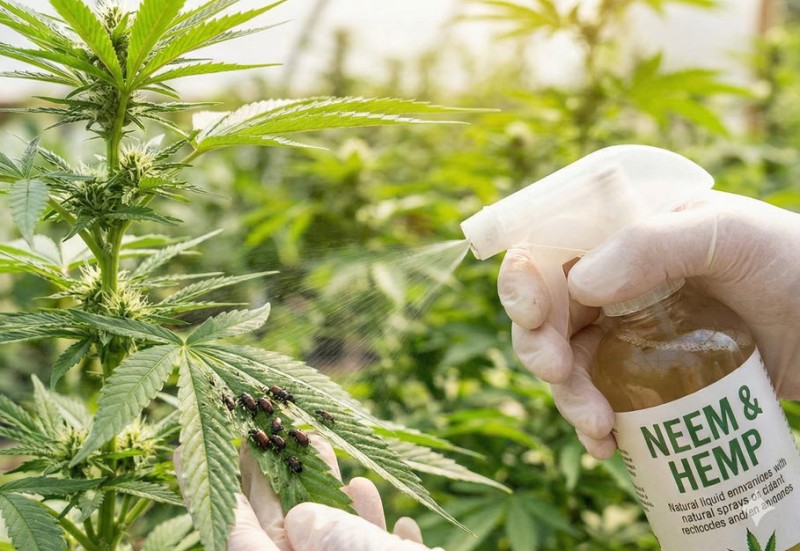

When we think about the world's deadliest creatures, our minds might conjure images of sharks, lions, or venomous snakes. But the truth is far more sinister and comes in a much smaller package. Mosquitoes, those tiny buzzing nuisances, claim a staggering 725,000 human lives every year. Let that sink in for a moment. These minuscule vampires are responsible for more deaths than all other animals combined, making them the planet's most lethal killer.
Now, you might have heard about Bill Gates and his foundation's efforts to genetically modify mosquitoes to combat this issue. While the intention is noble, we can't help but raise an eyebrow at the potential consequences. After all, we've seen how Monsanto's genetically modified crops stirred up quite the controversy over the years. Playing God with nature's DNA? That's a can of worms I'm not sure we want to open.
But fear not, dear readers, for our favorite plant might just swoop in to save the day. Recent studies suggest that cannabis could be the unexpected hero in our battle against these deadly insects. It turns out that good ol' Mary Jane might have the power to slow down mosquito reproduction rates. Talk about a buzz kill!
Now, I know what you're thinking. "Reginald, are you suggesting we hotbox the entire planet to get rid of mosquitoes?" While that idea has a certain appeal (and would make for one hell of a party), the science is a bit more nuanced. Researchers are looking at specific compounds in cannabis that could act as natural insecticides, potentially disrupting the life cycle of these disease-carrying pests.
Of course, we're still in the early stages of this research. But if these findings can be replicated and scaled up, we might be looking at a game-changing weapon in our arsenal against mosquito-borne diseases. Imagine a world where we combat malaria, dengue, and Zika with cannabis extracts instead of toxic chemicals or risky genetic modifications.
The potential here is enormous. If cannabis can indeed help us in this fight, we could be looking at saving hundreds of thousands of lives each year. And let's be honest, the idea of cannabis saving lives is a narrative I can get behind. It's like Mother Nature's way of saying, "I've got this, humans. Just chill out and let the herb do its thing."
So, let's dive into what these studies have revealed and explore the possibility of a future where our friend Mary Jane isn't just elevating minds, but also swatting down one of humanity's deadliest foes. Who knows? Cannabis might just be the unlikely superhero we've been waiting for in the epic battle of humans versus mosquitoes.
A Closer Look at the Study
JG
Now let's write 500-words on a segment entitled, "A Closer Look at the Study". In this segment focus on: * A general overview of the findings in the study * What type of insects were targeted * Mention the earlier study finding CBD extract and its effects on mosquitos * Talk about the lack of other studies and how this is essentially a "first of its kind" study * Provide quotes from the study authors * Explain how Hemp is already used for feeding livestock and was approved recently by the Department of Agriculture.
A Closer Look at the Study
Well folks, it's time to put on our lab coats and dive into the nitty-gritty of this groundbreaking research. Don't worry, I promise to keep things as light as a perfectly rolled joint while we navigate through the science.
The study, published in the Revista da Faculdade de Ciências Médicas de Sorocaba, took a deep dive into the insecticidal potential of our favorite plant. The researchers, clearly not content with cannabis just chilling us out, wanted to see if it could chill out some pesky insects too. And boy, did they find some interesting results!
Now, when we talk about insects, we're not just dealing with your average backyard bugs. The study focused on four types of mosquitoes and one species of flea. These aren't just any mosquitoes either - we're talking about the ones that spread some seriously nasty diseases. You know, the kind that make you cancel your tropical vacation plans faster than you can say "DEET."
The researchers found that different cannabis formulations showed an "evident" potential in killing insect eggs, larvae, pupae, and adults. It's like cannabis decided to become an equal opportunity pest controller, taking out insects at every stage of their life cycle. Talk about commitment!
But here's where it gets really interesting. The study authors noted, "Cannabis has been a promising plant in terms of insect vector mortality; it has also evidenced effects on insects' fertility, birth rates and adults' emergence." In other words, cannabis isn't just killing these bugs; it's messing with their entire reproductive game. It's like nature's own insect birth control!
Now, this isn't the first time we've heard about cannabis taking on mosquitoes. Earlier this summer, a study from Ohio State University found that hemp leaf extract containing CBD effectively killed larvae of mosquitoes that spread dengue, Zika, and yellow fever. The researchers in that study concluded that CBD "appears to be the principal active ingredient responsible for larvicidal activity." Who knew CBD was such a tough guy?
But here's the kicker - despite these promising findings, there's a shocking lack of research in this area. The authors of our main study pointed out that "the lack of data becomes indisputable" when it comes to cannabis's effects on insect reproductive parameters. It's like scientists have been too busy studying how cannabis affects humans (can't blame them) to look at how it might be saving us from tiny, disease-carrying vampires.
The researchers are calling for more investigation, saying it's "crucial to elucidate the role of Cannabis against insects of medical importance as well as to expand our knowledge about the plant's toxic action, and also to explore its potential in insect vectors' control strategies." In other words, they're saying, "Hey, we might be onto something big here. Can we get some more funding, please?"
But wait, there's more! While we're talking about cannabis and insects, let's not forget that hemp is already making waves in the agricultural world. Just this year, the U.S. Department of Agriculture gave the green light for farmers to use hemp seed meal as food for egg-laying hens. That's right, folks - chickens can now legally get their hemp on, as long as it doesn't exceed 20% of their diet. I can already hear the jokes about "baked chicken" writing themselves.
So there you have it, my friends. Cannabis isn't just for rolling joints anymore. It's potentially saving lives by taking on deadly insects, feeding our livestock, building houses, and who knows what else. As we discover more of these findings, it illustrates the colossal crime committed against humanity by stifling cannabis research for over half a century.
The Sticky Bottom Line
we've journeyed through the world of cannabis as an unlikely insect assassin, and I've got to say, the implications are as mind-blowing as that first hit of top-shelf bud. Let's roll up the key points and spark this conclusion, shall we?
First off, let's not mince words: this study could be a game-changer in our battle against some of nature's deadliest tiny terrors. We're talking about potentially saving hundreds of thousands of lives each year from mosquito-borne diseases. That's not just impressive; it's downright revolutionary. Cannabis, our beloved plant, might just evolve from a schedule I substance to a schedule "Save Humanity" herb.
But here's where things get a bit sticky, and not in the good, resinous way. For over half a century, we've been operating under a cloud of cannabis suppression that's hazier than a hotboxed VW bus. Fifty years of restrictive policies, misguided fear-mongering, and outright prohibition have left us in the dark ages when it comes to understanding the full potential of this miraculous plant.
Just imagine where we could be if we hadn't spent decades treating cannabis like it was radioactive. We might already have natural, hemp-based insecticides protecting crops worldwide. Mosquito-borne diseases could be a thing of the past, filed away in history books next to smallpox and polio. But instead, we're just now scratching the surface of what cannabis can do beyond giving us the munchies and making music sound awesome.
The continued restrictions on cannabis research and development are like trying to solve a jigsaw puzzle with half the pieces locked in a safe. It's frustrating, it's counterproductive, and frankly, it's costing lives. This study alone should be more than enough evidence to overturn these restrictive policies. I mean, come on! If cannabis can potentially save nearly a million lives a year from mosquito-related deaths, what other miracles are we missing out on?
But let's end on a high note (pun absolutely intended). It's encouraging to see that despite the hurdles, dedicated researchers are still pushing the boundaries of cannabis science. These findings are like the first tender shoots of a cannabis plant breaking through the soil - a promise of the abundance to come.
As we look to the future, I'm hopeful that we'll see more studies like this. Maybe we'll discover that cannabis can solve world hunger, reverse climate change, or bring about world peace. Okay, maybe that's a bit much, but given what we've learned today, would you really be surprised?
In the end, the sticky bottom line is this: cannabis isn't just a plant; it's a treasure trove of untapped potential. It's high time (last pun, I promise) we give researchers the freedom to explore every facet of this remarkable herb. Who knows? The next study might just reveal that cannabis is the solution to a problem we didn't even know we had.
So here's to the future of cannabis research - may it be as bright, green, and full of promise as a perfectly cultivated cannabis field. And who knows? Maybe one day, instead of reaching for the bug spray, we'll be reaching for a cannabis-infused solution that's good for us, good for the planet, and bad news for those pesky mosquitoes. Now that's a future I can get behind.
https://www.marijuanamoment.net/cannabis-is-a-promising-plant-as-an-insecticide-to-combat-bugs
-that-spread-deadly-diseases-study-says/
CANNABIS FIGHT INSECTS, READ ON...