

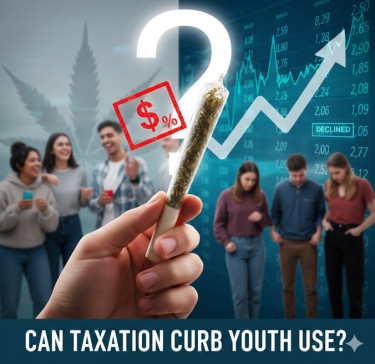
The Tax Deterrence Delusion: Why Economists Don't Understand Why Kids Get High
There's a special kind of academic hubris that emerges when economists try to solve social problems without ever talking to the humans involved. It's the same energy that brought us "rational actor theory" and other beautiful mathematical models that work perfectly on paper and fail spectacularly in reality.
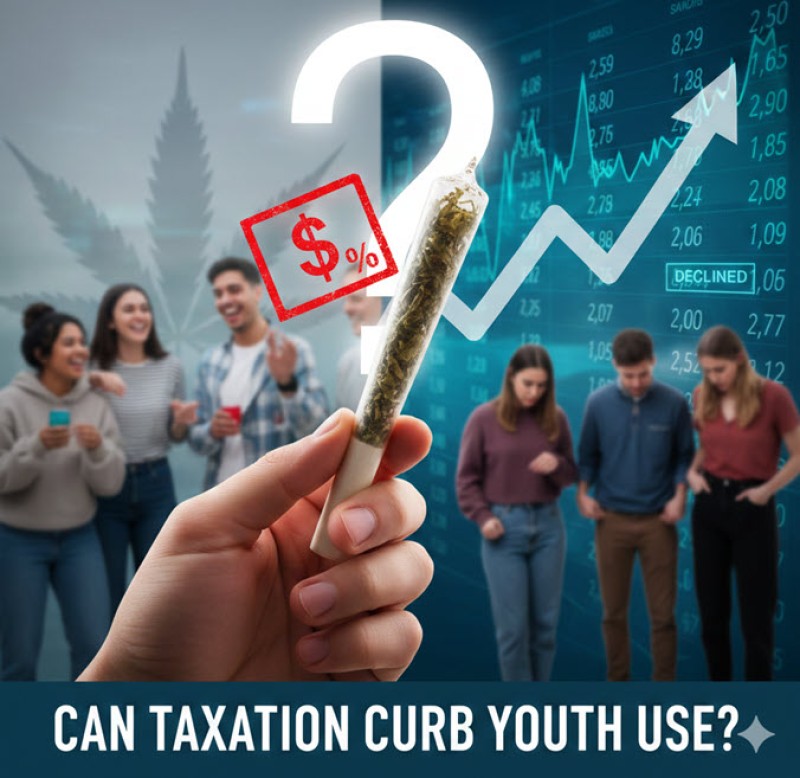
Enter a recent study from the Learned Societies Trust that asks: "Can taxation be used to effectively limit young people's use of legalized marijuana?"
The research, conducted by Michelle Sovinsky, observes that young people tend to use marijuana, alcohol, and cigarettes in combination. The conclusion? If we increase taxes on alcohol and cigarettes, we can reduce marijuana use among youth.
It's elegant. It's data-driven. It's peer-reviewed.
And it completely misses the point.
The Research: What They Found (And What They Missed)
Sovinsky's work identifies something legitimately interesting: marijuana consumption among young people correlates strongly with alcohol and cigarette use. The substances appear to be economic complements—when consumption of one goes up, consumption of the others tends to follow.
From this observation, the researchers theorize that taxation policy targeting alcohol and cigarettes could indirectly reduce marijuana use. Since these substances are consumed together, making alcohol and cigarettes more expensive through taxation should reduce overall consumption of the "bundle."
The methodology is sound. The statistics check out. The policy recommendations flow logically from the data.
But here's what the study doesn't do: actually ask young people why they use these substances together.
Instead of sitting down with actual consumers and understanding their motivations, the research treats human behavior as a purely economic optimization problem—as if teenagers are running cost-benefit analyses before deciding whether to get fucked up on a Friday night.
They're analyzing the chemical interactions, the economic elasticities, the cross-price effects. They're building beautiful regression models.
And they're completely ignoring drug synergy, user psychology, and the actual reasons young people want to alter their consciousness in the first place.
The Real Reason: Drug Stacks and Getting Properly Fucked Up
If these researchers had spent an evening with a group of teenagers who actually use these substances—maybe even shared a bong rip to establish trust—they would learn something fundamental that doesn't show up in their econometric models:
Young people aren't using alcohol, tobacco, and cannabis together by accident. They're deliberately combining them for specific psychoactive effects.
Welcome to the world of "drug stacks."
Any experienced psychonaut understands that when you're playing with the neurochemical settings on your consciousness, you need to know your uppers and downers, your stimulants and depressants, and how they interact synergistically.
The Tobacco Component: Anxiety Management Theater
Tobacco serves a specific function in this ecosystem. It's the socially accepted (if frowned upon) baseline anxiety management tool.
Nicotine creates a rapid dopamine cycle—the cigarette every 30-45 minutes for moderate smokers, every 10-20 minutes for heavy smokers, every 5-10 minutes for chain smokers. The frequency correlates directly with the level of chaos and anxiety in someone's life.
Here's the paradox nobody wants to acknowledge: roughly 95% of the anxiety a smoker experiences is generated by the addiction itself. We attribute the relief to the cigarette without realizing we were only that stressed because we were craving the cigarette.
I know this intimately. I used to smoke. I understand the psychology from the inside.
The chaos in one's life typically indicates the degree of reliance on the substance. But the substance isn't solving the underlying problem—it's creating a dependency loop that mimics anxiety management while actually generating most of the anxiety.
The Alcohol-Cannabis Combo: Engineering Oblivion
Then there's the beer-and-weed combination. Less commonly hard liquor and weed, though depending on the evening's objective, either works.
These substances pair together to create a specific experience: alcohol provides body intoxication and dissociation, while cannabis allows you to "ride the wave" and intensify the perceptual distortion.
It's a thick, grounded, almost narcotic feeling. Some would call it a "crossfade." Veterans of the combination know exactly the state I'm describing.
One might reasonably ask: "Why would anyone deliberately create such a potion of oblivion?"
The answer, from any teenager at the prime of rebellion, is simple and honest:
"To get fucked up."
The Motivations Nobody's Asking About
Here's what the taxation research fundamentally misses: you cannot understand substance use patterns without understanding user motivations.
Why do young people want to get fucked up? Let's consider what we're asking teenagers to be sober for:
-
Boredom: A life structured around standardized testing, social media dopamine cycles, and economic precarity.
-
Trauma: Whether personal, familial, or collective.
-
Social Media-Induced Anxiety: The constant performance of identity, the comparison trap, the algorithmic manipulation of mood and attention.
-
Global Existential Dread: Climate catastrophe, economic collapse, endless wars, political dysfunction.
-
The Latest Revelation: That some of your political leaders might be cannibalistic pedophiles (at least some of them), and nobody's going to jail for it.
You're at a stage of life where you're piecing together your identity, trying to figure out your place in a world that seems increasingly hostile to your future. Then you discover these magic potions that can alter your reality, make the unbearable bearable, and create moments of genuine connection and joy in a society optimized for alienation.
And scientists ask: "What's the relationship between the drugs?" and "If we tax this, can we deter that?"
The relationship isn't chemical—it's motivational.
The substances are tools. The goal is escape, connection, exploration, or simply making Friday night more interesting than doom-scrolling TikTok.
The Psychonaut Perspective: Intentional Consciousness Alteration
Let me put this in terms that might scandalize the academic reviewers but will resonate with anyone who's actually explored altered states:
If you want a cosmically orgasmic experience, pair MDMA with LSD and have sex with someone you love. It's an easy recipe if you follow the golden rules of set and setting, know what you're taking, dose appropriately, and are educated about the experience.
I'm not recommending this to teenagers. I'm illustrating a point: humans have been deliberately combining psychoactive substances for specific effects for thousands of years. This isn't aberrant behavior—it's sophisticated pharmacological experimentation, albeit often conducted without proper education or harm reduction infrastructure.
Young people aren't passively consuming whatever's available and happening to use multiple substances. They're actively curating experiences based on desired effects.
You want energy and social connection? Alcohol and stimulants.
You want introspection and sensory enhancement? Cannabis and psychedelics.
You want to numb out and forget? Alcohol and depressants.
You want to maintain baseline function while managing anxiety? Nicotine as a background process.
These aren't random combinations driven by price elasticity. These are intentional drug stacks designed for specific outcomes.
The Substitution Effect Nobody Wants to Talk About
Here's where the taxation strategy doesn't just fail—it actively creates harm.
When you make certain substances too expensive or inaccessible for young people, they don't just shrug and decide to stay sober. They find alternatives. And those alternatives are often far more dangerous than what you were trying to prevent.
Let me give you some historical examples that should terrify anyone advocating for simple prohibition-through-pricing:
The Codeine Crisis: A Cautionary Tale from the 1980s
During the heavy anti-cannabis crackdowns of the 1980s and early 1990s, when "Just Say No" was policy and marijuana was being demonized as a gateway drug, something interesting happened: codeine cough syrup became a recreational drug of choice among young people.
"Lean," "purple drank," "sizzurp"—whatever you want to call it—became popular precisely because cannabis was too risky to obtain. Kids couldn't get weed without facing serious legal consequences, so they raided medicine cabinets and pharmacies for over-the-counter medications containing codeine and promethazine.
The result? A wave of opioid dependency, respiratory depression, and deaths that could have been avoided if these kids had just been smoking joints instead.
We traded a relatively safe plant for a genuinely dangerous opioid. And we called it drug policy.
Spice, K2, and Synthetic Cannabinoids: The Monster We Created
The most damning example of substitution harm is the synthetic cannabinoid epidemic.
When states started cracking down on marijuana in the 2000s—random drug testing for employment, zero-tolerance policies in schools, harsh criminal penalties—chemists started creating synthetic cannabinoids that could evade drug tests and legal restrictions.
These substances were marketed as safe alternatives to cannabis. They were sold in gas stations and head shops. And they were infinitely more dangerous than the plant they were designed to replace.
Synthetic cannabinoids have caused:
-
Mass overdose events with dozens hospitalized simultaneously
-
Severe psychotic episodes
-
Kidney damage
-
Seizures
-
Deaths
Real cannabis has caused none of these things. Zero deaths. Ever. In thousands of years of human use.
But we made natural cannabis illegal, expensive, and risky to obtain—so the market responded by creating chemical alternatives that could kill you.
This is what happens when you focus on controlling behavior instead of understanding motivation.
The Bath Salts Phenomenon
When traditional stimulants became harder to access or test for, synthetic cathinones ("bath salts") filled the gap. The results were catastrophic: extreme psychosis, violent behavior, and medical emergencies that made headlines worldwide.
Again, these substances emerged not because people wanted something more dangerous, but because the safer alternatives were made inaccessible through prohibition and economic barriers.
The Fentanyl Crisis: The Logical Endpoint
The ultimate expression of prohibition-driven substitution is the current fentanyl crisis.
When prescription opioids became harder to obtain through regulatory crackdowns, users didn't stop using opioids—they turned to street heroin. When heroin supplies became unreliable, dealers started cutting their product with fentanyl because it's cheaper and more potent.
Now we have a situation where people seeking pain relief or recreational euphoria are playing Russian roulette with powder that can kill them with a dose measured in micrograms.
The war on drugs didn't reduce drug use—it just made drug use exponentially more deadly.
The Lesser of Two Evils Calculation
This brings us to an uncomfortable but necessary conversation: sometimes harm reduction requires accepting the lesser of two evils.
Would you rather have teenagers:
-
Smoking a joint that makes them giggly and hungry, or
-
Smoking K2 that sends them to the emergency room with seizures?
Would you rather have young adults:
-
Drinking beer and smoking weed at a party, or
-
Taking mystery pills from the internet that might contain anything from MDMA to fentanyl to rat poison?
Would you rather have people managing pain with:
-
Cannabis that has been used safely for millennia, or
-
Prescription opioids that have killed over 500,000 Americans in two decades?
The answer should be obvious. But prohibition advocates and taxation enthusiasts refuse to engage with this calculus because it requires admitting that access to safer substances actually reduces harm compared to prohibition.
This is the fundamental flaw in the "tax it until they can't afford it" strategy. You're not eliminating demand—you're just forcing people toward more dangerous alternatives.
Why Motivation Matters More Than Price
The substitution effect demonstrates why understanding motivation is infinitely more important than trying to control behavior through economic disincentives.
If a young person is seeking altered consciousness because they're dealing with:
-
Untreated anxiety or depression
-
Trauma from abuse or neglect
-
Social isolation and lack of meaningful connection
-
Existential dread about their future
-
Simple curiosity about altered states
...then making cannabis more expensive doesn't address any of those underlying drivers. It just forces them to find alternative solutions.
And when the safer alternatives are expensive or inaccessible, people turn to whatever is available—regardless of the risk profile.
The motivation to alter consciousness doesn't disappear when you raise prices. It just gets channeled into more dangerous pathways.
This is why the entire framework of deterrence through taxation is fundamentally flawed. It assumes that substance use is driven primarily by availability and cost, when in reality it's driven by much deeper psychological, social, and spiritual needs.
The Taxation Solution: Elegant But Insufficient (And Potentially Dangerous)
Now, to be fair to Sovinsky's research: analyzing taxation as a policy tool is valuable. There's genuine utility in understanding cross-price elasticities and how economic incentives shape consumption patterns.
If we're going to allow these substances to be legal and commercially available, taxation is one of several levers we can pull to influence behavior—particularly among young people who have limited discretionary income.
The research shows that increasing taxes on alcohol and cigarettes would likely reduce consumption of the "bundle" including marijuana. That's useful data for policymakers.
But here's what taxation alone cannot do:
It cannot address the underlying motivations that drive young people to seek altered states in the first place.
You can make substances more expensive. You can create economic barriers. You can try to price people out of consumption.
But if the fundamental reasons for use remain unchanged—if we're still offering young people a world of boredom, anxiety, trauma, and existential dread with no meaningful alternatives—they'll find ways to get what they need.
They'll pool resources. They'll substitute with cheaper (often more dangerous) alternatives. They'll turn to unregulated black markets. They'll synthesize new compounds in underground labs. They'll find creative workarounds because the motivation is strong enough to overcome economic barriers.
And those workarounds will almost certainly be more dangerous than the substances you were trying to make inaccessible.
The Alternative Framework: Age-Based Progressive Taxation
If we're going to use taxation as a deterrence mechanism, here's a more sophisticated approach than simple across-the-board increases:
Implement age-based progressive taxation that decreases as cognitive development completes.
Make alcohol, tobacco, and cannabis significantly more expensive for purchasers under 25—the age at which the prefrontal cortex fully develops and risk assessment capabilities mature. As users age out of the highest-risk developmental window, the tax burden decreases until it caps at the standard rate at age 25.
This approach:
-
Creates economic deterrence during the most vulnerable developmental period
-
Acknowledges that adult use carries different risks than adolescent use
-
Avoids punishing responsible adult consumption to prevent youth use
-
Provides a clear incentive structure tied to developmental biology
But even this more nuanced approach is insufficient if we're not simultaneously:
-
Ensuring that safer substances remain more accessible than dangerous alternatives
-
Addressing the motivational drivers of substance use
-
Providing comprehensive harm reduction education
Without those components, you're just creating market conditions for the next synthetic cannabinoid epidemic.
What Actually Works: Education Over Punishment
Here's the uncomfortable truth that prohibition advocates don't want to hear:
We haven't given young people a good enough reason NOT to do drugs.
And I don't mean "Just Say No" sloganeering or DARE programs that have been proven to increase drug use. I mean genuine, comprehensive, reality-based drug education that treats young people like intelligent humans capable of making informed decisions.
Imagine if instead of hysterical prohibition messaging, we taught young people:
-
How different substances actually work: Mechanisms of action, neurochemistry, tolerance development, addiction pathways.
-
Harm reduction principles: How to recognize dangerous situations, how to dose safely, how to identify adulterants, when to seek help.
-
The importance of set and setting: How context, mindset, and environment shape experiences.
-
How to recognize problematic use patterns: The difference between experimentation, regular use, and dependency.
-
The substitution risk: Why synthetic alternatives are almost always more dangerous than natural substances, and how prohibition creates market conditions for dangerous innovations.
-
Alternatives for achieving desired states: Meditation, exercise, breathwork, community connection, creative expression.
-
The neuroscience of adolescent development: Why the teenage brain is particularly vulnerable and how to make informed decisions during this critical window.
This isn't hypothetical. Countries that have implemented comprehensive drug education programs—treating substances as a public health issue rather than a criminal justice problem—have seen lower rates of problematic use, fewer overdoses, and better outcomes across the board.
Portugal decriminalized all drugs in 2001 and invested the money saved from enforcement into treatment and education. The results? Dramatic reductions in drug-related deaths, HIV infections, and problematic use. Importantly, people didn't substitute toward more dangerous alternatives—they had access to safer options and harm reduction services.
The Netherlands has provided reality-based drug education for decades. Dutch youth have among the lowest rates of cannabis use in Europe despite easy availability. They also haven't seen the synthetic cannabinoid epidemics that plagued countries with stricter prohibition.
Switzerland's heroin-assisted treatment program reduced crime, improved health outcomes, and didn't increase use rates. By providing access to pharmaceutical-grade opioids under medical supervision, they eliminated the substitution toward fentanyl-laced street drugs that's killing tens of thousands of Americans annually.
Education and harm reduction work better than punishment and deterrence. The evidence is overwhelming.
And crucially, they work better at preventing the substitution effect that makes prohibition-through-taxation so dangerous.
The Research Gap: Talk to the Fucking Users
Here's my challenge to Michelle Sovinsky and every other researcher trying to understand youth substance use:
Before you build your next econometric model, sit down with actual users and ask them why.
Not in a clinical setting. Not through surveys designed by academics. Actually spend time in the environments where these substances are consumed. Listen to the stories. Understand the motivations. Learn what people are actually seeking when they combine these substances.
You'll get more valuable data from a three-hour conversation with a group of stoners than from a thousand regression analyses.
You'll learn that the relationship between substances isn't about chemical interaction—it's about intentional experience design.
You'll discover that taxation might influence purchasing decisions at the margins, but it can't address the fundamental human need to occasionally alter consciousness, especially when sober reality offers limited hope, meaning, or joy.
You'll understand that young people aren't passive victims of availability—they're active agents making choices (sometimes wise, sometimes reckless) in pursuit of specific goals.
And most importantly, you'll learn that when you make the safer options inaccessible, people don't stop seeking altered states—they just find more dangerous ways to achieve them.
The Sticky Bottom Line
Can taxation be used to limit young people's use of marijuana, alcohol, and cigarettes? Sure. Higher prices reduce consumption at the population level. That's basic economics.
But if that's where our policy thinking stops—if we think we can tax our way out of youth substance use without addressing underlying motivations or considering substitution effects—we're not just setting ourselves up for failure. We're actively creating conditions for the next public health crisis.
Every major drug epidemic in recent history has been driven by prohibition and access restrictions forcing people toward more dangerous alternatives:
-
Cannabis prohibition created the synthetic cannabinoid market
-
Prescription opioid crackdowns created the fentanyl crisis
-
Alcohol prohibition created a methanol poisoning epidemic
-
Stimulant restrictions created the bath salts phenomenon
The pattern is clear: when you restrict access to relatively safe substances through prohibition or prohibitive taxation, people substitute toward more dangerous alternatives.
Sovinsky's research is valuable. Understanding cross-price elasticities matters. Taxation should be part of a comprehensive policy framework.
But it cannot be the primary tool. Not when the real drivers of youth substance use are:
-
A society that offers young people anxiety, precarity, and existential dread
-
An education system that doesn't teach harm reduction or realistic drug information
-
A culture that demonizes altered states while offering no meaningful alternatives
-
Economic conditions that leave young people with limited prospects and abundant stress
Tax cigarettes all you want. Triple the price of alcohol. Make marijuana expensive enough that teenagers think twice.
But understand that you're playing with fire. Because when you make cannabis too expensive or inaccessible, you're not preventing teenagers from getting high—you're just ensuring that when they do, they're using something far more dangerous.
Maybe instead of asking "how can we make drugs more expensive?" we should ask "how can we ensure that people seeking altered consciousness have access to the safest possible options, combined with the education to use them responsibly?"
That's harm reduction. Everything else is just prohibition with extra steps.
And prohibition has a body count that speaks for itself.
Reference
Sovinsky, M. (2024). "Can taxation be used to effectively limit young people's use of legalized marijuana?" Learned Societies Trust. https://lt.org/publication-plus/can-taxation-be-used-effectively-limit-young-peoples-use-legalized-marijuana/
TEENS ARE ALL GETTING HIGH? YES OR NO, READ ON...
TEENS WILL ALL BE GETTING HIGH - REEFER MADNESS MYTH BUSTED