

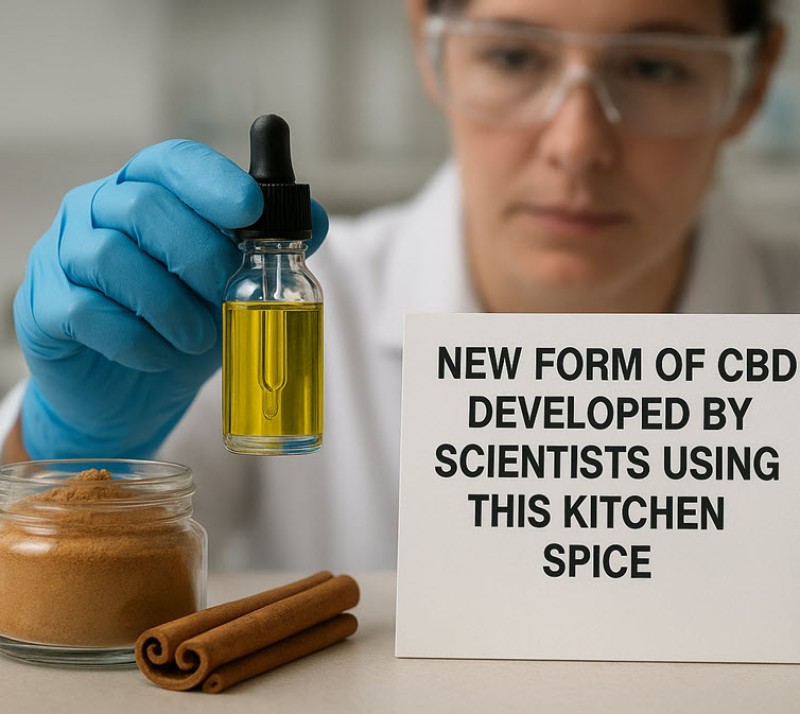
New Form of CBD Developed By Scientists Using This Kitchen Spice
Seizure Medication Might Just Be In Your Pantry
Developing synthetic forms of cannabidiol (CBD) can offer numerous scientific and practical benefits.
While hemp-derived CBD is still the standard, the goal isn’t to replace weed entirely: instead, it’s about solving problems that plant-based CBD can’t always do. For example, natural CBD may contain trace amounts of THC. Government, legal, and medical restrictions can pose a serious issue for CBD products that contain even the tiniest amounts of THC. On the other hand, synthetic CBD is engineered in such a way that it contains no THC.
Additionally, growing hemp to produce large volumes of CBD can be extremely costly. It’s also labor-intensive, and by its nature, can also be prone to crop failure.
These are just some of the several circumstances when synthetic CBD may actually be preferential to natural CBD.
How Caraway Seeds Work To Imitate CBD
However, researchers from the University of Nevada-Las Vegas discovered that caraway seeds, a common kitchen spice, can actually help in the development of medications that act similarly to CBD. The UNLV researchers, who worked together with colleagues from New Mexico State University for the study, found that when the primary chemical component of caraway seeds were altered, they were able to produce multiple CBD-like medications that are completely devoid of THC.
According to preclinical trials, the caraway-based therapy was extremely effective in treating seizures. What’s more, they found that the medication was powerful enough to stop seizures without serious side effects associated with long-term benzodiazepine use, since these anticonvulsant drugs are commonly prescribed for epilepsy.
“These fully synthetic compounds, made from a safe plant extract and free of THC, not only prevented seizures and reduced seizure-related deaths but also promoted healthier brain cell development - without the sedative side effects of current treatments,” explained co-author and UNLV professor of neuroscience, Dustin Hines. “Childhood seizure disorders are often resistant to available drugs, and both the seizures and the current frontline therapies can severely affect brain development, cognition, and quality of life, making the discovery especially promising,” he said.
This is one of the first studies to analyze the efficacy of compounds derived from carvone, which are manufactured in the essential oils of different plants including caraway, of course. Other similar plants with carvone include spearmint and dill.
The CBD-like molecules from caraway are certainly promising in terms of preclinical studies and efficacy, though the researchers believe that this is just the beginning. More research is necessary to better analyze the findings and progress with human trials. “Advancing this new class of therapeutics holds significant promise for patients who have exhausted existing treatment options, whether due to debilitating side effects or a lack of response to currently available therapies,” explains Adriana Carrillo, a study co-author and a senior double majoring in neuroscience as well as public health at UNLV. “It is encouraging to help build the foundation for future treatment options that could one day offer families safer and more effective choices,” she said.
Why Caraway Seeds?
Caraway seeds contain high amounts of carvone, a naturally occurring compound whose molecular structures can easily be modified by researchers. When the carvone scaffold is changed, synthetic molecules that mimic CBD can be created.
Yet, there’s no need to resort to cannabis for its anti-seizure effects here. Without discounting the efficacy of CBD in treating epilepsy and seizures, it’s no secret that products made from cannabis face a plethora of obstacles, including but not limited to manufacturing, regulatory, supply, and cost challenges. However, the compounds derived from caraway are completely free from THC, which makes it simpler to develop them into medications without worrying about the various legal loopholes to jump through.
Keep in mind that the objective here is to develop therapeutic medication out of caraway seeds. Just eating caraway seeds alone won’t give you the same seizure-relieving properties of CBD, since the seeds themselves don’t contain cannabidiol. Yet, it’s no doubt fascinating and impressive that scientists were able to use caraway seeds as a chemical source for transforming into compounds that are similar to CBD.
Other Plants With CBD-Like Activity
There are other plants and herbs that contain chemicals and compounds that possess CBD-like activity. This is especially true for their anti-inflammatory, anti-seizure, and neuroprotective properties. While they are not identical to CBD, they may act on similar pathways, including GABA, TRPV1, 5-HT1A, and others.
-
Valerian Root: Contains isovaleric acid and valerenic acid, which can be similar to CBD in the way that it induces a calm among users. There are also some studies documenting its anticonvulsant activity. In addition, valerian root hasbeen shown to have strong activity in the GABA receptors, which makes it a powerful candidate in seizure medication research.
-
Lavender: Famous for its sweet, intoxicating aroma that is well-known for its ability to soothe anxiety and induce calm, lavender works so well because it boosts the GABA. After all, this is the brain’s naturally occurring chemical, which signals the body to calm down. It works through TRPV1 modulation, a site that is also targeted by CBD.
-
Magnolia bark: Containing strong GABA-binding properties, magnolia is known for its antioxidant and anti-inflammatory properties. It contains honokiol, which has anticonvulsant properties too.
Conclusion
These are exciting findings, knowing that we may be able to work with compounds found in plants and herbs to treat conditions that CBD is used for. These are important developments for individuals who rely heavily on CBD for treating epilepsy and other neurological conditions. Ultimately, these findings tell us that the future of cannabinoid therapy is so wide, it isn’t limited to cannabis alone. There are so many possibilities found in nature - and sometimes, they might be hiding in our spice cabinets.
FLAVORED THC AND CBD, READ ON...