
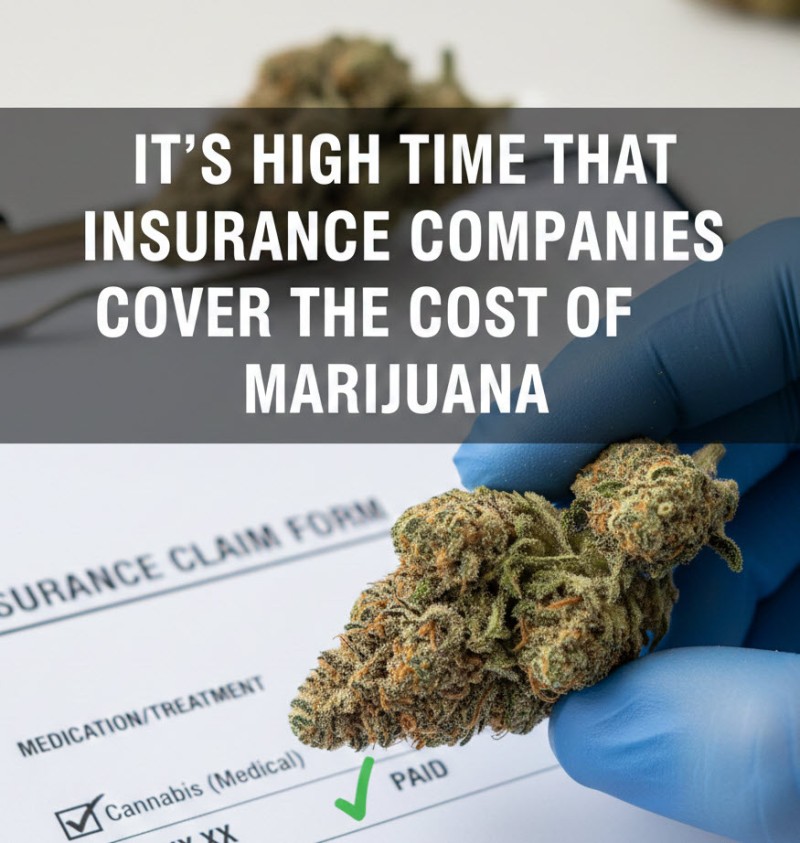
It’s High Time That Insurance Companies Cover The Cost of Marijuana
With cannabis legal in 40 states, including the District of Columbia alongside several territories, millions of Americans - and growing - are relying on the plant to treat numerous ailments.
Cannabis is used for treating several conditions, such as chronic pain, epilepsy, PTSD, anxiety, and even cancer-related ailments. But no matter how widespread its use is, or how mainstream it has become, insurance companies still don’t cover the cost of marijuana. The costs of medical cannabis vary according to the patient and state, but it can come out to approximately $300 per month. Meanwhile, a survey conducted by NuggMD reported that a majority of cannabis consumers acknowledge they spend more on weed now compared to the year before, and they expect costs to rise up even further.
These costs definitely add up for the average American consumer, not to mention the added expenses incurred by inflation, doctor’s visits, transportation, and everyday life.
While we may soon see cannabis being rescheduled - though the timeline and when the actual new regulatory changes may take effect is still unclear - the main reason why insurers won’t cover cannabis is that it’s still a Schedule I substance. This means that, according to the federal government, there is no known medical use for cannabis at this time.
Cannabinoid-Based Drugs May Be Insured
Since cannabis plant medications, or trips to a medical dispensary, still aren’t getting covered by insurance, there may be some cases where FDA-approved cannabis-based drugs may be covered. However, it’s a case-by-case basis and entirely circumstantial, which means that there is no guarantee.
These may include medications such as Epidiolex, which is a CBD-based drug designed for some kinds of epilepsy conditions. Additionally, synthetic forms of THC in FDA-approved medications may also be helpful for some patients; these include Marinol or Nabilone. If prescribed by a doctor, there is a possibility of getting these medications covered by Medicare.
This might sound like there’s some progress. But many patients feel that these medications don’t deliver the true therapeutic experience that whole-plant medicine does. At the end of the day, Epidiolex or Nabilone are not the same thing as whole-plant cannabis. They don’t offer the same flexibility or healing benefits that real marijuana does.
After all, most FDA-approved cannabinoid-based drugs are made from an isolated compound: typically synthetic THC or CBD. By contrast, whole-plant cannabis possesses hundreds of other compounds, including terpenes, flavonoids, and cannabinoids - all of which interact synergistically with the endocannabinoid system. This is why the entourage effect is so powerful.
Patients Prefer Whole Plant Medicine
There have been some surveys conducted that reflect the sentiment of cannabis consumers when it comes to this. For example, according to a medical marijuana petition conducted in New Jersey, patients shared their feedback about smoking weed in comparison with synthetic dronabinol, also known as Marinol. According to the respondents, smoking cannabis is more effective than the legal oral synthetic drug, or Marinol, when it comes to their medical needs.
In addition, some patients also report better tolerance for botanical weed compared to Marinol. They cite less side effects and better overall benefits.
One-Size-Fits-All Approach Doesn’t Work
There is such an incredible array of cannabis products out there, which, while wonderful for recreational users, offer a plethora of benefits for medical users. Medical marijuana patients can choose to medicate in a variety of ways, from edibles to tinctures, oils, flowers, and so much more. But FDA-approved drugs have only been developed and are prescribed for specific disorders, such as rare epilepsy conditions or nausea caused by chemotherapy.
Meanwhile, medical marijuana patients consume the plant for a much larger range of conditions ,ranging from insomnia to PTSD, anxiety, chronic pain, neurological conditions, cancer, autoimmune disorders, and so much more.
On that note, it’s important to highlight the fact that medical marijuana patients require so much more: various cannabinoid ratios, fast-acting formulas, personalized dosages or titration, micro or macrodose options, and access to both THC and CBD in the same product. FDA-approved cannabinoid medicines don’t offer the same flexibility.
The Case For Insurance Reform
Given there are serious limitations to pharmaceutical cannabinoid medications, it’s clear that the problem lies in the insurance system that has yet to evolve alongside patients' needs and medical science. There is a clear disconnect when insurance companies can cover synthetic cannabinoid drugs but can’t acknowledge the medicinal value of whole cannabis compounds. Then again, the issue circles back to the federal government.
These outdated regulations result in patients paying out of their own pocket for treatments that work the best for their specific needs. Once health insurance companies can cover evidence-based and patient-centered medicine, cannabis can already participate in this framework - it’s for the benefit of patients who need them, after all.
CONCLUSION
Marijuana has already made major strides in the real world, proving its efficacy time and time again. Thousands of people rely on cannabis to treat pain, seizures, anxiety, insomnia, and so much more, which is necessary to restore their quality of life. Yet, insurance companies still treat cannabis as if it isn’t part of the healthcare system.
Insurance reform doesn’t mean we should be replacing modern medicine with cannabis. It means that we should be evolving by expanding access to different options that may reduce harm while also respecting the autonomy of patients. Healthcare costs only continue to rise, yet public trust in the traditional system erodes because patients simply need better support economically, ethically, and clinically. Cannabis has a place in insured healthcare, so insurance companies should no longer try to deny it.
With Schedule 3 changes, you will see CBD and FDA-approved cannabinoid medicines covered by healthcare (up to $500 with Medicare is the rumor), but whole plant medicine, including buds and oils from whole buds, would not be covered.
Stay tuned, many moving parts in motion...
HEALTH INSURANCE IN OTHER COUNTRIES COVERS CANNABIS, READ ON...