
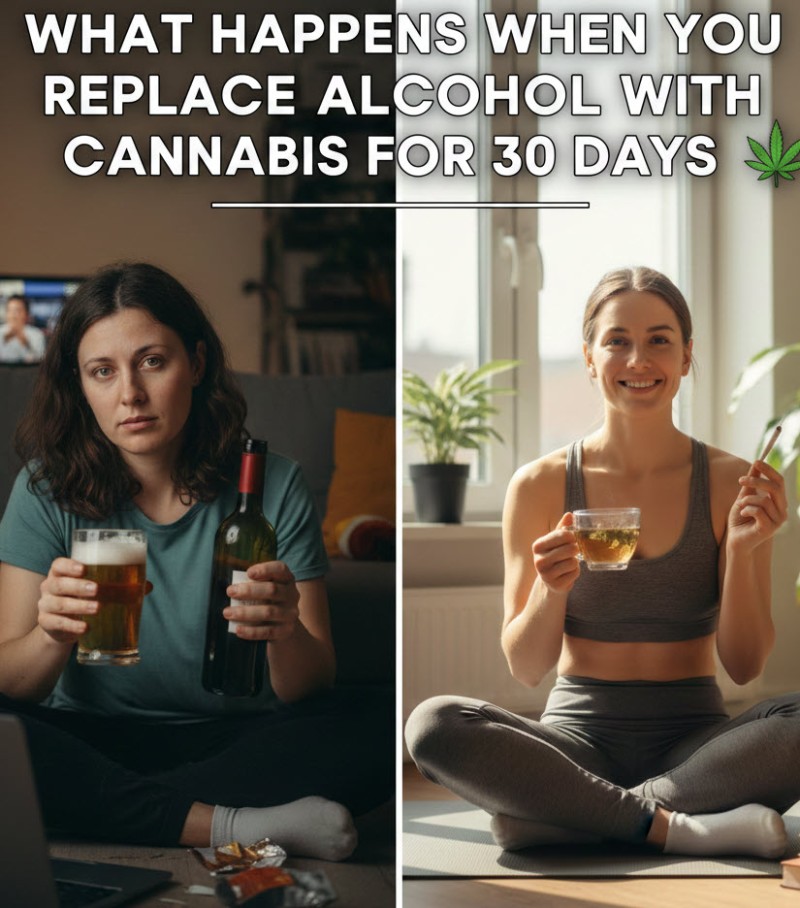
What Happens When You Replace Alcohol With Weed For 30 Days
Alcohol has been the default stress-reliever, social lubricant, and go-to ‘fun juice’ for decades, all over the world.
Have a glass or two after work to decompress. Destress with friends over happy hour. Pour a bottle during celebrations. Indulge during the holidays. No matter which way you look at it, alcohol is so ingrained in our culture and society, that the people who end up abstaining often feel it requires a long explanation.
But beneath the normalization of alcohol is a substance that has been scientifically and medically proven to cause cancer, wreak havoc on the liver, disrupt sleep, increase inflammation, and cause long-term damage on physical and mental health.
Yet, because it’s so accessible and accepted, people still turn towards booze.
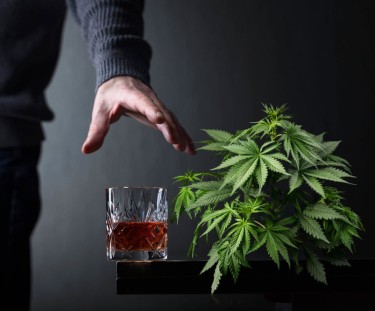
So imagine what cutting out alcohol can do for 30 days? Instead, think about replacing it with weed.
Weed Is A Powerful Substitute For Booze
Cannabis is such a potent substitute for booze, and it’s much safer and healthier. If more people smoked weed instead of drinking alcohol, we would likely have a more peaceful, calm culture that has seen a decrease in alcohol-related illnesses and deaths.
It’s no surprise, then, that along with medical marijuana laws, booze sales have declined. According to 2015 research from Georgia State University, there is strong economic proof that legalized cannabis is an opportunity to improve public health.
The study analyzed alcohol sales in more than 2,000 counties across the country in over a decade. They found that when states enact medical marijuana laws, the consumption of alcohol drops significantly. Interestingly, it wasn’t a temporary decline; the effects lasted for as long as 2 years after legalization. This suggests that access to legal weed results in lasting, positive changes for consumer behavior.
Another fascinating takeaway from the study: counties with medical marijuana laws saw a 15% drop in booze purchases. This is after the researchers accounted for factors that influence drinking patterns, such as employment, income, and age among others. Additionally, this study utilized Nielsen retail scanner information, which relies on hard sales data.
The results are clear: marijuana is a good substitute for alcohol. And when people can legally access it, a significant portion of the population will choose it instead of alcohol.
This is important because alcohol is no doubt a harmful, costly, and dangerous substance. It is linked to liver problems, domestic violence, addiction, impaired driving, accidents on the road, and various long-term health issues. For these reasons and more, it’s a positive takeaway that cannabis legalization reduces alcohol consumption.
“Our findings clearly show that these two substances act as strong substitutes in the marketplace,” explains Georgia State University Economics Professor Alberto Chong, who co-authored the study. “This implies that rather than exacerbating the consequences of alcohol consumption - such as an increase in addiction, car accidents, or disease risk - legalizing cannabis may temper them.”
Health Benefits Of Swapping A Joint For A Glass
Focusing on the health benefits of swapping weed for alcohol, where do we even begin?
Imagine quitting alcohol for just 30 days: this can have a profound effect on your health and wellness. It is so powerful that it can initiate a full-body
Keep in mind that alcohol is a dangerous systemic toxin that affects almost every single organ. It also affects your hormones, tissues, sleep, and liver. On the other hand, cannabis heals the body through the endocannabinoid system; it helps restore homeostasis and balance. Once you remove alcohol from your lifestyle and consume weed, your body can begin focusing on healing from inflammation and shifting to homeostasis.
Week 1: Inflammation Reduces
Within the first few days of quitting alcohol, your liver sees a great reduction in metabolic overload. Various inflammatory markers will begin to decline, while blood sugar fluctuations will also reduce. Many people, especially individuals prone to anxiety, will experience less mood swings or crashes, since the effect of alcohol on neurotransmitters will disappear.
Meanwhile, cannabis supports the activation of the parasympathetic nervous system. Relaxation is encouraged, and physiological chaos takes a back seat.
It may be difficult to sleep first, particularly if you are weaning off long-term alcohol use. Eventually, REM suppression caused by booze will be reversed - and you can expect some of the best sleeps in your life moving forward.
Week 2: Hormonal Balance Restores, Sleep Improves
As you enter the second week, sleep gets more restorative. The removal of alcohol allows your natural circadian rhythm to take hold, leading to improved insulin sensitivity and mood regulation. This also contributes to improved immune function.
Consuming cannabis, especially strains that are high in calming CBD and therapeutic terpenes, can help in the transition. They can also mitigate nighttime anxiety without the toxic burden imposed by alcohol.
Week 3: Mental Clarity, Liver Health
By the third week, your liver will be thanking you. Enzyme levels begin to stabilize, and it can start focusing on metabolizing nutrients that your body needs for overall health. Fat accumulation will also start to decrease, and oxidative stress reduces.
Most people start experiencing much clearer thinking, an improvement in memory, and cognitive energy. Since alcohol is no longer interfering with the brain and liver, serotonin and dopamine signaling becomes more efficient.
As a result, physical energy rises tremendously as the body is able to absorb nutrients and systemic inflammation is continuously driven down.
Week 4: Emotional and Cardiometabolic Health Improves
As you reach the end of one month without alcohol, blood pressure will normalize, and metabolic markers all throughout will improve. Your body is no longer trying to constantly detoxify toxins. Mood and thinking are stable, and stress tolerance improves.
When you use cannabis intentionally, it supports overall relaxation, mitigates pain, and modulates stress without the dangerous cost that comes with alcohol.
CONCLUSION
Quitting alcohol for 30 days isn’t about demonizing this accepted substance.
However, we’re trying to drive home a point that doing this once in a while - and being open to the possibility of sticking to it - will be beneficial for you and society as a whole. Alcohol is so taxing to the body while cannabis supports healing and balance.
Thirty days is enough to feel a significant difference in the lack of hangovers, better sleep, mental and physical energy, cognitive clarity and so much more.
REPLACING BOOZE WITH CANNABIS, READ ON...