

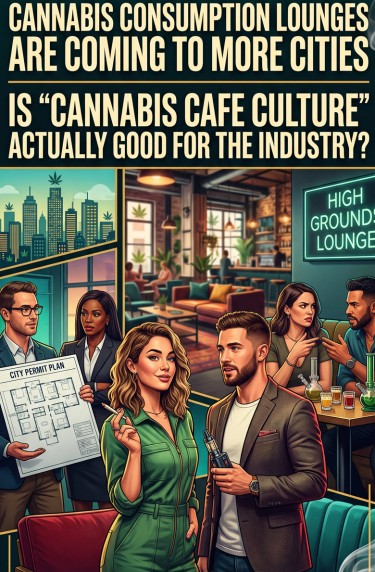
Long before cannabis dispensaries were the norm, socially consuming weed had designated places of its own.
Sometime around the 70s and 80s, Amsterdam’s coffeeshops marked the beginning of the world’s first public consumption lounges, where consumers could visit to buy legal and regulated weed, followed by a few hours of enjoyment in a relaxed atmosphere among other like-minded people. Amsterdam’s coffeeshop model was stark evidence that consuming weed didn’t have to be something we were ashamed of, or something to hide: it could happen in public, much like grabbing a beer or a drink with a friend.
However, there was no such equivalent of a coffee shop in North America for the longest time. Legalization started backwards: many states had already approved retail sales and cultivation before they figured out where people were allowed to consume the weed they bought. While there was no problem for residents who could smoke in their own homes, tourists, renters, or anyone else residing in federally subsidized housing couldn’t smoke weed.
Plus of course, we were missing out on the social aspect that Amsterdam’s coffee shops offered.
Change Comes In 2012
That eventually ended in 2012, when Colorado started experimenting with private cannabis clubs after a vote. Unfortunately, it didn’t last long due to some ambiguity and local bans. By 2018, California finally legalized weed, and the rules allowed for local jurisdictions to legalize consumption in various sites, including dispensaries. Some locations, such as West Hollywood, proved to be early adopters in the social cannabis consumption scene, and even established cannabis lounges that allowed customers to buy weed AND toke up in the same venue.
Soon after, we began to see the rise of social cannabis consumption venues in Las Vegas, which eventually became home to some of the country’s most ambitious weed lounges. Tourists came from all over the country to enjoy smoking at Las Vegas’s glitzy weed lounges, while taking part in the city’s many other hedonistic pleasures.
What started as a European niche concept gradually became a category of its own within the American marijuana industry, and one that grew faster than most people realized.
It’s important to take note of the history of cannabis lounges, because the current lounges no longer feel like a novelty and more like something that was an afterthought; a flaw in the system that we worked to fix after the fact. Besides, we can’t say it isn’t true: cannabis was legalized first before the government decided where people could smoke it.
Why Cafe Culture Is Important
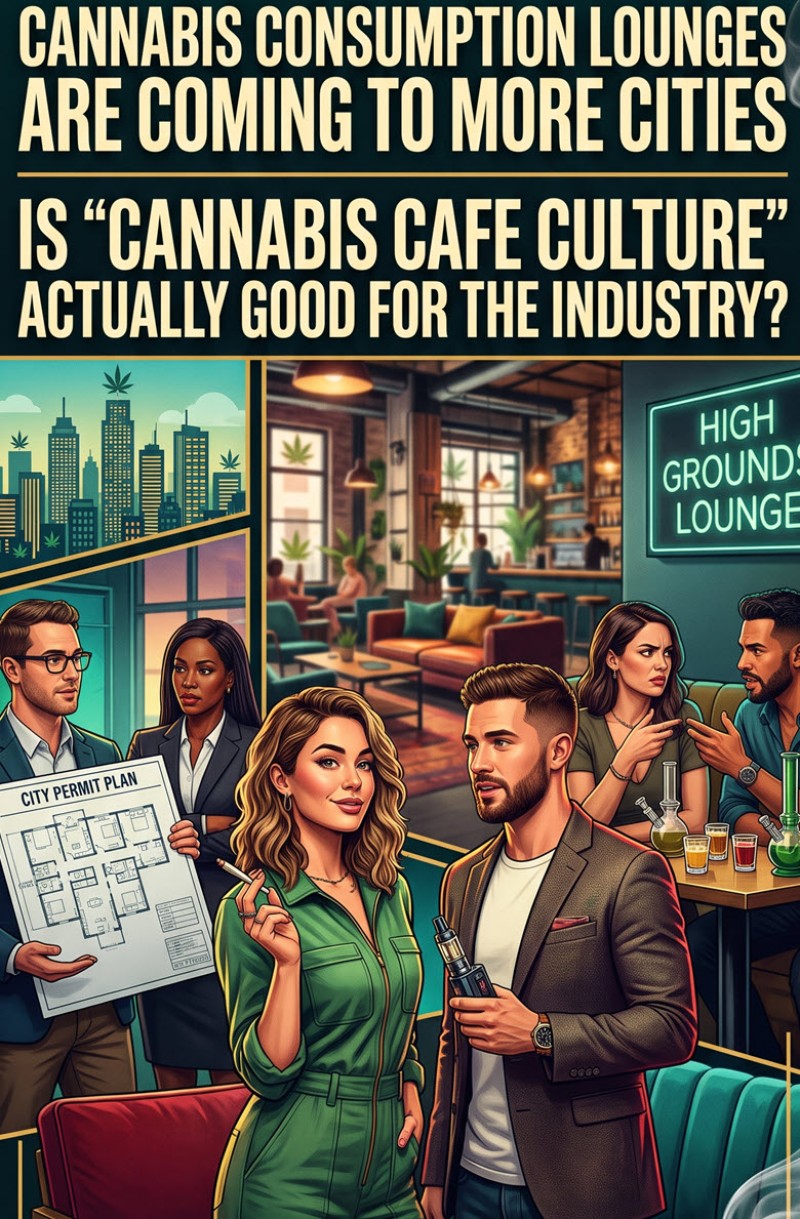
Cannabis cafe culture and consumption lounges are incredibly important for the industry.
There are many reasons why. For one, it directly solves a problem relating to access. Lounges already close the gap and take consumption outside residences, public parks, hotel bathrooms, and cars into licensed spaces that are manned by professionals. It also helps that these spaces are properly ventilated.
Another reason is that consumption lounges normalize weed use in a way that dispensaries or shops alone don’t. Think about it: making a transaction at a dispensary is nothing more than that; it’s merely a transaction. Meanwhile, a lounge or cafe is social in nature.
Being in a lounge invites consumers to slow down and enjoy an unhurried experience of enjoying weed in a communal way, amongst others who also love the same thing. It’s much like going to a wine bar or a craft brewery. It shifts the framing from just buying something to enjoying an experience, which takes consumption to another level, especially when you are among like-minded people.
That is exactly what a mature industry requires in order to successfully eliminate the stigma of the black market era and compete for a more mainstream customer base.
Third, cannabis lounges create a fantastic opportunity for high-margin income, much more than just selling edibles and flowers. Revenues can be generated through events, membership models, food and beverage pairings, and so much more. Given that the cannabis industry has been plagued by burdensome taxation and decreasing wholesale prices, it’s critical to diversify income streams.
Additionally, consuming weed on-site is also a great way to educate people. Trained lounge staff and budtenders can educate consumers on various facets of consumption, including strain differences, dosing, and new products, all in real-time for them to enjoy. A guided experience like this provides an opportunity to reduce the risk of bad sessions that may be caused by consuming too much as a beginner. It also generally improves the impressions of first-time users as a whole.
Last but not least, cannabis lounges give the industry a much stronger case for federal legitimacy. When the industry is visible with organized, well-run spaces in public, similar to how we normalize bars, it feels less stigmatized and underground. Instead, the shift in optics matters as much as any kind of regulation when we’re trying to shape public opinion and legislation.
Conclusion
Of course, none of this is entirely frictionless.
There are real costs involved with lounges, which include but are not limited to new layers in licensing, special ventilation, compliance rules, and much more. The fact that weed is still federally illegal means that there are financial hurdles to overcome, too.
However, these are issues that are related to implementation, and they don’t mean the model itself is poorly drawn out. All obstacles here will be significantly reduced once regulations are improved and catch up to the demand. Once cities get licensing right, and business owners can solve the banking issues, cannabis hospitality is finally given a chance to be taken to a whole new level.
CANNABIS BARS AND LOUNGES? READ ON...