
A study dropped in The Lancet Psychiatry in March 2026 and the headlines wrote themselves. The largest review of medicinal cannabis ever conducted. Fifty-four randomized controlled trials. Forty-five years of data. Conclusion: no evidence that cannabinoids effectively treat anxiety, depression, or PTSD. The three conditions that drive most medicinal cannabis use worldwide.
News outlets ran it as proof. Commentators who've been waiting for this moment forwarded it to their group chats. Regulators in Australia, where the study was timed to land during an active government review, cited it immediately.
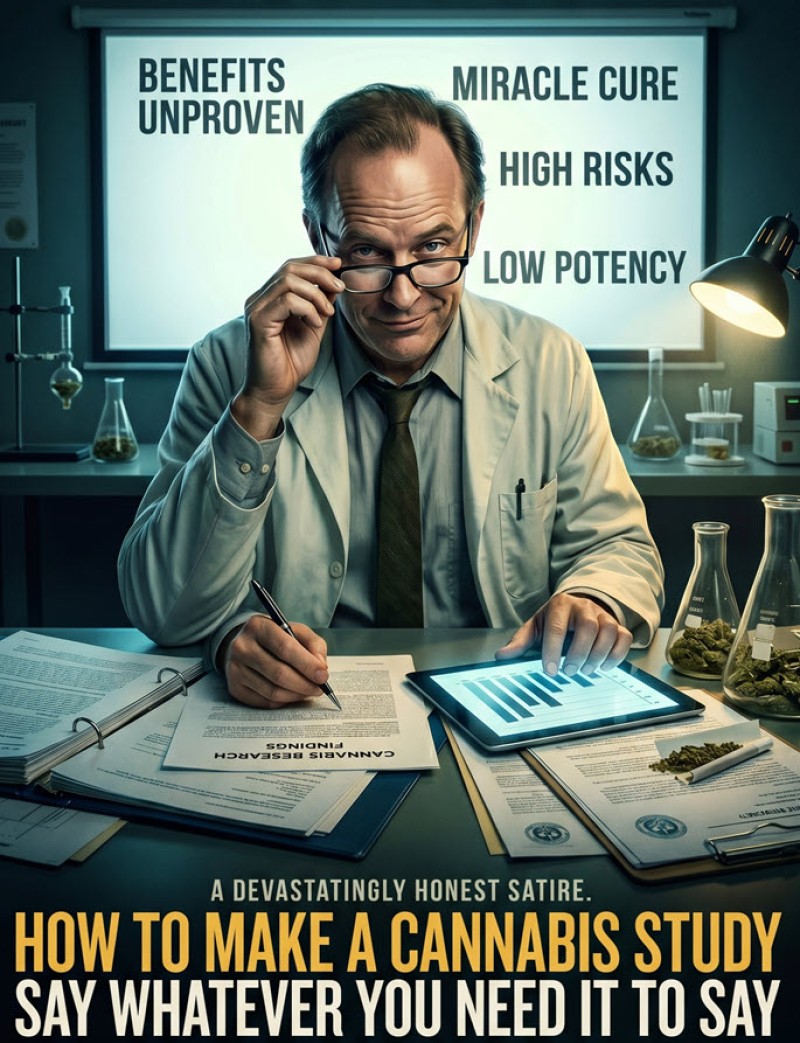
I've been watching cannabis research get produced, weaponized, and buried for fifteen years. I want to walk you through exactly how a study like this gets constructed, why it gets amplified, and why the methodology problems are serious enough that the headline conclusion should not be trusted at face value. Not because the researchers are liars. Because the system that produced the evidence they reviewed was never designed to find what they were looking for.
This is how the playbook works.
Step One: Build Your Conclusion Into the Evidence Pool
Cannabis has been Schedule I under U.S. federal law since 1970. That classification means the government officially considers it to have no accepted medical use and high abuse potential. It also means that for decades, researchers who wanted to study cannabis had to navigate a DEA approval process that was structurally hostile to efficacy research.
For most of the period the Wilson review covers, the only federally approved source of cannabis for U.S. research was a single farm at the University of Mississippi. Independent lab testing of that cannabis found THC concentrations around four to eight percent, negligible terpene content, and a chemical profile that bore little resemblance to the commercial products patients actually use. Researchers trying to study therapeutic cannabis were dosing their test subjects with something closer to low-grade hemp than to any dispensary product. And those were the researchers who cleared the DEA approval process. Studies oriented toward identifying harms had an easier path to approval than studies oriented toward identifying benefits. This wasn't a written policy. It was the predictable output of a regulatory culture built around the assumption that cannabis is dangerous.
The Wilson review pooled results from 54 trials drawn from this environment. A rigorous meta-analysis applied to a skewed evidentiary pool does not correct the skew. It calculates the average of the skew. If the majority of studies were designed to look for problems rather than benefits, finding no benefits in the aggregate is not a finding about cannabis. It's a finding about what the system chose to study.
Step Two: Study a Different Product Than the One People Use
The trials in the Wilson review used CBD isolates, THC isolates, and synthetic cannabinoids like dronabinol and nabilone. The review groups all of these under the label 'cannabinoids' and draws conclusions about 'cannabis.' This is a category error that would get laughed out of most other pharmacology discussions.
Cannabis plants produce over five hundred identified compounds: more than one hundred cannabinoids, over one hundred and fifty terpenes, and various flavonoids. When a patient uses full-spectrum cannabis for anxiety, they're interacting with all of these simultaneously. The therapeutic activity of the full plant differs from isolated components in ways that pharmacologists have documented under the term 'entourage effect,' where terpenes modulate how cannabinoids bind to receptors, minor cannabinoids alter the activity of major ones, and the net result is a pharmacological profile that no isolate replicates.
To understand what this means in practice: imagine a researcher wants to know whether fermented beverages reduce social anxiety. Instead of studying wine, beer, or spirits, they administer pure pharmaceutical ethanol to participants in a clinical setting. Their trial finds weak and inconsistent results. They publish a meta-analysis: no evidence that alcohol reduces social anxiety. The study is technically accurate about what it measured. It tells you nothing useful about what actually happens when a person has two glasses of wine at a dinner party.
That is what the Wilson review did. It studied pharmaceutical isolates and synthetic analogs, then drew conclusions about a plant. Pharmaceutical isolates are easier to standardize and easier to blind, which is why researchers use them. But ease of study is not the same as validity of conclusion. When a researcher writes 'cannabinoids show no evidence of efficacy for anxiety,' they are describing results from dronabinol trials. They are not describing what happens in the brain of someone using well-grown, full-spectrum cannabis.
Step Three: Use a Tool That Doesn't Work for This Job
Randomized controlled trials are the gold standard of clinical evidence for a specific reason: they use blinding to prevent participants' expectations from distorting outcomes. A participant who doesn't know whether they received the active drug or a placebo can't let that knowledge bias how they report feeling afterward.
Cannabis makes blinding impossible. A person who has just become high knows they didn't receive the placebo. The person who received the placebo also knows. Researchers try to manage this with active placebos, compounds that produce some physical sensation without full psychoactive effect, but no solution has proven satisfactory. Every cannabis RCT carries compromised blinding as a known limitation, usually acknowledged in a footnote and then ignored in the conclusions.
This isn't a small technical problem. It goes to the core of what RCTs are designed to measure. A meta-analysis that pools results from trials where blinding failed inherits the failure across every single data point it includes. And yet the Wilson review's headline treats those pooled results as if the methodology held.
There's a related problem with outcome measures. The Hamilton Anxiety Rating Scale, the Beck Depression Inventory, the standard instruments these trials use, were designed and validated for pharmaceutical drug studies. They capture specific symptom clusters over short periods. Cannabis patients typically report benefits in domains these instruments measure poorly: sleep architecture, physiological baseline arousal, the ability to interrupt rumination, sustained reduction in hypervigilance. A trial that runs eight weeks, doses participants with pharmaceutical THC, and measures outcomes with instruments designed for SSRIs will miss much of what patients report experiencing. Missing the signal is not the same as proving the signal doesn't exist.
Step Four: Confuse Absence of Evidence with Evidence of Absence
This is the pivot point where the study becomes a weapon.
'No evidence of effectiveness' means the reviewed trials did not produce a reliable positive signal. It does not mean the trials demonstrated that cannabis is ineffective. These are different claims requiring different types of evidence. Demonstrating that something doesn't work requires well-powered trials designed to detect an effect, using appropriate products, in appropriate populations, with appropriate outcome measures. The Wilson review, by the researchers' own implicit acknowledgment, drew from a trial pool that met none of those conditions reliably.
Compare this to how antidepressant evidence gets treated. The SSRI clinical trial record contains a documented publication bias problem: pharmaceutical companies submitted negative trials to the FDA but did not publish them. When researchers obtained the unpublished data and reanalyzed the full record including trials that never appeared in journals, the effect sizes for SSRIs dropped substantially. A 2008 analysis in PLOS Medicine, published in The Lancet's family of journals, found that antidepressant effect sizes in the published literature were inflated by roughly 30 percent due to selective reporting. The Lancet published that critique. It did not produce a meta-analysis concluding 'no evidence antidepressants work for depression.' Because the same evidentiary standards are not applied equally.
Wilson's recommended alternatives carry their own evidentiary baggage. Cognitive behavioral therapy for PTSD has solid evidence, but therapist access is limited by cost and availability in most of the markets where medicinal cannabis is prescribed. SSRIs for anxiety produce meaningful benefit for a significant minority of patients and partial benefit for others, with a side effect profile that drives considerable discontinuation. These treatments have evidence. That evidence is imperfect, subject to methodological criticism, and not universally applicable to the populations seeking cannabis alternatives. Holding cannabis to a cleaner evidentiary standard than the available comparators is not scientific rigor. It's rigor applied selectively.
Step Five: Ignore the Biology
This is the part that genuinely bothers me about the Wilson review's framing, and about the coverage it received.
The human body has a dedicated receptor system for cannabinoids. The endocannabinoid system, documented in its current form since the early 1990s by Dr. Raphael Mechoulam's team, consists of CB1 and CB2 receptors distributed throughout the brain and body, endogenous cannabinoid molecules the body produces itself called anandamide and 2-arachidonoylglycerol, and the enzymatic machinery to synthesize and break them down. CB1 receptors are among the most densely expressed receptors in the central nervous system. They concentrate in the amygdala, which processes threat and fear responses. They concentrate in the hippocampus, which regulates memory consolidation. They concentrate in the prefrontal cortex, which governs executive function and emotional regulation. These are the exact brain regions most implicated in anxiety disorders, PTSD, and depression.
Phytocannabinoids from cannabis bind these receptors with high affinity because they are structurally similar to the molecules the body makes itself. Research on endocannabinoid deficiency, a condition where the system's baseline tone is chronically low, has associated it with treatment-resistant depression, PTSD symptom severity, and several chronic pain conditions. The mechanism for therapeutic benefit doesn't require speculation. It sits in basic neuroscience literature that predates the Wilson review by decades.
A study that reviews flawed clinical trials and finds no reliable positive signal needs to reconcile that finding with this mechanistic picture. If the body maintains a dedicated receptor system in the brain's emotional processing centers, and plant cannabinoids bind those receptors with high fidelity, and endocannabinoid deficiency correlates with the exact disorders the study says cannabis fails to treat, then 'no evidence of efficacy' demands a biological explanation. The Wilson review offers none. It presents the clinical trial results and stops.
The most coherent explanation for the gap between the mechanistic evidence and the clinical trial record is not that cannabis doesn't work. It's that the clinical trials, for all the reasons described above, were poorly designed to detect whether it does.
Step Six: Time It for Maximum Regulatory Impact
The Wilson review was published March 17, 2026. Australia's Therapeutic Goods Administration was running a simultaneous regulatory review of medicinal cannabis, receiving over five hundred public submissions. Dr. Wilson stated in media appearances that the study was designed to inform TGA decision-making. The timing was not incidental.
Here's the financial context you need to hold alongside that. The pharmaceutical industry loses an estimated ten billion dollars annually in regions where legal medicinal cannabis is accessible. The FDA receives approximately half its drug approval budget from pharmaceutical company user fees under the Prescription Drug User Fee Act. The TGA operates under a similar model. Regulatory agencies that depend on industry funding have documented structural conflicts of interest when evaluating products that compete with that industry's revenue. Nobody needs to make a phone call or write a check. The incentive gradient runs in one direction and the research ecosystem responds to it over time.
This is how the playbook actually runs. It doesn't require corruption. It requires the mundane operation of self-interest at scale. Funding flows toward studies that produce useful results for funders. Researchers who produce inconvenient findings find their grant applications passed over. Journals with pharmaceutical advertising relationships develop subtle editorial sensitivities. Over decades, the research literature tilts. Then someone runs a meta-analysis of the tilted literature and produces a headline that the industry can cite for the next fifteen years: 'even The Lancet found no evidence cannabis treats anxiety.'
That citation will outlive the criticism of the methodology by a long margin. The criticism requires you to understand randomized controlled trial design, publication bias, the endocannabinoid system, regulatory history, and pharmaceutical funding mechanisms. The headline requires you to read a sentence.
What the Study Actually Tells You
None of this means cannabis is a proven treatment for anxiety, depression, or PTSD. The clinical evidence for that claim is genuinely limited, and acknowledging that limitation honestly matters. Cannabis carries real risks that deserve serious attention: it can precipitate psychotic episodes in genetically predisposed individuals, heavy adolescent use correlates with developmental consequences, and high-potency concentrates represent a different risk profile than traditional flower. These things are true.
The Wilson review tells you that the clinical trial record built under fifty years of Schedule I prohibition, using products that don't match real-world cannabis, with a blinding methodology that doesn't survive psychoactive substances, measured against instruments designed for pharmaceutical trials, failed to produce a reliable positive signal. That is a finding about the research environment. It is not a verdict on the plant.
Twenty-seven percent of American and Canadian adults have used cannabis for medical purposes. Half of them cite mental health management. Those millions of people didn't arrive at cannabis by accident or stupidity. Most arrived because conventional treatments failed them, came with side effects they couldn't tolerate, or were simply inaccessible. A research system that spent five decades studying whether cannabis causes paranoia is now producing meta-analyses saying it doesn't help anxiety, and presenting that as a conclusion rather than an indictment of what we chose to study.
The studies we actually need would use full-spectrum preparations matched to what patients use. They would run longer than eight weeks. They would recruit populations with clinical diagnoses rather than convenience samples. They would use outcome measures built around what cannabis patients report experiencing, not instruments inherited from SSRI trials. They would be funded by sources without a financial stake in the result. And they would be conducted in a regulatory environment that treats therapeutic efficacy as a question worth answering.
We have not done those studies. Until we do, 'no evidence of efficacy' is not a conclusion. It's a description of what happens when the system studying a substance is built by the people who profit from its failure.
Start reading studies like a journalist rather than a supplicant. Find out who funded them, what products they actually tested, whether the blinding held, what the outcome measures were designed for, and when they were published relative to regulatory decisions they conveniently support. Most people who read the Wilson review headline stopped at the abstract. The abstract is where the playbook wants you to stop.
---
Sources: Wilson et al., 'The efficacy and safety of cannabinoids for the treatment of mental disorders and substance use disorders,' The Lancet Psychiatry (March 2026), DOI: 10.1016/S2215-0366(26)00015-5; Kirsch et al., 'Initial Severity and Antidepressant Benefits: A Meta-Analysis of Data Submitted to the Food and Drug Administration,' PLOS Medicine (2008); Mechoulam, R. and Parker, L.A., 'The Endocannabinoid System and the Brain,' Annual Review of Psychology (2013); Russo, E.B., 'Clinical Endocannabinoid Deficiency Reconsidered,' Cannabis and Cannabinoid Research (2016); University of Mississippi cannabis potency program, NIDA contract records; Prescription Drug User Fee Act funding disclosures, FDA.gov; Australian Therapeutic Goods Administration medicinal cannabis review submissions, March 2026.
MEDICAL CANNABIS STUDIES, READ ON...