

There was a time when cannabis culture had its heroes. Its anti-establishment icons who made rebellion look fun, made counterculture accessible, and made prohibition look absurd through the power of comedy, art, and sheer audacity.
Cheech and Chong turned stoner culture into mainstream entertainment in the 1970s and 80s, right in the teeth of Nixon's War on Drugs. They didn't just make people laugh—they made cannabis users human. Relatable. Not the dangerous criminals propaganda painted them as, but regular people who happened to enjoy weed.
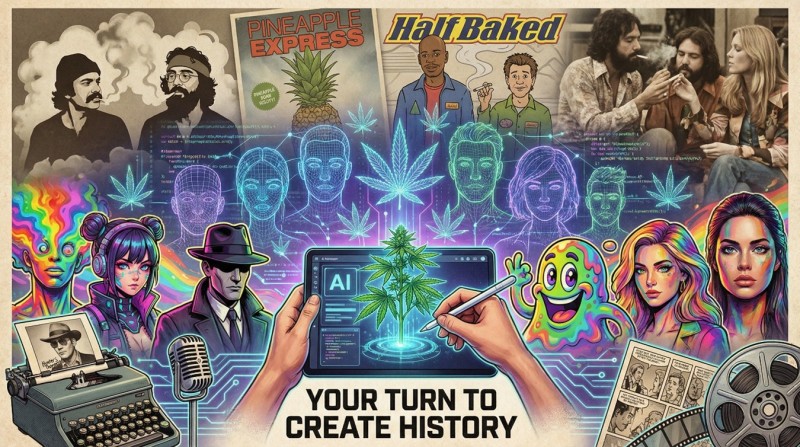
Fast forward through decades of stoner cinema: Dazed and Confused captured the authentic teenage experience. Half Baked brought stoner comedy to the Dave Chappelle generation. Pineapple Express legitimized the genre with an actual budget. The Big Lebowski gave us The Dude—a zen master disguised as a burnout.
These were more than mere movies. They were cultural statements during an era when "Just Say No" dominated, when DARE officers told kids that marijuana would destroy their lives, when mandatory minimum sentences were locking people up for decades over a plant.
These comedies and their characters were acts of resistance dressed up as entertainment.
They said: "We refuse to be ashamed. We refuse to be demonized. We refuse to accept your narrative about who we are."
And they worked. They helped shift culture. They made cannabis prohibition look increasingly ridiculous by simply showing that cannabis users were... normal. Funny. Creative. Human.
But here's the thing: we're entering a new era of prohibition rhetoric, and we need new icons for a new age.
Except this time, we have something our predecessors didn't: AI.
The Golden Era of Stoner Anti-Heroes
Let's take a moment to appreciate what came before, because understanding the past helps us build the future.
Cheech and Chong (1970s-1980s): The originals. During the height of Nixon and Reagan's drug war hysteria, these two created a cottage industry out of making prohibition look stupid. Their comedy albums sold millions. Their movies were box office hits. They proved that cannabis culture could be mainstream entertainment even when cannabis itself was being demonized.
The genius of Cheech and Chong wasn't just that they were funny—it was that they made cannabis use look harmless and silly in an era when the government was calling it a gateway to heroin. They were living proof that the propaganda was bullshit.
Dazed and Confused (1993): Richard Linklater's masterpiece captured the authentic experience of teenage cannabis use in the 1970s. No exaggeration. No "Reefer Madness" hysteria. Just kids being kids. The film's honesty was revolutionary—it showed that cannabis was simply part of coming of age for many people, not a descent into madness.
The Big Lebowski (1998): The Dude became a cultural icon precisely because he represented an alternative to American hustle culture. He consumed cannabis, drank White Russians, went bowling, and... was content. In a society obsessed with productivity and success, The Dude's cannabis-fueled zen was subversive as hell.
Half Baked (1998): Dave Chappelle brought his comedic genius to stoner cinema, creating memorable characters and quotable moments that defined late-90s cannabis culture. "Marijuana is not a drug. I used to suck dick for coke. Now that's an addiction." Comedy, but also truth-telling about the relative harms of different substances.
Pineapple Express (2008): Seth Rogen and James Franco elevated stoner comedy with actual production value, showing Hollywood that cannabis-centered films could be mainstream blockbusters. The film also humanized dealers and users in ways that challenged stereotypes.
These characters mattered because they existed during times of intense prohibition pressure.
When the government was saying "cannabis users are criminals destroying society," these films said "actually, they're just regular people who happen to enjoy weed."
When DARE was telling kids that marijuana would ruin their lives, these comedies showed that cannabis users could be successful, creative, and happy.
They were counter-narratives in an era when alternative narratives were desperately needed.
And we need them again. Now.
The New Prohibition Wave Requires New Icons
If you've been paying attention, you've noticed the shift. Around 2023-2024, the cannabis narrative started changing. The propaganda machine cranked back up. "Scromiting." Heart scares. Mental health panics. Potency fears. Gateway theory revival.
State repeal efforts. Hemp bans. Schedule III corporate capture. Federal enforcement threats.
We're in a new prohibition wave, wrapped in public health concern language but funded by pharmaceutical companies and law enforcement lobbies.
And where are our cultural icons? Where are the Cheech and Chongs of 2026?
The old icons are still beloved, but they're from another era. They spoke to their time. We need voices speaking to ours.
We need new anti-heroes who can make prohibition look as absurd in 2026 as it looked in 1978. Who can humanize cannabis users. Who can make people laugh while making them think. Who can challenge the new propaganda with creativity, humor, and truth.
And here's the revolutionary part: You can create them.
The AI Revolution: Democratizing Creativity
Here's what's changed since Cheech and Chong needed a film studio, or Dave Chappelle needed a production company, or Seth Rogen needed tens of millions in budget:
Anyone can create now.
AI has democratized creative production in ways that would have been science fiction a decade ago. You don't need a studio. You don't need a massive budget. You don't need to convince gatekeepers that your vision is worth funding.
You need:
-
Creativity
-
A computer
-
AI tools (many of which are free)
-
The willingness to create
Let me paint a picture of what's now possible:
Web Comics: Tools like Midjourney, Stable Diffusion, and DALL-E can generate professional-quality artwork. You can create an entire comic series—characters, backgrounds, panels—with prompts and basic editing. Your stoner anti-hero adventures can be published online, built into a following, and never cost you more than your time.
Animated Series: AI video generation is getting sophisticated. Combined with AI voice acting (ElevenLabs, others), you can produce animated shorts or even series. Your characters can move, speak, and tell stories—all created from your living room.
Podcasts with AI Voices: Create characters, write their dialogue, generate their voices with AI, and produce episodic content. Comedy podcasts, audio dramas, interview shows—all featuring your cannabis culture characters.
AI-Written Stories: Use language models to help develop scripts, dialogue, and narratives. Not to replace your creativity, but to amplify it. Brainstorm with AI, refine with your human touch.
Social Media Characters: Short-form content thrives on platforms like TikTok, Instagram, YouTube Shorts. Create a character, give them a voice (AI-generated or your own), and start posting. Build a following. Make people laugh. Challenge narratives.
Music and Videos: AI can help with music generation, video editing, special effects. The tools that used to require specialized studios are now available to anyone with a laptop.
The barrier to entry has collapsed.
What took millions of dollars and armies of professionals in the 1970s-2000s can now be done by one creative person with AI tools and determination.
The AI-Native Cannabis Icons Are Already Emerging
And it's already happening. If you look around, you'll see AI-generated content gaining massive followings:
AI-generated comedy accounts posting daily content that accumulates millions of views.
AI character accounts on Twitter/X with devoted fanbases despite everyone knowing they're AI-generated.
AI-assisted web comics building subscriber bases and even monetizing through Patreon.
AI voice podcasts discussing various topics with entirely synthetic hosts that sound increasingly human.
The audience doesn't care that it's AI-assisted. They care that it's:
-
Entertaining
-
Consistent
-
Authentic to a character or vision
-
Saying something worth hearing
If AI slop can gain massive followings, imagine what happens when talented creators use AI as a tool to amplify genuinely good ideas.
That's the opportunity. That's what I'm calling for.
A Call to Cannabis Creatives: Create Your Icon
Here's what I want to see in 2026:
New characters that capture this moment. Not rehashing Cheech and Chong, but creating something fresh that speaks to today's cannabis culture and today's prohibition battles.
Web series that make people laugh while making them think. Comedy that challenges the new propaganda with wit and intelligence.
Podcasts featuring cannabis culture characters discussing everything from politics to philosophy to the absurdity of prohibition—all delivered with humor and humanity.
Comics and graphic novels telling stories about cannabis users, cultivators, advocates, patients—showing the reality versus the propaganda.
Music and videos that capture the spirit of cannabis culture in 2026—the defiance, the creativity, the community, the joy.
Social media characters that go viral by being funny, authentic, and unapologetically pro-cannabis while making prohibition look absurd. AIQuantumLabz.com is an industry leader in AI Influencers!
Your Hunter S. Thompson. Your Cheech and Chong. Your stoner anti-hero who becomes a cultural touchstone.
But Here's the Critical Part: Create for Art, Not Politics
This is important: Don't create propaganda. Create art.
Cheech and Chong didn't make movies to advance marijuana legalization—they made funny movies about their experiences and perspectives. The cultural impact followed from the authenticity.
Hunter S. Thompson didn't write political manifestos—he told wild, true stories about the absurdity of American life while high on various substances. The political impact came from his honesty and brilliance.
The Dude wasn't designed as a pro-cannabis statement—he was just a character that resonated because he was real and relatable.
Create characters that are genuine. Funny. Human. Complex. Flawed. Real.
Don't make them spokespeople for legalization—make them people who happen to use cannabis and whose stories reveal truths about prohibition's absurdity.
The best counter-narratives don't announce themselves as counter-narratives. They just tell honest, compelling stories that happen to contradict the official bullshit.
Create art that reflects the absurdity of our moment. The humor. The tragedy. The humanity.
Let the cultural impact take care of itself.
The Practical Guide: How to Start
If I've inspired you (I hope I have), here's how to begin:
1. Develop Your Character(s):
-
Who are they? What's their personality?
-
What's their relationship with cannabis?
-
What makes them unique/interesting/funny?
-
What perspective do they offer on the world?
2. Choose Your Medium:
-
Web comic? (Easiest to start)
-
Animated shorts? (More ambitious but doable)
-
Podcast? (Great for dialogue-driven stories)
-
Social media character? (Build audience quickly)
-
Written series? (If you're a writer)
3. Learn the AI Tools:
-
Image generation: Midjourney, Stable Diffusion, DALL-E
-
Voice synthesis: ElevenLabs, Play.ht
-
Video: Runway, Pika, various AI video tools
-
Writing assistance: ChatGPT, Claude, others
-
Music: Suno, Udio, others
4. Start Small, Stay Consistent:
-
Don't try to create a feature film immediately
-
Start with short pieces—single comics, short episodes, brief posts
-
Post consistently—build an audience through regular content
-
Refine your character and style as you go
5. Find Your Audience:
-
Share on appropriate platforms (Reddit, Twitter, Instagram, TikTok)
-
Engage with cannabis communities
-
Collaborate with other creators
-
Let it grow organically
6. Stay Authentic:
-
Your unique voice matters more than production quality
-
AI is a tool to amplify your creativity, not replace it
-
If you're funny, let that shine through
-
If you're insightful, lead with that
-
Whatever makes you YOU—that's what makes your creation valuable
The Sticky Bottom Line: History Is Waiting for You
Every cultural icon started as someone creating something new. Cheech and Chong were just two comedians making people laugh. Hunter S. Thompson was just a weird journalist writing about his experiences. The Dude was just a character in a script.
They became icons because they captured something true about their moment. They reflected society back at itself in ways that revealed absurdity, hypocrisy, and truth.
2026 needs new icons.
We're in a new prohibition wave. We're facing coordinated attacks on cannabis freedom. We need voices that can cut through propaganda with humor and truth.
And thanks to AI, you can be one of those voices.
You don't need permission from studios or publishers. You don't need massive budgets or teams of professionals. You need creativity, determination, and the willingness to create.
So here's my challenge to every creative reading this:
Create something in 2026.
A character. A comic. A podcast. A series. Something that makes people laugh. Something that makes them think. Something that challenges the absurdity of prohibition while simply being good art.
Use AI tools to amplify your vision. Don't wait for perfect conditions or complete plans—just start creating and refining as you go.
Maybe your character becomes the next cultural icon. Maybe they reach ten people who really needed to laugh that day. Maybe they inspire someone else to create.
All of it matters. All of it contributes to the cultural narrative we're building together.
The prohibition era needed Cheech and Chong. The 90s needed The Dude. The 2000s needed Seth Rogen's stoner comedies.
The 2020s need you.
Unleash your creativity. Create counter-narratives. Flood the world with art and intention. Use every tool available—including AI—to bring your vision to life.
This is the year you could debut a character that reshapes society. Or just makes people laugh. Both are revolutionary acts in their own way.
The stage is set. The tools are available. The moment is now.
Your turn to create history, cannabis family.
Now get to work. The world needs your weird, wonderful, cannabis-inspired creativity.
And I can't wait to see what you create.
CANNABIS INFLUENCERS, READ ON...
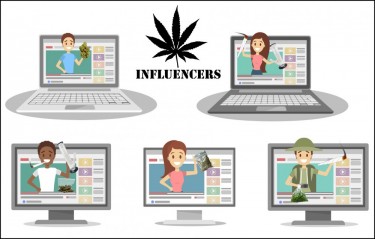
WHAT CANNABIS INFLUENCERS ARE OUT THERE??