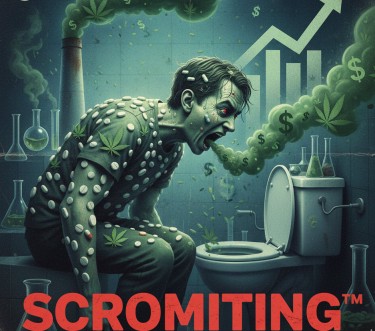




What Is Scromiting and Why Is It Going Viral
You might have seen some viral news going around that cannabis causes scromiting.
Scromiting is the slang term used for cannabis hyperemesis syndrome (CHS), an actual medical condition characterized by episodes of both screaming and vomiting among some users of cannabis - hence the term scromit.
Cannabis hyperemesis syndrome is a real medical condition, but why has it been going viral these days?
Real - But Rare: Context Is Important
Scromiting is a rare reaction that occurs among a small subset of heavy cannabis consumers. While you may be seeing viral reports of scromiting on the news, keep in mind that these are being spread by anti-cannabis groups who conveniently left out the fact that most cannabis consumers won’t ever experience scromiting in their lives.
Millions of Americans use cannabis every day for different reasons: anxiety, chronic pain, cancer, neurological conditions, insomnia, and much more. Guess what? They can go on their entire lives using weed without ever experiencing scromiting.
Remember, there is no known lethal dose for cannabis. Unlike alcohol, which directly causes cancer and thousands of deaths each year. Yet, cannabis is always held to a standard of perfection that is impossible to attain. All substances we consume on a daily basis, including legal medications that are easy to obtain over-the-counter such as ibuprofen, all have edge cases of unwanted side effects that are rare, but also real.
Potency, Dosage, and Education Matter
Spreading fear about cannabis unnecessarily by enabling news on scromiting to go viral benefits nobody.
Sure, modern-day cannabis is stronger than ever: States with legal marijuana offer high-potency THC in many different attractive forms and products these days. In some cases, even dabs can have as much as 80% THC, which is enough to cause severe unwanted side effects on individuals who don’t have enough experience with weed.
That said, most consumers who end up suffering from side effects such as scromiting are usually not well-educated on cannabis use. It’s important to have a good grasp on THC, the different forms of consumption out there, what constitutes a low to high dose, and how to responsibly consume or medicate. It’s usually seen that cannabis hyperemesis syndrome affects people who consume heavily over a long period of time, especially high THC, and without cycling or moderation.
This is an opportunity to improve consumer education, promote responsible use, and encourage dosing guidance.
Cannabis Affects Everyone Differently
The same dose and strain of weed can be received differently by two people. It can make a person energetic and lively, while it can make another person lazy and couch-locked.
There is no one-size-fits-all approach to cannabis.
That’s because it works through our endocannabinoid system. This regulatory network is so complex yet plays an important role in helping us regulate our stress, mood, appetite, digestion, sleep, pain, and even nausea. When we consume cannabinoids such as CBD and THC, they interact with the endocannabinoid system, and the effects vary from one person to another.
For a significant majority of the population, cannabis is anti-nausea or anti-emetic. In fact, many chemotherapy patients take cannabis to aid with the nausea, so that they can keep food down and improve their chances of completing chemotherapy rounds. As a result, they’re able to have better survival rates. Cannabis’s antiemetic effects are so well-known, which is why cases of scromiting can seem like such a paradox.
Looking into biological reasons why cannabis hyperemesis may occur:
-
Genetic biological variability: Genetic and biological differences in the expression of cannabinoid receptors or one’s metabolism can be a reason why such a small subset of heavy cannabis consumers suffer from CHS. Additionally, differences in gut-brain signaling can also cause this.
-
Long-term cannabis use can chronically overstimulate CB1 receptors: Studies show that chronically overstimulating the CB1 receptors can severely disrupt the normal balance of the body’s emesis and enti-emesis signaling.
-
Biphasic response: Cannabis is biphasic, which means that it can have different effects at different doses. For example, in this case, it can be anti-nausea at average doses, but it may actually cause nausea in extremely high doses due to chronic stimulation of the endocannabinoid system pathways.
The bottom line is that cannabis isn’t dangerous or bad in the broader sense. It just means that our individual biology is important. In the same vein, some people can drink several cups of coffee a day without any issues, while others experience heart palpitations and anxiety. Even exercise, which is universally considered healthy, can cause hormonal disruptions when the wrong type of workout is used by someone with a very specific physiology.
We Need Smarter Harm-Reduction Messaging
We’ve said it before, and we’ll say it again: context changes everything. Instead of falsely accusing cannabis of causing scromiting, we need smarter harm-reduction messaging that guides the public to:
-
Take tolerance breaks
-
Consume small doses of THC instead of high doses
-
Experiment with CBD or CBD-dominant strains
It all goes back to responsible cannabis use.
CONCLUSION
When we encounter headlines about scromiting or cannabis hyperemesis syndrome, we should approach with caution but most importantly critical thinking. It’s spreading fast because fear will always travel faster than nuance, but the average cannabis consumer really shouldn’t be worrying so much.
Cannabis is not bad, but we do need to do better by educating ourselves. This is why regulated marijuana markets are so important: they pave the way for proper labeling, awareness, and harm-reduction strategies.
Let’s get rid of sensationalism and focus on science. Cannabis is, and will always be, one of the safest natural therapies out there. Viral headlines may cause panic temporarily but the medicinal effects of cannabis will make more of an impact.
MORE ON SCROMITING, IS IT BIG PHARMA, READ ON...