

The prohibitionists had a prediction. Legalize cannabis for adults and you'd unleash a wave of teenage stoners, a generation of red-eyed, academically ruined adolescents stumbling toward society's exit. It was the rallying cry for decades of opposition, the rhetorical trump card pulled out every time a legalization ballot measure threatened to pass.
The data, once again, doesn't cooperate.
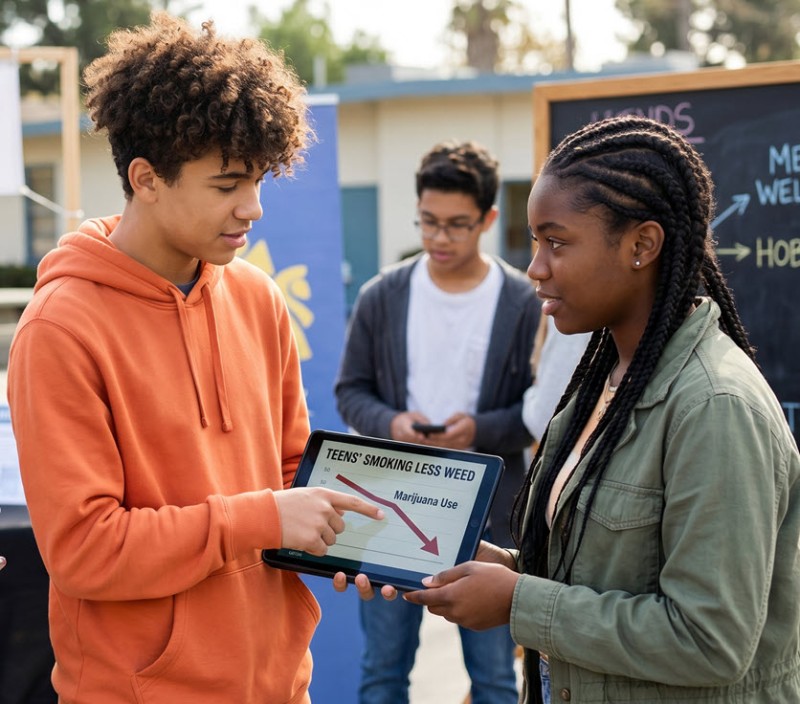
Minnesota's Department of Health just released the latest results of its triennial Minnesota Student Survey, and the headline reads like a prohibitionist's nightmare: there has been a 57.7 percent statewide drop in self-reported past-year cannabis use from 2013 to 2025 among 8th, 9th, and 11th graders combined. "96 percent of students report not having used cannabis in the last month," the department said in its release. Gov. Tim Walz legalized adult-use cannabis in 2023, making this the first survey cycle conducted since the state ended prohibition.
Legalization came. The teenage weed apocalypse didn't.
This isn't a Minnesota anomaly. A report from the Marijuana Policy Project found that youth marijuana use declined in 19 out of 21 states that legalized adult-use marijuana, with teen cannabis consumption down an average of 35 percent in the earliest states to legalize. A research letter published by JAMA in 2024 found no evidence that states adopting adult-use legalization laws led to an increase in youth cannabis use. A separate JAMA study similarly found that neither legalization nor the opening of retail stores led to increases in youth consumption.
The pattern is consistent. The conclusion, if you're willing to follow the evidence, is that regulated markets with age-gated retail simply don't put more cannabis into teenage hands than black markets do. Dealers don't card.
But here's where I want to pump the brakes on the victory lap, because crediting legalization with the decline is just as intellectually lazy as blaming it for a spike that never happened.
The Bigger Picture Nobody Wants to Talk About
Minnesota's teens aren't just smoking less weed. They're doing less of almost everything previous generations considered a teenage rite of passage.
The CDC's 2023 Youth Risk Behavior Survey found that only 32 percent of high school students had ever had sex, meaning 68 percent had never had sex at all. The share of high-school students who had ever had sexual intercourse fell from 54 percent in 1991 to 47 percent in 2013, then down to 30 percent in 2021. That's a generational collapse in one of the most reliable teenage behaviors in recorded survey history.
In 1991, over 64 percent of U.S. high school seniors had been drunk at least once. By 2024, it was just 33 percent. Two-thirds of that decline occurred after 2012, not coincidentally the year smartphones became ubiquitous.
Less sex. Less drinking. Less weed. The kids aren't alright, exactly. They're just... different.
The National Institute on Alcohol Abuse and Alcoholism noted that in-person social time among people aged 15 to 24 saw especially steep declines, with average time spent with friends dropping from 30 hours a month in 2003 to 10 hours a month in 2020. You can't smoke out at a party you're not attending.
Young people today spend more time online and less time socializing face to face. That means fewer parties and fewer drinking occasions. The ever-present risk of being photographed while intoxicated and having that photo circulate has made risky behavior less appealing. Add parental location tracking apps, helicopter supervision, and a generation that grew up being photographed and documented from birth, and you have a behavioral environment that has nothing to do with what the legislature did or didn't pass.
Location tracking has effectively made it impossible for teens to lie to their parents. If a teenager claims to be at a friend's house but is attending a party, at least one parent in that friend group is liable to notice the discrepancy. With the ubiquity of smartphone cameras and social media, one unwanted photo can expose bad behavior to parents and school administrators alike.
The surveillance state starts at home, apparently.
Correlation Is Not the Point
The legalization advocates will run with the Minnesota numbers, and they're right to push back against prohibitionist fearmongering. The data dismantles the "legalization causes teen use" argument completely. But claiming legalization caused the decline is a separate, equally unsupported assertion.
What the data actually shows is that Gen Z, as a cohort, has pulled back from almost every category of risky or socially transgressive behavior that previous generations participated in. Cannabis is one line item in a much longer list. Teenagers today are less likely to drive drunk, less likely to have unprotected sex, less likely to binge drink, less likely to smoke cigarettes, and less likely to use hard drugs. They are more likely to be indoors, online, and consuming entertainment rather than seeking it through social risk-taking.
One particularly strange data point from the Minnesota survey: 8th, 9th, and 11th graders reported thinking that over half of their peers (54 percent) use cannabis, but 92 percent of students reported never using cannabis. The perception of peer drug use is wildly disconnected from the reality. Which raises an interesting question about where these kids are getting their social reference points. They're probably getting them from screens, not from parties.
The argument that a regulated, taxed, age-gated retail system is better for youth protection than black market prohibition still holds. That remains true regardless of what's driving the behavioral trends. Licensed dispensaries checking IDs represent a structurally sounder approach to keeping cannabis away from teenagers than relying on dealers to exercise ethical restraint.
But the broader cultural story here is more complicated, and more worth exploring, than "legalization good, teen use down." A generation that has grown up with infinite on-demand entertainment, chronic social anxiety, constant parental surveillance, and the implicit knowledge that every moment of public behavior is potentially documented doesn't need a legal framework to discourage risky behavior. The culture already discourages it, relentlessly, through the architecture of digital life itself.
Whether that's progress or its own kind of problem is a conversation worth having.
The Minnesota Student Survey is conducted every three years among students in grades 5, 8, 9, and 11. The full results were released by the Minnesota Department of Health in April 2026.
WHY DO TEENS SMOKE LESS AFTER LEGALIZATION, READ ON...