
Late last month, the United States announced a formal exit from the World Health Organization.
This was shocking news, to say the least, considering that the US was one of the agency’s top donors. However, US President Donald Trump already began the motions for their withdrawal about a year ago, as he criticized the World Health Organization for being too focused on China during the pandemic. The US Department of Health and Human Services even went as far as accusing the WHO of mishandling the pandemic.
According to Trump, the initial recommendations made by the agency on how nations should have responded to the pandemic were harmful, saying they failed to contain the outbreak in several countries. True to his brand, he also accused the WHO of doing all this deliberately - and without the evidence for it.
Trump also said during his briefings that the WHO knew more about the impact of the virus than they made public, saying they could have warned the world about it earlier. Trump’s criticisms projected blame to the WHO instead of taking accountability for the US’s early pandemic responses.
The Impact of the US Leaving the WHO
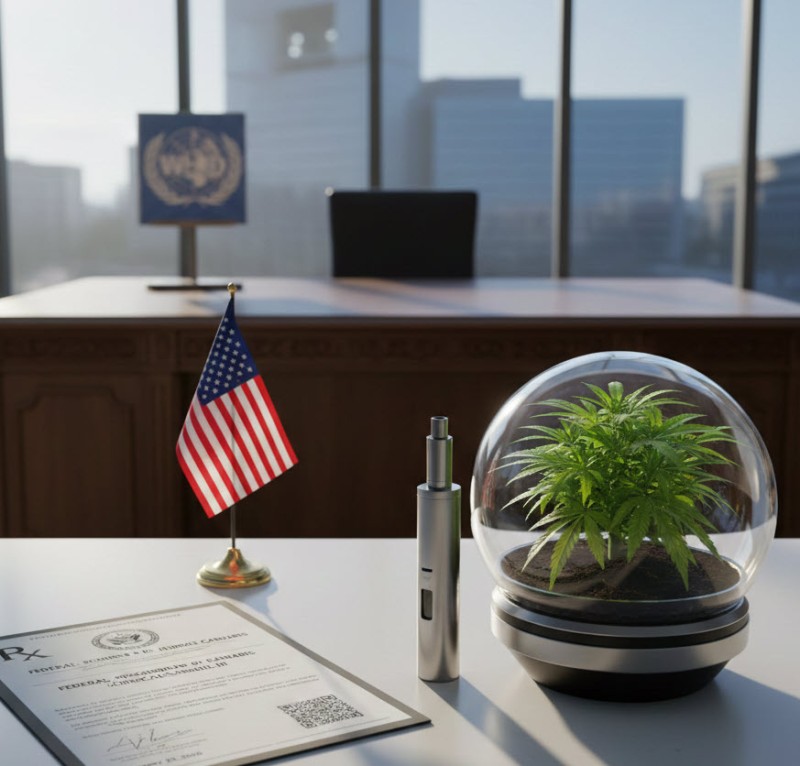
There are serious, long-lasting implications for the US leaving the World Health Organization, including potential consequences for medical marijuana, the future of cannabis reform, and drug policy as a whole.
After all, the WHO has played a pivotal role in helping shape how marijuana is researched, classified, and even made legitimate globally, and not just in the United States. Since America has withdrawn from the agency, we are now left to think about what would happen to medical marijuana now that the world’s biggest economy has removed itself from the main institution that is responsible for guiding international drug and health policies.
Even if the WHO doesn’t directly influence laws in the US, it has still influenced federal agencies as well as courts throughout history. Recommendations from the WHO have been used in debates to advance discussions on scheduling, public health risk assessments, and research permissions to name a few important matters.
Why The World Health Organization Is Important for Medical Marijuana
The World Health Organization is an important public health agency, but it does so much more than that.
The WHO’s Expert Committee on Drug Dependence helps evaluate various psychoactive substances and writes recommendations that have an important influence on international drug treaties, including the UN Single Convention on Narcotic Drugs.
It was the WHO that, in fact, recommended removing marijuana from the list of Schedule IV substances back in 2019, after years of reviewing. After all, Schedule I is the most restrictive category, typically reserved for substances or drugs that have little to no medical value. The recommendations were adopted a year later by the United Nations, which was a breakthrough in medical history: for the first time in history, marijuana was officially recognized internationally as having medical value.
The decision was revolutionary, as it finally gave many countries the scientific and political back-up they needed to research medical marijuana. In addition, it helped validate the argument that medical marijuana was deserving of further research, since it was blocked by its classification, alongside drugs such as heroin.
Consequences for Medical Marijuana Patients
Medical marijuana patients may not feel it yet, though the effects of exiting the WHO may come soon. Since medical marijuana users depend heavily on physician education, standardized guidelines, and research on the plant, areas that are influenced by the WHO, there are serious impacts here.
Since the US left the World Health Organization, it will no longer be aligned internationally on issues affecting patients. These include, but are not limited to, inconsistencies in product standards, slower development when it comes to clinical best practices, and potentially continued stigma in the world of mainstream medicine.
The science behind medical marijuana may be advancing in the rest of the world, but it will be uneven and can affect areas where it is drastically needed.
The Message
Exiting the World Health Organization sent a message to the rest of the world that having an international consensus on health and medicine matters is not mandatory. This signaling, whether we like it or not, doesn’t have a positive impact. Countries that have been on the fence about legalizing cannabis, especially those in Asia and parts of Latin America, may feel emboldened by the US’s decision and feel that disengagement from having shared standards, which is important.
Additionally, symbolic hierarchy comes into play. Developing nations usually look to bigger powers such as the United States for cues about drug policy direction. Since the US has now left the WHO, this can reduce the perceived importance of multilateral cooperation.
As a result, this may standardize a fragmented approach to international drug policy, leading to ignorance of evidence-based recommendations based on political convenience. Sadly, we should be role model by focusing on public health outcomes, among other key decisions.
The disengagement reinforces uncertainty, and uncertainty can hinder reform for many more years.
CONCLUSION
The United States’ withdrawal from the World Health Organization doesn’t necessarily mean the end of medical marijuana progress, but it can seriously complicate matters. Marijuana reform in the country has always suffered from uneven advancements, driven by federal restrictions that other nations don’t have. In addition, factors such as economic pressure, patient advocacy, and cultural attitudes come into play.
Global health institutions like the World Health Organization do matter because they help shape the rules and priorities. Stepping away from these agencies brings about a large risk of isolating the United States at a time when marijuana is already reaching the medical mainstream.
THE WHO ON CANNABIS, READ ON...