


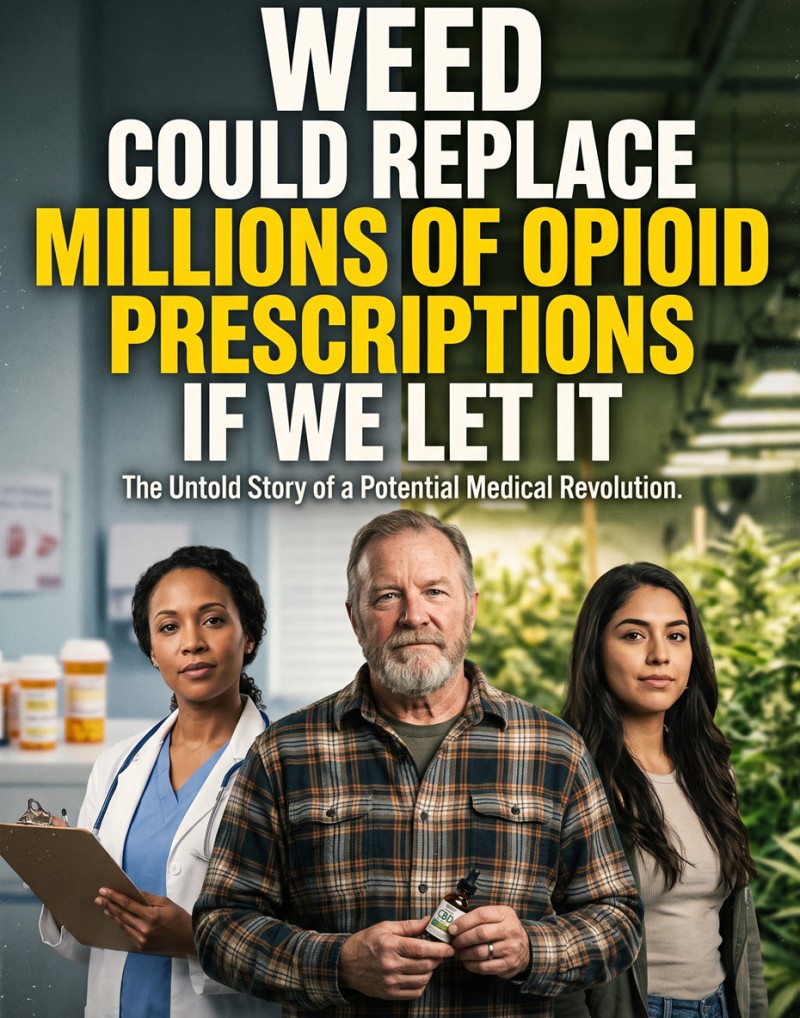
Opioids have caused one of the deadliest health crises in the history of the United States.
These drugs have notoriously caused hundreds of thousands of deaths alone, primarily through overdoses of synthetic opioids including prescription painkillers, fentanyl, and heroin. In 2024 alone, approximately 54,700 deaths were caused by opioids alone, while around 88% of opioid overdose deaths were caused by illicit drug use such as fentanyl.
According to the World Health Organization, some 80% of 600,000 deaths around the world in 2019 were associated with opioid use.
Over the past few years, however, there has been a significant decline in opioid-related fatalities. There have been important tools that contributed to this: increased naloxone distribution, improved surveillance, and fentanyl test strips. But we aren’t giving enough credit to how cannabis legalization has also played a critical role in reducing opioid-related deaths.
We also aren’t discussing the root cause enough, primarily because it’s uncomfortable to talk about: doctors have played a role in this all, because they have spent decades prescribing extremely addictive opioid drugs to millions of patients, even if their conditions didn’t warrant a drug as strong as these. Each opioid prescription written led to a potential dependency and thus each drug refill was risky.
The question was no longer about how we could reduce overdoses, but focused on how we could reduce the number of people that needed opioids.
That’s where cannabis comes in.
The Data Is Already There
Researchers have been keeping close tabs on what happens when states legalize cannabis, specifically its impacts on public health.
It has been difficult to deny a pattern that has kept surfacing: the growth of cannabis dispensaries as well as the rise in cannabis legalization laws have been associated with fewer opioid poisonings and overdoses. This is not a coincidence: it’s right in line with something that the medical community has also known: if there are legal, lower-risk alternatives for treating pain, more patients will use them instead of addictive, deadly painkillers.
According to data published in Preventive Medicine Reports, investigators from the University of Kentucky Department of Health found that the adoption of statewide laws regulating marijuana use both for medical and recreational use is linked to notable declines in non-fatal opioid overdoses. For the study, researchers analyzed the association between marijuana legalization laws and the incidence of non-fatal opioid overdoses among 107 million adults who were enrolled in health insurance plans sponsored by their employers.
The participants were sourced nationwide, representing all 50 states. Researchers concluded that non-fatal overdoses reduced after states regulated marijuana access. They specifically noted, “MCD [medical cannabis dispensary openings] was associated with a 15.47 percent reduction in NF-OPD [non-fatal opioid poisoning diagnoses],” they said.
“These findings suggest that expanded access to cannabis through MCD and RCL is associated with lower NF-OPD among adults with employer-sponsored insurance, particularly among males and younger adults, who are disproportionately affected by the opioid epidemic,” they concluded.
Meanwhile, another study (of many) reinforced that cannabis use has been linked to reductions in opioid use among patients with chronic pain.
Based on the findings of a study conducted by researchers from the University of Pennsylvania, Perelman School of Medicine, patients using state-legal cannabis products reduced their dependency on opioids taken for chronic pain.
“Opioid misuse related to chronic pain treatment remains a significant public health challenge in the United States. Although cannabis has historically been characterized as a potential gateway drug, it may also serve as a harm-reduction tool for some patients seeking to reduce reliance on higher-risk opioid medications,” researchers wrote. “These results suggest that medical cannabis may be a useful adjunct therapy for reducing opioid use, relieving chronic pain, and improving health-related quality of life,” they concluded.
The Implications of Cannabis as a Substitute for Opioids
Think about what the findings of these studies mean: chronic pain is one of the top reasons opioids are prescribed. Whether it’s for arthritis, injury, back pain, post-surgery recovery or more, even if a fraction of these prescriptions could be replaced by weed, that would make a significant dent in the number of people who are crossing the threshold into risky opioid dependency.
Using cannabis instead of opioids makes total sense; there are thousands of studies out there proving how the plant’s valuable compounds can ease inflammation and thus pain. More than that, cannabis has also proven beneficial in treating addiction itself.
This is important because cannabis doesn’t have the same risks of overdose that opioids do. Cannabis is not addictive, and no one has died from overdosing on it.
There are also implications for the entire system: all states that have a legal cannabis market also have their own infrastructure such as dispensaries, regulated products, laboratory-tested formulations and potency, and many others; infrastructure that we need once chronic pain patients begin moving away from opioids.
Nothing better to catch the fall than a regulated, quality-controlled system to support natural healing.
Conclusion
We’re in the midst of seeing overdose numbers reduce, and that progress is truly worth protecting with everything we have. However, protecting it in the long-term requires that we face the problem head on: decrease the quantity of people who become dependent on opioids in the first place.
Cannabis, in a properly regulated system, is a remarkable tool that promotes healing in a way that no other pharmaceutical can. We just need the political backups to ensure cannabis is treated as an alternative to opioids.
THE OPIOID EPIDEMIC, READ ON...

WHY ARE WHITE WOMEN GETTING WIPED OUT BY OPIOIDS?