

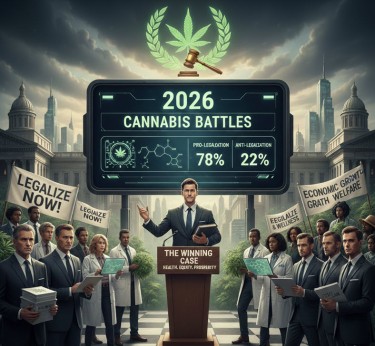
Since 2012, when Colorado and Washington became the first states to legalize recreational cannabis, the trajectory seemed clear: forward. State after state, the dominoes fell. Public support grew. The industry flourished. Medical patients found relief. Tax revenues poured in. The sky didn't fall.
It felt inevitable that cannabis prohibition's days were numbered.
But something changed about two years ago. The rhetoric shifted. The narratives evolved. The opposition, which had seemed resigned to defeat, suddenly found new energy, new funding, and new strategies.
And now, as we enter 2026, we're facing what can only be described as an existential threat to cannabis legalization. Multiple states are considering rolling back their legal markets entirely. Federal rescheduling turned out to be a corporate giveaway rather than real reform. Hemp bans are crushing a thriving industry. The propaganda machine is working overtime with "scromiting" scares and heart attack fears.
This is not business as usual. This is a coordinated, well-funded assault on cannabis freedom.
As Kyle Jaeger wrote in a recent Marijuana Moment op-ed: "Legal marijuana access faces an existential threat in 2026, and we must fight back."
He's absolutely right. This is the year we either defend the gains we've made, or we watch them erode under a renewed prohibitionist offensive backed by pharmaceutical money, law enforcement lobbying, and political opportunism.
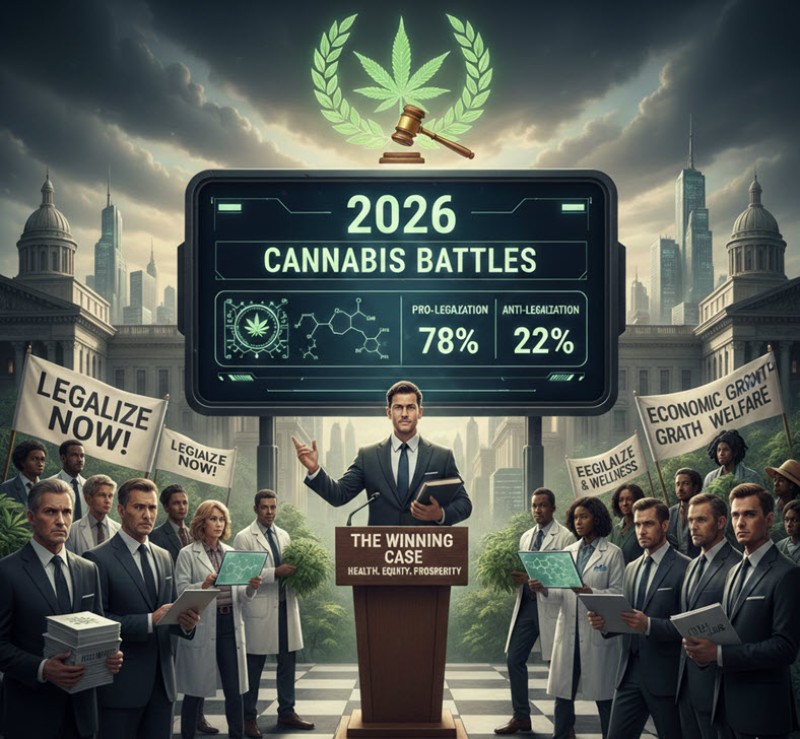
2026 is the year of the Great Cannabis Battles. And we need every advocate, every patient, every consumer, and every rational human being to show up and fight.
How We Got Here: The Coordinated Rollback
Let me be clear about what's happening. This isn't organic grassroots concern about public health. This is a calculated, multi-pronged strategy to roll back legalization by any means necessary.
The repeal efforts: Multiple states with existing legal cannabis markets are facing serious campaigns to repeal legalization entirely. These efforts are funded by:
-
Big Pharma interests (who lose billions to legal cannabis)
-
Alcohol industry lobbying (direct competition)
-
Private prison corporations (fewer arrests = less profit)
-
Law enforcement agencies protecting drug war budgets
-
Astroturf "parent groups" funded by pharmaceutical companies
The federal hemp ban: Congress effectively killed the $32 billion hemp-derived cannabinoid industry, putting 150,000+ jobs at risk and handing the market back to cartels and black market operators.
Schedule III as corporate capture: Trump's "reform" turned out to be exactly what critics predicted—a Big Pharma giveaway that creates pharmaceutical-grade compliance requirements small businesses can't afford while doing nothing for consumers or criminal justice.
The propaganda blitz: Coordinated media campaigns around "scromiting," heart problems, mental health crises, and potency panics—all timed perfectly to coincide with legalization debates and repeal efforts.
Restrictive regulations: Even in legal states, new regulations are making it harder for businesses to operate, reducing product variety, and pricing out small operators in favor of large corporations.
This is not coincidence. This is strategy.
And it's working because cannabis advocates have gotten complacent. We thought we'd won. We thought the momentum was irreversible. We thought public opinion had shifted permanently.
We were wrong.
The prohibitionists never gave up—they just changed tactics. And now they're coming for everything we've built.
Why 2026 Matters More Than Ever
Here's why this year is so critical:
State repeal efforts come to a head. Several states will vote on whether to maintain their legal markets. If even one state successfully repeals, it provides a blueprint for prohibitionists everywhere and shifts the narrative from "inevitable progress" to "reversible mistake."
Federal policy remains in flux. Schedule III implementation (if it happens) will determine whether the federal framework supports or crushes state markets. Hemp bans take effect. Enforcement priorities shift. The uncertainty alone is damaging markets and deterring investment.
The opposition is better funded than ever. Pharmaceutical companies are pouring money into anti-cannabis efforts. They've learned from their losses and adapted their messaging. They're using public health language while protecting private profits.
Public opinion can still shift. Despite majority support for legalization, that support is not deeply rooted. Fear campaigns work. Misinformation spreads. Without active counter-messaging, prohibitionists can erode public support gradually.
The legal cannabis industry is vulnerable. Banking restrictions, tax burdens (280E), and regulatory compliance costs have left many businesses on shaky ground. A coordinated attack during this vulnerable period could collapse markets.
This is the inflection point. We either defend legalization aggressively in 2026, or we watch the rollback accelerate in 2027, 2028, and beyond.
The 2026 Cannabis Activist Playbook
So what do we do? How do we fight back against well-funded opposition, coordinated propaganda, and political hostility?
We get loud. We get smart. And we update our talking points for 2026.
Here's your playbook for defending cannabis freedom this year:
Core Principle #1: Adult Access Is About Freedom
When discussing recreational legalization:
"This is about giving adults who pay taxes, work, and contribute to society a choice of recreational substance other than alcohol. Nobody is talking about giving cannabis to kids—just like beer isn't for kids. We're talking about adult freedom and bodily autonomy."
Key points:
-
Adult recreational legalization targets adults, period
-
Age restrictions work the same as alcohol and tobacco
-
This isn't controversial—it's giving responsible adults options
-
People under the age limit are not the target market and would be carded just like they are for beer
Counter their "protect the children" rhetoric: "We protect kids the same way we do with alcohol—age verification, penalties for sales to minors, and honest education. Prohibition doesn't keep drugs away from kids; it just ensures the dealers don't card. Legal, regulated markets actually reduce youth access."
Core Principle #2: Cannabis Is Safer Than Alcohol
When they claim cannabis is dangerous:
"Cannabis is safer than alcohol by every measurable metric. I'm not making this up—Professor David Nutt conducted comprehensive research creating an index of drug dangers and societal impacts. Alcohol ranks as one of the most harmful substances. Cannabis ranks far lower."
Key facts to cite:
-
Alcohol: 140,000+ deaths annually in the U.S.
-
Cannabis: Zero overdose deaths (ever, in recorded history)
-
Alcohol: Involved in 40% of violent crimes
-
Cannabis: Associated with decreased violence
-
Alcohol: Causes liver disease, brain damage, cancer, heart disease
-
Cannabis: No proven fatal dose, potential therapeutic benefits
-
Alcohol: 15% addiction rate
-
Cannabis: <9% dependency rate
The bottom line: "If alcohol is legal—and it absolutely should be, prohibition failed spectacularly—then cannabis should definitely be legal. It's simply safer."
Core Principle #3: Legalization Creates Safety Through Regulation
When they talk about black markets and crime:
"Legal cannabis creates jobs, generates tax revenue, and makes products safer through testing and regulation. Under prohibition, that revenue goes to cartels and criminals. Under legalization, it funds schools, roads, and public health programs."
Key points:
-
Legal markets eliminate black market exposure
-
Testing ensures purity (no fentanyl, no pesticides)
-
Regulation provides accountability
-
Tax revenue benefits communities
-
Jobs created for legitimate workers
-
Banking access reduces crime (less cash-based business)
Use the data: "We have legal cannabis in multiple states for over a decade now. We have data. Society hasn't collapsed. Teen use hasn't skyrocketed. Crime hasn't increased. Tax revenues are in the billions. These aren't theories—these are facts."
Core Principle #4: Evidence Over Fear
When they cite health concerns:
"I agree that nothing is without risk, which is why it's important to study, research, and educate people about cannabis. But here's the irony: prohibition prevents research. Under prohibition, we can't study it properly. Under legalization, research entities have access and we learn more than ever, allowing us to properly inform people before they use it."
Key talking points:
-
Schedule I status blocks research
-
Legal markets enable better studies
-
We need honest education, not fear campaigns
-
Risk exists, but it should be contextualized honestly
-
Comparison to legal substances provides perspective
Acknowledge concerns while demanding honesty: "Yes, cannabis affects the developing brain—so does alcohol, so does sugar, so do smartphones. We manage these risks with age restrictions and education, not blanket prohibition. Let's be honest about risks while also being honest about relative safety."
Core Principle #5: Home Growing Is a Fundamental Right
When they oppose cultivation:
"Cannabis is a plant. People should have the right to grow their own food and medicine at home. If you don't need to be dependent on Big Pharma or corporations for your health, you should have that right. This is basic self-sufficiency and autonomy."
Key arguments:
-
You can brew your own beer legally
-
You can grow your own tomatoes
-
You can cultivate medicinal herbs
-
Cannabis is no different—it's a plant
-
Home growing ensures access and quality
-
It removes corporate control over medicine
-
It's a matter of personal freedom and self-reliance
Connect it to broader principles: "The right to cultivate plants for personal use is fundamental to liberty. Governments don't belong in your garden dictating what you can grow for personal consumption. Period."
Core Principle #6: Life, Liberty, and Pursuit of Happiness
The fundamental argument:
"Your life, liberty, and pursuit of happiness are inalienable rights. No politician should convince you otherwise. If cannabis contributes to your happiness, your health, or your quality of life—and you're an adult harming no one—that's your right. The government exists to protect your rights, not dictate your personal choices."
This is the principle that cannot be compromised:
-
Bodily autonomy is fundamental
-
Government serves citizens, not controls them
-
Personal freedom includes substance choice
-
Harm to others justifies intervention; personal use does not
-
These principles apply to cannabis just as they do to alcohol, coffee, or any other substance
How to Use These Points Effectively
Stay principled: These talking points aren't about winning arguments—they're about stating fundamental truths that remain valid regardless of political climate or propaganda campaigns.
Don't get defensive: You're not asking for special permission. You're asserting fundamental rights. Frame it that way.
Use comparisons: Alcohol is your best friend in these debates. It's legal, it's dangerous, and everyone understands it. Cannabis is safer—full stop.
Cite evidence: Refer to actual studies, real data, and concrete examples from legal states. Don't make claims you can't back up.
Acknowledge concerns without conceding the argument: "Yes, there are risks" doesn't mean "therefore prohibition." It means "therefore education and regulation."
Make it personal: "I use cannabis for [medical condition/relaxation/creativity]. It helps me [specific benefit]. Why should that be illegal when alcohol—which is more dangerous—is sold in every grocery store?"
Turn it back on them: "Why are you more concerned about adults using cannabis than about [alcohol deaths/pharmaceutical opioid crisis/actual violent crime]? Where are your priorities?"
The Sticky Bottom Line: Fight or Fall Back
Let me be brutally honest: we're losing ground.
The momentum that felt inevitable three years ago has stalled. The opposition has regrouped, refinanced, and returned with better tactics. They're not just defending prohibition anymore—they're actively rolling back legalization gains.
Multiple states may repeal their legal markets in 2026. The federal hemp industry is being destroyed. Schedule III benefits corporations while screwing consumers. Propaganda campaigns are shifting public opinion. Small businesses are being crushed by compliance costs and banking restrictions.
If we don't fight back—loudly, aggressively, and strategically—we will lose.
But here's what gives me hope: we have truth on our side.
Cannabis is objectively safer than alcohol. Legalization demonstrably works better than prohibition. Adult freedom is a fundamental right. The evidence supports our position completely.
The prohibitionists have money, but we have facts. They have fear, but we have experience. They have corporate backing, but we have grassroots passion.
This is winnable. But only if we actually fight.
So here's what I'm asking from every person reading this:
Show up. Attend town halls. Contact representatives. Vote in local elections. Join advocacy organizations. Don't assume someone else will do it.
Speak up. Use these talking points. Educate your family. Challenge misinformation. Write letters to editors. Comment on social media. Make your voice heard.
Support the industry. Buy from legal sources when possible. Support small businesses over corporations. Help legitimate operators survive the assault.
Donate to reform organizations. NORML, Marijuana Policy Project, Drug Policy Alliance—these groups need funding to counter pharmaceutical lobby money.
Don't let them take your weed. Seriously. This is about more than cannabis—it's about freedom, autonomy, and the right to make personal choices. If we let them roll back cannabis legalization, what's next?
2026 is the year of the Great Cannabis Battles. The prohibitionists are coming for everything we've built. They're well-funded, well-organized, and highly motivated.
But so are we.
Or at least, we better be. Because if we sit this one out, we lose. Simple as that.
Stand up. Fight back. Defend your rights.
Don't let them take us back to prohibition.
The stakes couldn't be higher. The time to act is now.
See you on the battlefield, cannabis family. Bring your facts, your passion, and your refusal to back down.
Because we're not going back. Not without one hell of a fight.
TRUMP GOES SCHEDULE 3, WHAT DOES IT MEAN, READ ON...
TRUMPS CANNABIS CHANGES LOOKS LIKE A WIN, BUT ITS NOT.