

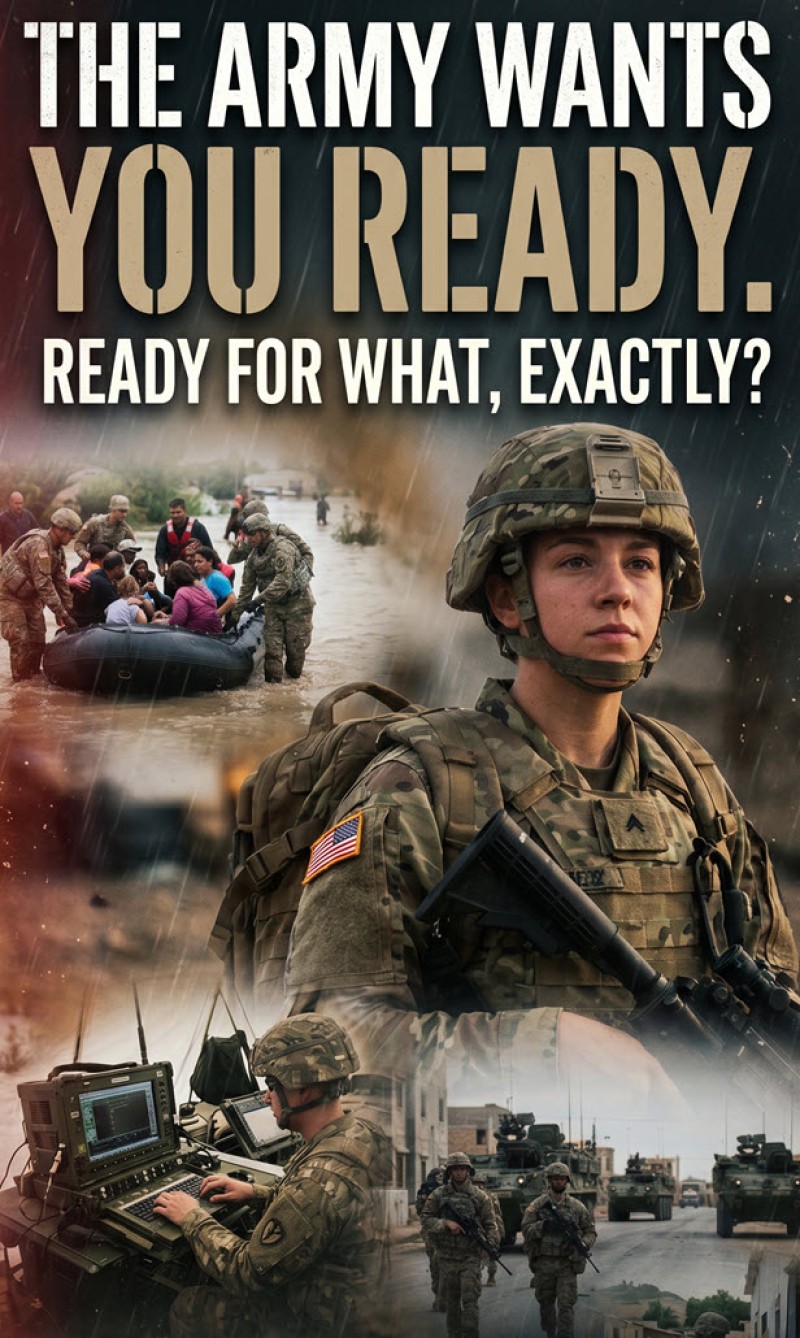
On May 14, 2026, the U.S. Army published an article titled 'Breaking Down Cannabinoids: How They Compromise Readiness.' The piece, written by two staffers from the Directorate of Prevention, Resilience and Readiness, runs through the standard arguments: cannabinoids impair judgment, Delta-8 can cause false positives, CBD is banned regardless of what your state law says, zero tolerance is the policy, full stop.
Fine. The Army banning substances that might impair combat effectiveness is not news. It's policy. It's been policy for decades.
What is interesting is the timing.
The Iran Context Nobody Wants to Say Out Loud
The Trump administration set a six-week deadline for Iran negotiations sometime in the spring of 2026. That deadline passed. There are no signs of resolution. The military posture in the region has not de-escalated. And on May 14, the Army published a piece about cannabis and readiness.
Connect the dots in whatever direction you want, but readiness is a word with a specific operational context. The Army doesn't publish readiness articles in a vacuum. When the Directorate of Prevention, Resilience and Readiness starts pushing internal messaging about soldier fitness and substance compliance, it's reasonable to ask: readiness for what mission? Readiness over what timeline?
The article itself quotes Colonel Kevin Goke: 'Soldiers are able to perform their duties to the fullest extent while maintaining the high standards required to defend the nation.' Defend the nation. Not secure a base. Not conduct peacekeeping. Defend the nation. Obviously this is a typical talking point, but come on – if your conspiratorial whiskers aren’t twitching at this then you might be a fed!
The Draft Question
I'll say the thing that's uncomfortable to say: if the United States moves toward sustained military engagement with Iran, the all-volunteer force faces serious capacity questions. The military has struggled with recruitment shortfalls for several years running. The Army missed its recruiting goals by approximately 10,000 soldiers in fiscal year 2023. The Navy and Air Force have reported similar gaps.
Iran is not Afghanistan. It is a country of 90 million people with a professional military, ballistic missile capability, regional proxy networks, and the demonstrated will to absorb sustained conflict. A military campaign against Iran would not be a quick, decisive operation. The Trump administration's stated timelines have already proved optimistic.
The question of whether a draft could be reinstated is not paranoia. It's a legitimate policy question that several military analysts and foreign policy scholars have raised publicly. The Selective Service System is still active. Every male American between 18 and 25 is still required to register. The infrastructure for conscription never went away. It's been dormant, not dismantled.
If a draft were to be reinstated, the pool of available recruits would include millions of cannabis users — people who, in 38 states and Washington D.C., have been living in an environment where cannabis use is legal, normalized, and widely practiced. The Army's sudden interest in explaining cannabinoid policy to a general audience, as opposed to purely internal military communications, is at minimum curious.
What the Army's Own Science Says
Here's where the Army's position runs into some friction. The article leans heavily on impairment concerns — judgment, coordination, reaction time. These are real effects of acute THC intoxication. Nobody serious disputes this. You shouldn't drive a tank stoned. This is not a controversial position.
But the Army's blanket ban extends to CBD, which is non-intoxicating, and to any cannabinoid product regardless of how long ago it was consumed. THC metabolites can be detectable in urine for weeks after a person was last intoxicated. A soldier who used cannabis legally in a recreational state six weeks ago, is no longer impaired by any pharmacological measure, and has performed every readiness metric at standard — that soldier is still subject to discharge under current policy.
That's not a readiness policy. That's a moral judgment dressed up as one.
The Army has, in recent years, quietly shown flexibility on cannabis in the context of recruitment, allowing waivers for prior use in some cases because recruitment pressure left no other option. The zero-tolerance posture and the waiver reality exist simultaneously. What that tells you is that the policy is less about operational readiness and more about institutional culture and legal liability.
The Harder Question
If young Americans are going to be asked to fight in Iran — asked, or eventually compelled — they deserve a government that is honest with them about what it's asking. Not a 195-page drug strategy document invoking psychosis studies. Not a military readiness article that treats CBD lotion as a national security threat. Honest accounting.
The cannabis readiness article is a small thing. In the context of a potential major regional war, it barely registers. But small things are often where you see the logic of larger systems most clearly. The Army is tightening discipline. Messaging is going out about substance compliance. Recruitment remains a challenge. The operational environment is escalating.
Readiness is a word that means something. And right now, the Army is trying to ensure it has enough ready soldiers.
Ready for what is the question they're not answering.
CANNABIS AND THE DRAFT, READ ON...
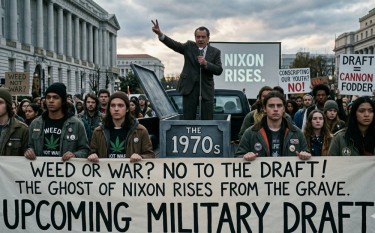
CANNABIS AND THE MILITARY DRAFT, WHAT WE KNOW!