

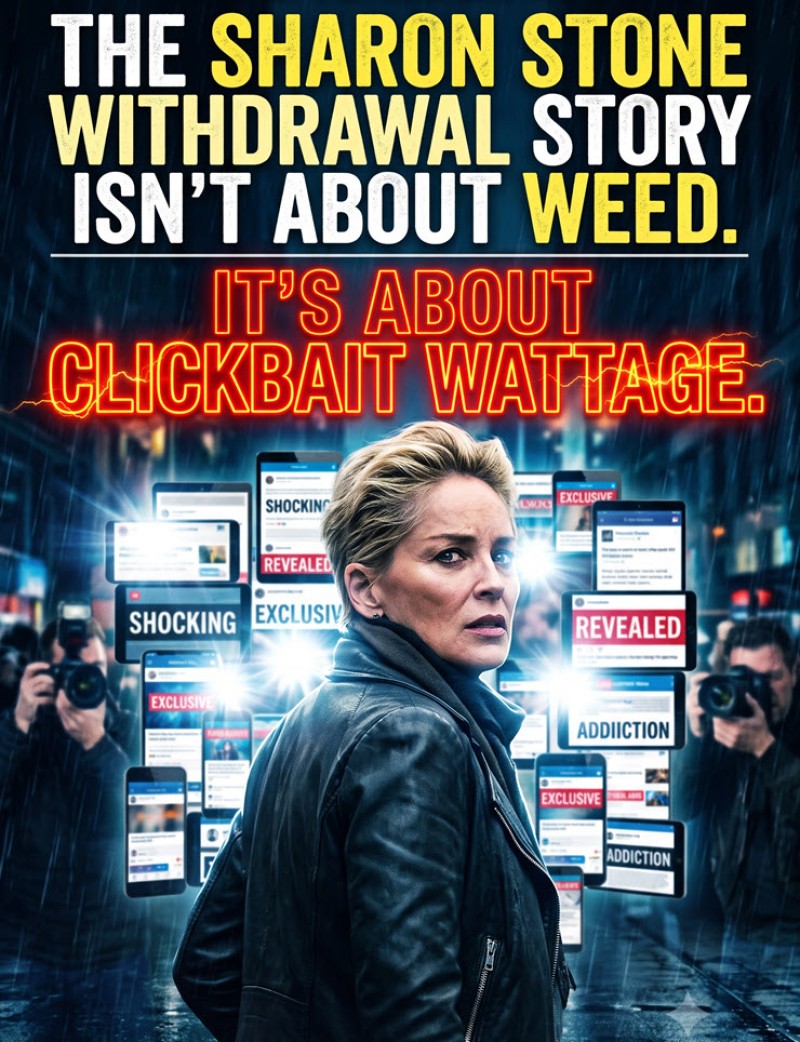
Sharon Stone spent a month feeling like garbage after she quit smoking pot, and now half the internet is treating it like a public service announcement about the plant itself. I've been smoking cannabis for over twenty years. I've taken long breaks. I know what withdrawal feels like from the inside, not from a press junket. And I'm telling you the Stone story isn't evidence that cannabis has become dangerous. It's evidence that nobody bothered to ask what she was actually smoking, how much, or how often — details that would have made the story make sense instead of making headlines.
Here's what she told Variety. Stone came off one of her stroke medications last September against her doctor's advice, and the withdrawal from that was brutal enough that she compared it to kicking heroin, four and a half months of feeling sick. Separately, she also quit weed, and that knocked her sideways for about a month. Her neurologist told her he'd seen people die in the emergency room from marijuana. She thinks the culprit is what's being added to cannabis today, telling Variety, "It's not like you're pulling it out of the ground anymore. It's not like when we were kids."
I don't doubt she was sick. I doubt the diagnosis.
What a month of misery actually tells you
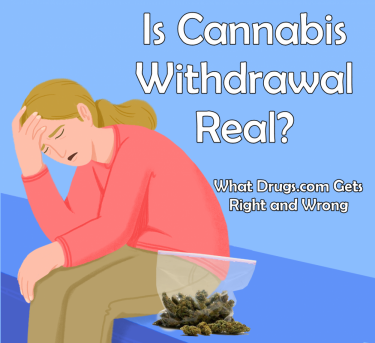
Cannabis Withdrawal Syndrome is real. It's been in the DSM-5 since 2013, so this isn't fringe theory — irritability, insomnia, appetite changes, restlessness, sometimes nausea. What it is not, according to the Cleveland Clinic and every addiction specialist who's spoken on this, is life-threatening on its own. People don't die from cannabis withdrawal. They die from what's happening around it — other substances, other medications, underlying conditions that get destabilized when the routine that was managing them disappears.
Stone had just spent four and a half months in a medically supervised nightmare coming off a stroke drug her doctors said she should never stop taking. Her nervous system was already in a state of chaos before she touched her cannabis habit. Layering a second withdrawal on top of that isn't the same experiment as a healthy person putting down a joint for a week. It's closer to pulling two support beams out of a house at the same time and being surprised the ceiling sags.
I'm not a doctor and I'm not diagnosing Sharon Stone. I'm telling you that the simplest explanation on the table — a woman with a serious neurological history had a rough physiological month after stacking two withdrawals back to back — doesn't need a villain. It got one anyway, because "modern weed is poison" is a better headline than "recovery is complicated."
The potency problem is real, but it's not the mystery ingredient
Where Stone is onto something is potency, and the numbers back her up. Dr. Chris Tuell, clinical director of addiction services at the Lindner Center in Cincinnati, told Fox News that flower ran about 3 to 5 percent THC in the 1980s. Today's flower routinely tests at 20 to 30 percent, and concentrates can clear 90 percent. That's not a rumor, that's a lab result, and it's the actual difference between the plant I started smoking in the early 2000s and what's sitting on a dispensary shelf right now.
But potency isn't the same claim as "they put something in it." Higher THC percentage isn't an additive. It's the same molecule, delivered in a much bigger dose, often through a completely different route — dabs, live resin, disposable vape carts — none of which resemble a hand-rolled joint of mid-shelf flower from a bag. If Stone was smoking or vaping concentrate-level THC daily, her body built a dependency on a dose that dwarfs anything a casual smoker from my generation ever touched. Stopping that cold is going to hit differently than stopping a nightly bowl of what we used to call "regular" weed.
There's a mechanical piece of this nobody talks about either. When you inhale cannabis smoke or vapor and hold it, roughly 90 percent of the THC absorption happens in the first three seconds. Holding a hit longer doesn't get you more high, it just irritates your lungs for nothing. But it does tell you something about dosing behavior. People chasing a bigger effect from high-potency products aren't just smoking something stronger, they're often smoking it the same intense way they always have, on top of a product that's five to ten times the strength. That's not a recipe hidden in the plant. That's math.
What twenty years of actual use looks like
I'll give you my numbers, because anecdote is cheap unless you're specific. I smoke daily. Less than two grams of mid-potency flower, most days. I'll break into rosin or RSO from something I grew myself when I want to mark an occasion, and I like playing with kief and infusing food, but that's a garnish, not a diet. If I stop for a week, I'm cranky for two or three days, restless sleep, maybe a short fuse. By day seven I'm done. That's the withdrawal curve every honest longtime flower smoker I know describes, and it lines up with what the clinical literature says about typical cannabis withdrawal timelines.
Nobody I know who smokes the way I smoke is reporting a month of being sick as a dog. The people I hear about having a rough time coming off cannabis are the ones dabbing all day, living on vape pens, treating 80-90 percent THC concentrate like it's a cigarette. That's not a knock on them. It's a different relationship with a different product, and it deserves different research and different warnings than the ones we've been recycling since Reefer Madness.
The industry needs to study this, not just sell it
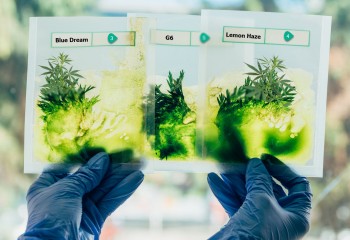
This is the part that should actually worry the cannabis industry instead of embarrassing it. Vape cartridges aren't just flower boiled down. Plenty involve solvents, cutting agents, and thickeners to keep oil from crystallizing, and the long-term inhalation safety data on a lot of those additives is thin at best. That's a legitimate regulatory conversation, and it's separate from the THC potency conversation, and both of them are separate from whatever caused Stone's month of misery. Collapsing all three into one viral scare does nothing for public health. It just gives prohibitionists a celebrity quote to wave around.
And that's exactly what's happening. Stone's neurologist telling her he's seen people "dying in the emergency room from marijuana" is doing a lot of work in these headlines without any supporting detail. Dying from what, exactly? Cardiac events in people with existing heart conditions who took a massive edible dose? Psychiatric crises in people with a genetic predisposition to psychosis who hit an 80 percent concentrate for the first time? Those are real, documented risks at the extreme end of high-potency use, and they deserve real study. They are not the same claim as "cannabis withdrawal killed people in an ER," which isn't a thing the clinical literature supports. A vague quote from an anecdote-driven conversation shouldn't be treated as an epidemiological finding, and no outlet running this story bothered to ask the follow-up question.
This is where the industry has a genuine blind spot, and where I'll criticize my own side of the aisle. Legalization advocates spent decades fighting the false claim that cannabis is instantly dangerous, and in the process a lot of us got sloppy about acknowledging that dosage and delivery method actually matter. Potency creep happened fast, and the research establishment hasn't caught up. We need real longitudinal data on what daily concentrate use at 80-plus percent THC does to long-term dependency patterns, not because it proves prohibitionists right, but because consumers deserve honest information about the product they're buying instead of a marketing pitch dressed up as harm reduction.
Cannabis is a tool, not a lifestyle requirement
I love this plant. I've built a life and a body of work around it. But if you're hyper-stoned around the clock on the strongest concentrate you can find, take a week off and actually notice what happens to you. If day three feels like a health crisis, that's data, not a personality trait. Maybe the answer isn't quitting forever. Maybe it's sparking some mid-shelf flower again and asking yourself honestly why you needed to be that high, that often, in the first place.
There's no wrong way to live this life, and I'm not here to shame anyone's dab rig. But the point of cannabis was always to enhance the experience of being alive, not to replace it. If a month without it sounds unthinkable, the plant stopped being a tool a while ago.
Sources referenced: Variety interview with Sharon Stone as reported by Fox News Digital, AOL, LADbible, and High Times (July 2026); Cleveland Clinic on Cannabis Use Disorder and withdrawal; American Psychiatric Association DSM-5 criteria for Cannabis Withdrawal Syndrome; Dr. Chris Tuell, Lindner Center, via Fox News Digital.
IS CANNABIS WITHDRAWAL A REAL THINGS, READ ON...