
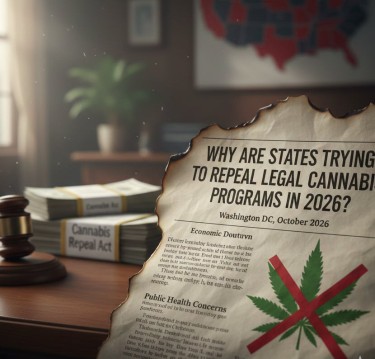
The Legalization Backlash: Why Your State Might Repeal Legal Cannabis in 2026
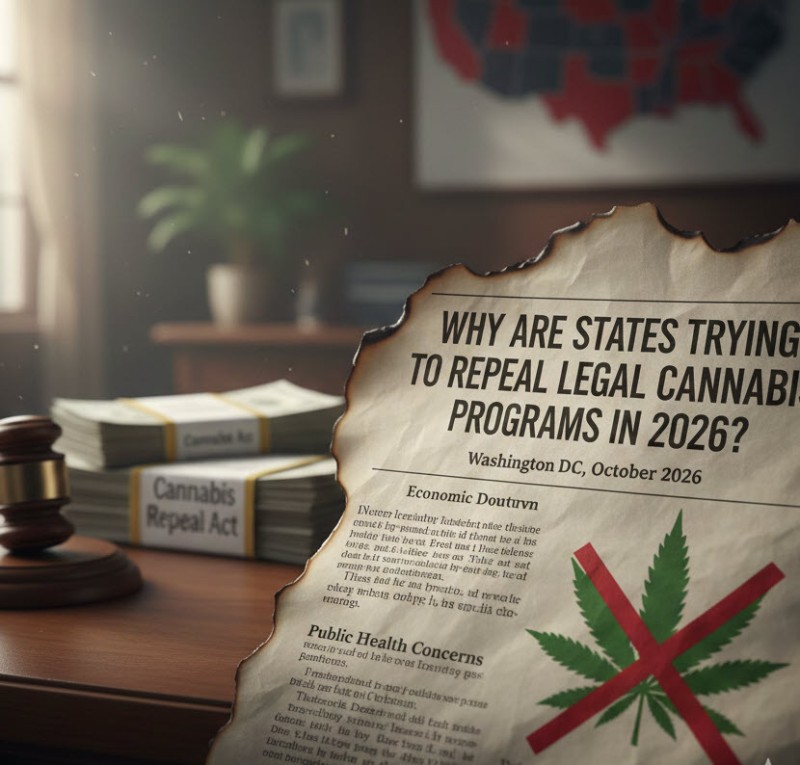
Just when you thought the cannabis legalization train was unstoppable, reality is about to slap you in the face. According to a recent Vice article, several states are considering repealing their legal cannabis markets in 2026. That's right—not just pausing expansion, not just adding more regulations, but actually rolling back legalization entirely and returning to prohibition.
If you've been celebrating legalization as a done deal, as inevitable progress that can't be reversed, you need to wake up. Cannabis legalization is fragile, it's under attack, and the forces pushing for repeal are powerful, well-funded, and deadly serious.
Let me break down what's happening, who's behind it, and why cannabis enthusiasts need to understand that legalization means absolutely nothing until cannabis is fully descheduled federally and we have real, permanent protections for consumers' rights to purchase, produce, and sell.
The Repeal Movement Is Real
Several states with existing legal cannabis markets are facing serious repeal efforts heading into 2026. We're not talking about states that rejected legalization—we're talking about states that legalized, implemented markets, generated tax revenue, and are now being pressured to undo all of it.
The pushback is coming from multiple directions:
Conservative Political Groups: Organizations that never accepted legalization in the first place are using every tool at their disposal to reverse it. They're funding ballot initiatives, lobbying state legislators, and running fear-based campaigns about "the dangers of legal weed."
Some Law Enforcement Organizations: Despite data showing that legalization doesn't increase crime and actually frees up resources for serious offenses, some law enforcement groups continue pushing prohibition narratives. Why? Follow the money—drug war funding, asset forfeiture, and institutional inertia.
"Concerned Parent" Groups: Often funded by pharmaceutical companies and other interests with skin in the game, these groups push narratives about protecting children while ignoring that legal, regulated markets are far better at preventing youth access than black markets.
Some Medical Professionals: Usually citing cherry-picked or misinterpreted data about "cannabis harms," conveniently ignoring the far greater harms of alcohol or pharmaceutical alternatives.
The arguments they're using are familiar: cannabis is too potent now, it's causing mental health crises, it's leading to impaired driving, it's harming children, the markets are "out of control," etc. Never mind that the data doesn't support most of these claims. Never mind that prohibition demonstrably failed for decades. The repeal movement isn't about facts—it's about power and money.
Who's Really Behind the Repeal Push
Let's talk about who actually benefits from cannabis prohibition and why they're fighting so hard to restore it.
Big Pharma: The pharmaceutical industry loses roughly $10 billion annually in states with legal medical cannabis. Every person who chooses cannabis for pain management, anxiety, insomnia, or other conditions is a person not buying their pills. Pharmaceutical companies have a direct financial interest in keeping cannabis illegal or so heavily restricted that they control the market.
They don't fund repeal campaigns directly—that would be too obvious. Instead, they funnel money through "concerned citizen" groups, medical associations, and advocacy organizations that do their dirty work while maintaining plausible deniability.
Private Prison Industry: Legal cannabis means fewer arrests, fewer prisoners, and less profit for private prison companies. The prison industry has lobbied against cannabis reform for decades and continues to fund opposition efforts through PACs and political donations.
Alcohol Industry: While some alcohol companies have started investing in cannabis, many still view it as a direct competitor. When people choose cannabis over alcohol (which they increasingly do), alcohol sales drop. The industry has a vested interest in limiting cannabis access.
Some Law Enforcement Agencies: Not all law enforcement opposes legalization—many departments support it or are neutral. But some agencies benefit from prohibition through federal drug war funding, asset forfeiture programs, and institutional structures built around the drug war. Ending prohibition threatens their budgets and justifications for certain programs.
Pharmaceutical-Funded Medical Organizations: Many medical groups that oppose cannabis legalization receive significant funding from pharmaceutical companies. Their "medical concerns" often align suspiciously well with their funders' financial interests.
Conservative Political Organizations: Some genuinely ideological, others funded by the interests listed above. They provide the political muscle and grassroots organizing to turn corporate interests into repeal movements.
What Repeal Would Actually Mean
If states successfully repeal their legal cannabis markets, here's what happens:
Thousands of Jobs Lost: Legal cannabis industries employ tens of thousands of people in each state—budtenders, growers, processors, delivery drivers, compliance officers, testing lab workers, and countless ancillary businesses. Repeal means all those cannabis jobs disappear overnight.
Tax Revenue Evaporates: States have become dependent on cannabis tax revenue, generating hundreds of millions of dollars annually. That money funds schools, drug treatment programs, law enforcement, and infrastructure. Repeal means those revenue streams disappear, forcing budget cuts or tax increases elsewhere.
Black Market Returns: Does anyone actually believe that repealing legal markets will make cannabis go away? The demand doesn't disappear—it just moves back to unregulated black markets where products aren't tested, sellers don't check IDs, and criminal organizations profit instead of taxpaying businesses.
Arrests Resume: The most tragic consequence—people go back to being arrested, prosecuted, and incarcerated for possessing a plant. Lives get destroyed, families get torn apart, and communities get devastated, particularly minority communities that are disproportionately targeted by drug enforcement.
Medical Patients Suffer: People using cannabis for legitimate medical conditions lose legal access. They're forced to either break the law or return to pharmaceutical alternatives that are often less effective and more dangerous.
Why State-Level Legalization Was Never Enough
Here's the uncomfortable truth that too many cannabis advocates don't want to acknowledge: state-level legalization without federal descheduling is built on sand. It can be washed away with a single election, a ballot initiative, or a legislature that decides prohibition was better after all.
As long as cannabis remains federally prohibited—and especially as long as it's in the Controlled Substances Act—state-level legalization is vulnerable:
Federal Preemption: The federal government can, at any time, decide to enforce federal prohibition in legal states. We've been lucky that most recent administrations chose not to, but that's policy, not law. Policy changes with elections.
Banking and Financial Services: Cannabis businesses can't access normal banking because banks are federally regulated. This creates security risks, limits growth, and makes legitimate businesses operate like criminal enterprises.
Interstate Commerce: You can't move cannabis across state lines, even between two legal states, because crossing state lines triggers federal jurisdiction. This prevents economies of scale and market efficiency.
Tax Discrimination: Section 280E of the tax code prevents cannabis businesses from normal tax deductions, crushing them with effective tax rates up to 80%. This applies regardless of state legality because cannabis is federally prohibited.
Research Barriers: Federal Schedule I status continues to restrict research, limiting our understanding of cannabis's benefits and risks. This allows prohibitionists to claim "we don't know enough about cannabis" while maintaining the barriers that prevent us from learning more.
Vulnerability to Repeal: As we're seeing now, state legalization can be reversed by motivated opposition groups, particularly when federal prohibition provides legitimacy to anti-cannabis arguments.
The Only Real Solution: Federal Descheduling
Moving cannabis to Schedule III doesn't solve these problems. Rescheduling to Schedule II doesn't either. The only solution that provides actual, lasting protection is complete removal from the Controlled Substances Act—descheduling.
Here's what federal descheduling would accomplish:
Permanent Legal Status: Cannabis would be treated like alcohol or tobacco—regulated but fundamentally legal. States could still regulate within their borders, but they couldn't create criminal penalties for simple possession without violating federal law.
Banking Access: Cannabis businesses could use normal banking and financial services, making operations safer and more efficient.
Interstate Commerce: Businesses could operate across state lines, allowing for economies of scale and market development.
Tax Fairness: Section 280E would no longer apply, allowing cannabis businesses normal tax deductions like any other industry.
Research Freedom: Scientists could study cannabis without DEA permission and regulatory barriers, accelerating our understanding of the plant's properties.
Federal Protection: State repeal efforts would be meaningless for individual possession and use rights, just as states can't criminalize alcohol possession even if they wanted to.
End to Federal Prosecution: No more federal cannabis arrests, prosecutions, or imprisonments. The federal war on cannabis users would be over.
Why You Shouldn't Celebrate Yet
Every time a state legalizes cannabis, we see celebrations, victory laps, and proclamations that prohibition is over. But prohibition isn't over until it's over federally, and even state-level legalization is increasingly under threat.
The cannabis community needs to understand that legalization is not a done deal. It's not inevitable. And without federal descheduling, every state-level victory is vulnerable to reversal.
We need to stop acting like we've won when we've barely established a beachhead. The forces opposing cannabis legalization haven't given up—they've regrouped, developed new strategies, and are actively working to roll back the gains we've made.
Celebrating state legalization while cannabis remains in the Controlled Substances Act is like celebrating winning the first quarter while you're still losing the game.
What Needs to Happen
If we want permanent, protected cannabis legalization, here's what has to happen:
Federal Descheduling: Complete removal from the Controlled Substances Act. Not Schedule III. Not Schedule II. Off the schedule entirely.
Consumer Rights Protection: Federal law protecting individuals' right to possess, purchase, and grow cannabis for personal use, regardless of state laws.
Interstate Commerce: Clear federal framework allowing cannabis businesses to operate across state lines.
Expungement: Automatic expungement of all federal cannabis convictions and federal incentives for states to do the same.
Social Equity Programs: Real investment in communities destroyed by the War on Drugs, not token programs that get defunded or ignored.
Banking Reform: Explicit federal protections for cannabis businesses to access banking, insurance, and financial services.
Research Funding: Federal funding for cannabis research to replace the decades of knowledge suppressed by prohibition.
Anything less than this leaves cannabis legalization vulnerable to repeal, federal interference, and continued prohibition by another name.
The Sticky Bottom Line
States are seriously considering repealing their legal cannabis markets in 2026. This isn't hypothetical—it's happening. The repeal movement is funded by pharmaceutical companies, private prisons, and other interests that profit from prohibition. They're using the same tired fear-based arguments that didn't work before, but in today's political climate, they might succeed.
The fundamental problem is that state-level legalization without federal descheduling is inherently unstable. As long as cannabis remains in the Controlled Substances Act, state legalization can be rolled back with a ballot initiative or a change in state government.
Cannabis enthusiasts need to stop celebrating half-measures and demand what we actually need: complete federal descheduling. Not Schedule III. Not "medical marijuana programs." Not "decriminalization." Full descheduling with federal protections for individual rights to possess, purchase, grow, and consume.
Until that happens, every state-level legalization victory is temporary. Every legal market is vulnerable. Every celebration is premature.
The repeal movement proves that prohibition advocates haven't given up. They're fighting harder than ever, and they have deep pockets funding their efforts. The question is: are we ready to fight back with the same intensity for real, permanent legalization?
Because anything less than federal descheduling means the battle isn't over. It's just getting started.
TRUMP TO RESCHEDULE WEED SOON, READ ON...