
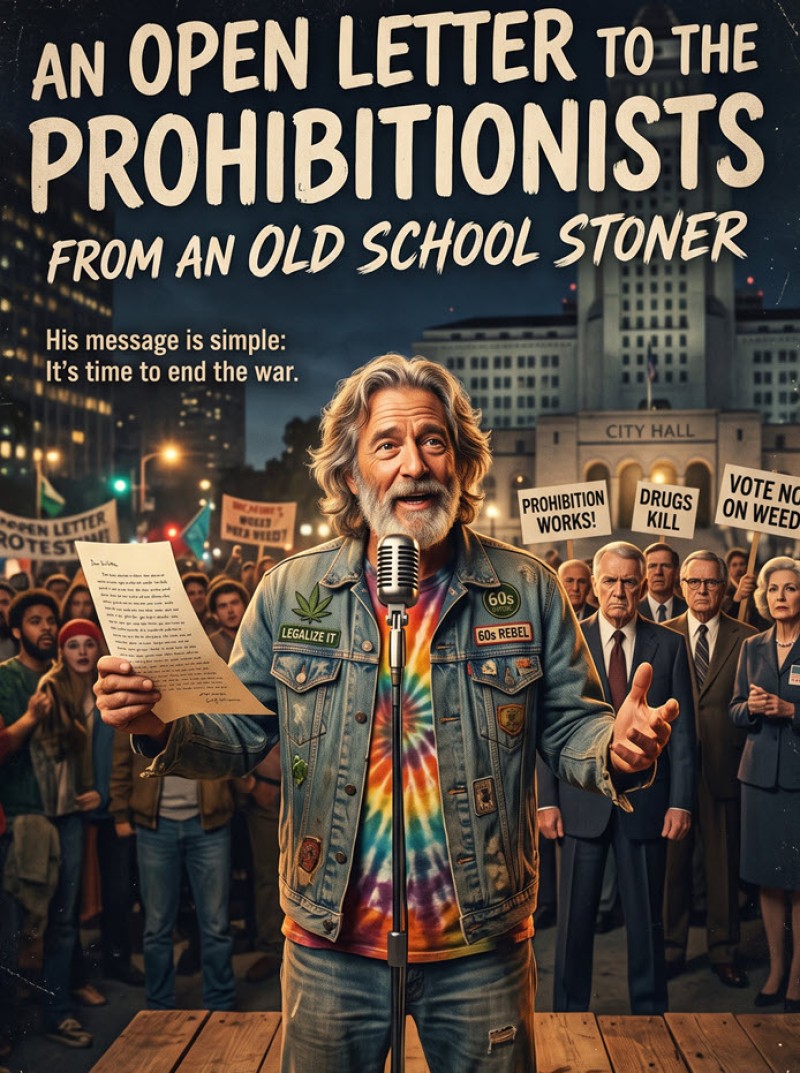
To whoever is still out there drafting the next crackdown, still lobbying to walk back forty years of hard-won ground, still convinced that if you just tighten the screws one more turn the plant will disappear: I want to talk to you directly, one adult to another, without the theater.
I'm an old school stoner. I was here before legalization was a punchline on late-night television, before dispensaries had loyalty programs, before anybody put a leaf on a billboard. I remember when this plant could cost you your kids, your job, your freedom, your life, and people smoked it anyway, because some things are worth the risk. So when I hear rumblings about reversing course, about reclassifying, recriminalizing, rebuilding the machinery of the drug war one quiet regulation at a time, I don't feel panic. I feel something closer to recognition. We've been here before. We know how this goes.
So let me save you some time and tell you plainly: it won't work.
Not because we're stubborn for the sake of it, but because you're fighting a fight you already lost once, against people who have nothing left to lose and everything to remember. Throw the full weight of the federal government at this if you want. Fund the task forces, run the ad campaigns, resurrect the old scare tactics with a fresh coat of paint. You will not put this plant back in the box. You'll only remind an entire generation why the box needed breaking in the first place.
Here's the part that should worry you more than anything: if you succeed in rolling this back, even partially, you won't kill the cannabis movement. You'll resurrect it. Right now, weed is almost boring. It's in gummy form at the grocery store, discussed on daytime television, taxed like a bag of chips. That's what winning looks like, and it's a little unglamorous. But criminalize it again, even a little, and you hand us back the one thing prohibition always accidentally gives its opponents: a symbol. You'll make this plant mean something again, the way it meant something during the Reagan years, the way it meant something when Nixon's own advisors admitted, decades later, that the drug war was never really about drugs. Every generation that's tried to legislate this plant out of existence has ended up advertising it instead. Congratulations in advance.
I need you to understand what year it is. This is 2026. The world you're trying to drag us back to doesn't exist anymore, and it's not coming back. The moral architecture you built your case on, the idea that this plant is uniquely dangerous, uniquely corrupting, a first domino toward ruin, has been picked apart by the same scientific institutions you claim to trust. Decades of state-level data on legalization didn't produce the chaos you promised. Teen use didn't spike. Crime didn't explode. The sky, stubbornly, did not fall. You had your natural experiment, fifty states running slightly different versions of the same policy, and the results came back, and they didn't back you up.
And there's something else working against you now that wasn't fully in play during the last drug war: trust, or rather, the absence of it. COVID did something to this country's relationship with official pronouncements that isn't coming back either. People watched public health guidance shift, contradict itself, get politicized in real time, and they learned to ask questions instead of simply complying. That skepticism cuts in every direction, including toward you. When the same institutional voices that fumbled a pandemic response tell us cannabis is dangerous, we don't take it on faith anymore. We ask for the data. Usually, you don't have it.
So here's my honest offer, and I mean this without malice: give up.
Not because we're bigger than you, though we might be, but because there is no version of this fight where you get a different result than last time. You've already tried arresting us. Millions of arrests, entire communities gutted, families broken over a plant that outlasted every president who tried to eradicate it. You've already tried killing us, funding the paramilitarized raids, backing the foreign eradication campaigns that turned into body counts. You've already tried taking everything else, the right to vote, the right to work, the right to raise our own kids, all stripped from people over cannabis convictions that wouldn't earn a citation in half the country today. And here we are anyway. Bigger. Louder. Better organized. With actual industries, actual jobs, actual tax revenue funding actual schools in the states that let this thing breathe.
Let's talk history for a second, because you keep acting like this fight started with legalization ballot initiatives in the 2010s, and it didn't. Richard Nixon's own commission, the one he appointed in 1972 to study marijuana and build the case against it, came back and told him personal possession shouldn't be a crime at all. He buried the report. Ignored his own experts and launched the war on drugs anyway, later confirmed by his own aide to have been less about drugs and more about disrupting Black communities and the antiwar left. That's not activist folklore. That's on the record, in Nixon's own administration's words, decades later. So when you talk about "restoring order" or "protecting the community," understand that the very foundation you're building on was, by the confession of the people who built it, never really about the plant in the first place. We've known that for a long time. It's part of why we don't scare as easily as you'd like.
We will overgrow you. That's not a slogan I made up for effect, it's just what happens when you try to legislate against a plant that grows in ditches. You cut it back, it comes back thicker. We will grow more. We will share more. We will organize more. There is no ending this by force, because force is the one tool you've already exhausted, across five decades, at a cost of over a trillion dollars, with nothing to show for it but overflowing prisons and a public that stopped believing you somewhere around the Clinton administration.
I also want to address the practical side of your threat, because I don't think you've thought it through. The legal cannabis industry now employs hundreds of thousands of people and generates billions in state tax revenue every year, money that funds schools, roads, and public health programs in states that chose regulation over prohibition. Try to unwind that and you're not just fighting stoners with signs, you're fighting governors who don't want to lose that revenue, employers who don't want to lose that workforce, and voters in both parties who've grown comfortable with a legal market that mostly just works. Prohibition doesn't eliminate demand, it just moves supply back underground, out of tested, regulated, tax-paying channels and into whatever fills the vacuum. You'd be trading dispensaries with ID checks and lab results for exactly the unregulated, unaccountable market you spent decades claiming to be against. That's not a policy win by any definition you'd recognize.
But I want to be honest with you about something else too, something bigger than weed, because I think you're missing the actual scope of what you're up against. This was never only about the plant. Cannabis was always the easiest entry point into a much larger argument about who gets to decide what belongs in your own body and your own mind. That fight doesn't end at the dispensary door. It extends to every substance, every medical choice, every altered state that a free adult might choose to explore without asking your permission first. Weed is just the symbol, the mascot, the thing that made the argument legible to people who'd never thought about drug policy before. The actual goal is bigger: full sovereignty over our own consciousness, backed by the same bodily autonomy arguments this country claims to believe in everywhere else.
So go ahead, if you're determined to. Write your bills. Fund your task forces. Try to convince a country that just spent a decade watching this experiment succeed that it was all a mistake. I'll be here when you're done, same as I was here before you started, rolling one up, unbothered, because I've already watched this movie, and I know how it ends. It ends with you, eventually, quietly, admitting you were wrong, the same way every prohibitionist before you eventually had to.
We're not stopping. We're not slowing down. And the harder you push, the more of us you'll make. That's not a threat. It's just how this particular plant, and the people who love it, have always worked.
One more thing, and then I'll let you get back to drafting whatever you were drafting. This letter isn't written out of hatred for you personally. Some of you believe what you're doing is protecting people, and I understand the impulse even where I think the evidence has moved past it. But belief isn't a substitute for outcome, and the outcome of prohibition, every single time it's been tried against this plant, has been more harm, more incarceration, more distrust, and eventually, more of us. If you want a different result this time, you'll need a different approach than the one that's already failed twice. I'm not holding my breath, but the door's open if you ever want to actually look at the data instead of the fear.
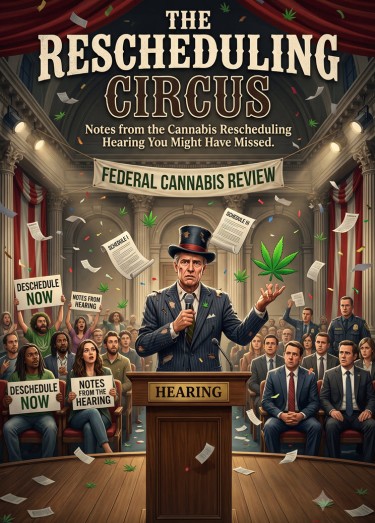
See you at the next hearing.
THE LATEST DEA HEARINGS ON WEED, READ ON...