
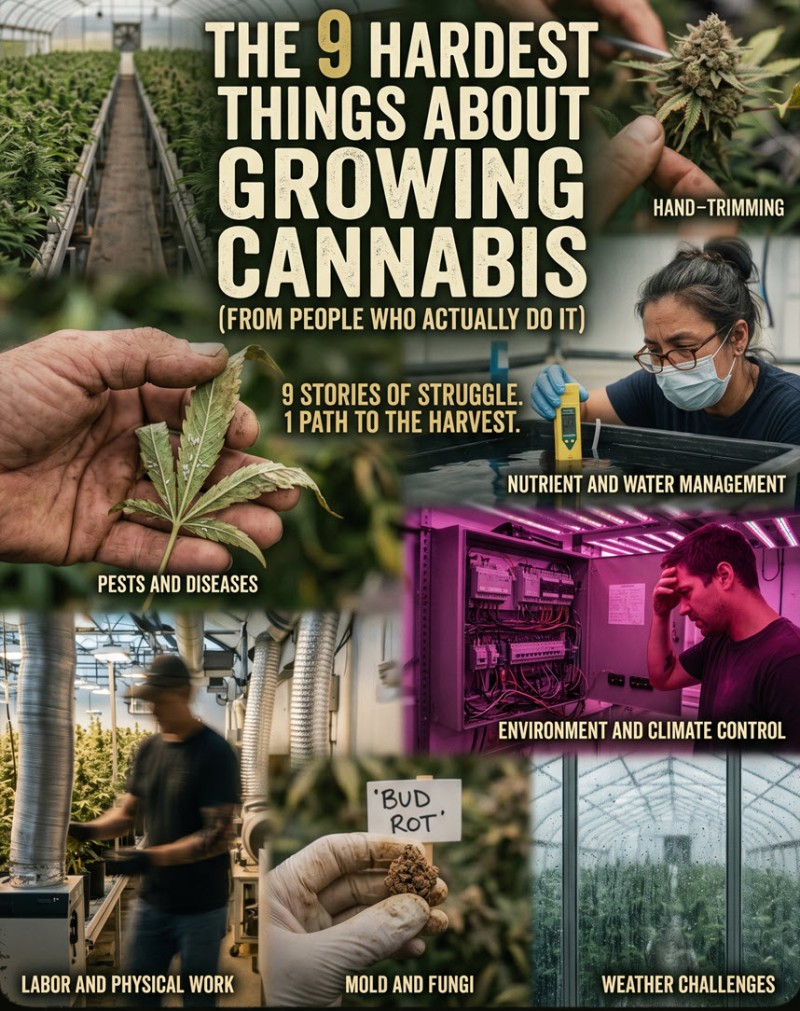
Nobody Told Me It Would Be Like This: The 9 Hardest Things About Growing Cannabis (From People Who Actually Do It)
Growing cannabis looks deceptively simple from the outside. You plant a seed, water it, give it some light, and in a few months you harvest something you can smoke. The internet is full of tutorials that make it seem like a slightly more complicated version of keeping a houseplant alive.
Then you actually do it.
A recent Reddit thread asked growers to name the most challenging thing they didn't expect, and hundreds of people answered with the kind of hard-won honesty that no beginner's guide bothers to include. No sponsored content, no brand partnerships, no reason to sugarcoat anything. Just growers telling other growers what actually got them.
I parsed the whole thread. Here is what came up, ranked from the most commonly reported to the least, with the practical solutions people actually found useful. If you're new to growing, consider this the guide you wish you'd read first.
1. Drying and Curing — The Step That Breaks More Grows Than Anything Else
More people cited drying and curing their cannabis as their hardest challenge than any other single issue. Not pests, not nutrients, not lighting. The end of the process. After months of careful work growing a plant, growers discovered that the quality of the final product depends enormously on what happens in the two to four weeks after harvest — and almost nobody covers this phase adequately.
The problem isn't simply getting the weed dry. It's getting it dry at the right rate, at the right temperature, with the right humidity, while preserving the terpenes that define the flavor and effect. Too fast and you get hay-smelling, harshly burning cannabis. Too slow and you get mold. The target window is narrow and unforgiving.
Most growers aim for a slow dry at 60-65°F with 55-60% relative humidity, taking seven to fourteen days before the stems snap rather than bend. Curing then extends this process in sealed glass jars, opened ("burped") daily for the first two weeks to release moisture and carbon dioxide. The total process from chop to fully cured takes four to eight weeks. Many beginners don't plan for this timeline at all.
Pro tip: A dedicated cure space matters more than most growers admit. Wine coolers modified with a Inkbird humidity controller — the "wineador" method borrowed from cigar enthusiasts — give you stable temperature and humidity in a compact unit. One commenter in the thread living in a desert climate specifically cited the Cannatrol as a purpose-built version of this. If your environment is extreme (very dry, very humid, or very hot), get a controlled cure space before you harvest.
Pro tip: The paper bag method (placing buds in paper bags during the drying phase) can help moderate moisture loss but doesn't fix an uncontrolled environment. It's a bandage, not a solution.
Pro tip: One grower accidentally discovered that leaving trimmed buds sealed in jars without burping for an extended period — during a vacation — produced exceptionally sticky, pungent results. This isn't a recommended method, but it suggests the cure benefits significantly from time. Don't rush it.
2. Environment Control — Temperature, Humidity, and the Fight to Keep Both Consistent
Right behind drying and curing in frequency was the challenge of keeping the grow environment stable. Temperature swings, humidity spikes, inadequate ventilation, and the sheer difficulty of keeping a tent or room within target parameters around the clock hit growers harder than they expected.
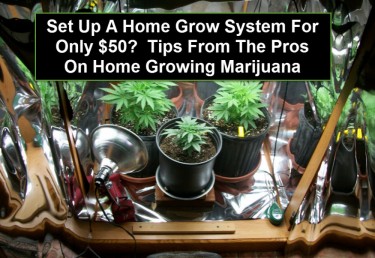
Cannabis wants a fairly specific environment: 70-85°F during the light period, lower by about 10°F during dark, with relative humidity around 50-70% in veg dropping to 40-50% in flower to reduce mold risk. Getting these numbers in a living space with real seasons, real weather variation, and a heating and cooling bill that reflects every choice you make requires more active management than most beginners realize.
Summertime is particularly punishing. More than one commenter in the thread described tents running 85°F or higher even with home AC set to 70. Indoor tent grows produce substantial heat from the lights, and removing that heat requires either upgrading lighting (LED over HPS generates less heat per photon), adding dedicated exhaust capacity, or accepting a higher electricity cost from supplemental cooling.
Mountain and desert climates have their own version of the problem: daily outdoor temperature swings of 35°F or more make it nearly impossible to maintain a stable tent without active heating overnight and active cooling midday.
Pro tip: If you're fighting summer heat, LED lights make a meaningful difference over HPS. Modern quantum board LED fixtures produce comparable results with roughly half the heat output. The upgrade pays for itself in reduced cooling costs and better temperature stability.
Pro tip: Negative pressure in the tent — ensuring the tent walls bow inward slightly — means all air exits through your carbon filter and fans, not through gaps. This solves both odor control and gives you real control over what air is entering versus leaving.
3. Pests — Spider Mites, Thrips, and the Grow You Didn't Finish
Bugs. The thread had plenty of stories about bugs. Spider mites, thrips, and russet hemp mites came up most frequently, with powdery mildew (technically a fungal issue but similar in impact) closely following. Several growers described cutting down entire crops weeks into flower because infestations got ahead of them.
The unanimous finding from experienced growers: prevention beats treatment in every scenario. Once spider mites are established in a flowering plant, options are limited and outcomes are poor. Miticides effective enough to kill an established mite population tend to leave residues you don't want in material you're about to smoke. Prevention infrastructure, on the other hand, is cheap and effective.
The clearest finding from the thread was about vectors. Clones and living soil were identified as the two primary ways pests enter a grow that didn't previously have them. One experienced grower reported years without a single pest outbreak simply by starting from seed, using synthetic nutrients, and keeping a strict clean-room protocol — never taking in clones, never bringing in new soil.
Pro tip: If you're getting clones from a dispensary or another grower, quarantine them for a minimum of two weeks in a separate space before introducing them to your main garden. Many pest problems traced back to clone introduction could have been stopped at that point.
Pro tip: SNS-209 (rosemary oil-based) used as a systemic drench and SNS-203 as a contact spray represent a fully organic integrated pest management (IPM) approach that multiple growers in the thread credited with zero pest issues across multiple grows. Apply preventively on a schedule rather than reactively when you see damage.
Pro tip: Hydroponic grows, particularly recirculating systems, effectively eliminate soil-borne pest vectors. One grower who switched from soil to hydro specifically cited the end of spider mite problems. The tradeoff is a steeper learning curve on nutrient management and more acute root zone issues when things go wrong.
4. Watering — The Single Skill With the Longest Learning Curve
The original poster in the thread named watering as their hardest challenge, and enough other growers agreed to put it firmly in the top tier. The issue is that proper watering can't be reduced to a schedule. It depends on the specific plant, pot size, medium, temperature, humidity, and stage of growth, all of which change constantly throughout a grow.
Both overwatering and underwatering cause problems. Overwatering deprives roots of oxygen, causing symptoms that paradoxically look like underwatering or nutrient deficiency. Growers see yellow leaves on an overwatered plant and add nutrients, making things worse. The cycle repeats until root rot sets in.
The skill experienced growers describe is reading the plant and the medium rather than following a fixed schedule. The weight method — lifting the pot when dry and noting that weight as the baseline, then watering when the pot returns to close to that weight — works well for soil. Some growers add a cheap digital scale to formalize this.
Pro tip: The pot-lift method: before planting, fill a pot with your dry medium and note its weight. After transplanting and watering to runoff, note the wet weight. Water again when the pot returns to somewhere between dry and a little above dry weight. This eliminates guesswork and builds an intuitive feel for the medium faster than any other method.
Pro tip: If you're repeatedly struggling with overwatering, consider perlite. Adding 20-30% perlite to a soil mix dramatically improves drainage and aeration, giving you a wider margin for error. Hempy buckets (pure perlite with passive bottom drainage) are nearly impossible to overwater by design.
Pro tip: Pot sizing matters. Transplanting through progressively larger containers — solo cup, then 1 gallon, then 3-5 gallon, then final size — encourages the root ball to fill each container before moving to the next. This makes watering more predictable at each stage and reduces root problems from sitting in too much unoxygenated medium.
5. Patience — The Crop That Teaches You to Wait
"Patience" appeared as an answer so many times it became almost a running joke in the thread. But the growers citing it weren't being glib. The patience problem manifests in several specific, costly ways.
The most common version is harvesting too early. Cannabis in its final two to three weeks before peak maturity is at its most visually impressive. Buds look done. They smell incredible. The urge to cut becomes almost physical. But harvesting two weeks early sacrifices significant potency and yield. Trichomes are still maturing. The plant is still building resin.
The reliable tool is a jeweler's loupe or microscope capable of 60-100x magnification to examine trichome heads. Clear trichomes mean the plant isn't ready. Milky/cloudy trichomes indicate THC is at or near peak. Amber trichomes indicate degradation to CBN, which produces a more sedative, body-heavy effect. The target ratio of milky to amber varies by desired effect, but the point is that harvest timing requires looking rather than guessing.
The second version of the patience problem is tinkering too much, too often. Multiple growers described ruining healthy plants by making constant adjustments — changing nutrients weekly, adjusting pH daily, trying new training methods mid-grow. Cannabis is resilient and will recover from most single stressors, but constant disruption prevents recovery. Stability is a grow input as real as light and water.
Pro tip: Change one variable at a time and give the plant at least two weeks to respond before evaluating. This applies to nutrients, training, environmental changes, and pH adjustments. The plant's feedback loop is slow. Faster feedback loops belong to you, not the plant.
6. pH Management — The Problem Nobody Mentions in the Beginner Guides
Multiple growers cited pH management as a challenge they didn't expect to matter as much as it does. The short version: cannabis has a relatively narrow pH window in which it can actually access the nutrients in its medium. Soil grows target 6.0-7.0 (optimally 6.2-6.8). Hydro targets 5.5-6.5. Outside these ranges, specific nutrients become chemically unavailable regardless of whether they're physically present in the medium. The result looks like nutrient deficiency and is often treated as such, when the actual problem is pH lockout.
Many beginners don't pH their water at all. Some don't know pH matters. The result is plants that look sick despite being fed correctly, triggering additional nutrient additions that make the pH problem worse. A decent pH meter costs $20-50 and eliminates this entire category of problems.
Pro tip: Calibrate your pH pen before every use with the included calibration solution. pH pens drift over time. An uncalibrated pen reading 6.5 might actually be measuring 7.2. This single discipline catches most pH measurement errors before they cause plant problems.
7. Light Management — More Than Just On and Off
Growers reported being caught off guard by how sensitive cannabis is to light period disruption and how much light intensity actually matters for yield quality. One grower in the thread described an expensive mistake: introducing clones obtained from a dispensary running 24-hour light cycles directly to an outdoor environment with 14-hour days. The plants flowered prematurely, had to be re-vegged, and caused weeks of additional grow time.
Indoor growers discovered that light intensity isn't linear in its effect. Low light grows weak, stretchy plants with poor structure and modest yields. Proper PPFD (photosynthetic photon flux density) — the technical measure of light intensity reaching the canopy — is specific to growth stage. Seedlings and clones want low intensity. Flowering plants want substantially more. Matching the right intensity to the right stage makes a material difference in output.
Pro tip: Light leaks during dark periods cause significant stress, particularly during flowering. Even a small, seemingly insignificant light source — an LED indicator on a fan, light through a tent zipper gap — can interrupt the dark cycle and cause hermaphroditism or re-vegging. Inspect your tent in complete darkness to find leaks before they matter.
8. Genetics — Where Results Are Set Before You Start
"Genetics is more important than nutes" came up multiple times, and it's a fundamental truth that marketing tends to obscure. You can grow the same variety with two different nutrition programs and see relatively similar results. You can grow two different varieties under identical conditions and see dramatically different results.
For new growers specifically, the implication is that buying seeds from a reputable breeder with stable, documented genetics reduces the difficulty of everything downstream. Mystery seeds from unknown sources introduce a variable you can't control. The plant might be male, hermaphrodite, or a phenotype with characteristics that work against your environment. Starting with seeds from established breeders like Bodhi, Elev8 Seeds, Humboldt Seed Co., or similar operations gives you documentation, community feedback, and predictable baselines.
The thread also raised the specific hassle of finding quality genetics in a market full of marketing and opacity. One grower put it precisely: navigating breeders in a market full of "intransparent bullshit" is itself a significant challenge. The solution is research before purchase — grow journals, third-party lab tests, and community reputation in grower forums rather than marketing claims.
9. The Hidden Challenges Nobody Likes to Admit
Several answers in the thread fell into a category I'd call the social and logistical challenges: keeping the grow secret in illegal states, dealing with the legal and practical risks of discovery, managing the scale jump from a tent to a larger operation, and handling the trim.
Trim jail is real. Trimming a significant harvest is tedious, sticky, physically demanding work that quickly loses whatever initial romance it might have had. Bowl trimmers (manual rotary devices that remove sugar leaves while sparing buds) cut this labor substantially for wet or lightly dried material. Wet trimming immediately after harvest is faster but results in faster drying. Dry trimming after the initial dry is slower but generally produces better-looking results.
The security issue deserves a straightforward mention. In the 24 legal adult-use states, home cultivation is permitted (usually 3-6 plants per adult). In the remaining 26 states and under federal law, growing cannabis is still a criminal offense. Multiple commenters in the thread were growing in states without home cultivation rights. The risk is real, the consequences range from civil fine to felony depending on jurisdiction, and no grow guide should pretend otherwise. Know your state's laws.
The Common Thread
Reading through hundreds of grower responses, one theme emerges above the specific challenges: growing cannabis well requires learning to manage systems rather than react to crises. The best growers in the thread weren't the ones who had the best solutions to pest outbreaks or overwatering — they were the ones who had built systems stable enough that those crises rarely happened.
Consistency in environment, watering, and timing beats reactive tinkering every time. The plant already knows how to grow. The grower's job is to remove obstacles, maintain stability, and then step back. As one commenter put it: it's been doing this for 50 million years. Get out of its way and let it work.
That's not to say growing is easy. It isn't. The challenges above are real, they catch experienced and new growers alike, and anyone who tells you otherwise is selling something. But the learning curve is finite, the feedback loops are honest, and few agricultural endeavors reward patience and attention as visibly as this one.
The first grow is always the hardest. Everything after that is refinement.
Thread source: r/farmingthebestgreens, Reddit (reddit.com/r/farmingthebestgreens). Additional grow science references: Cervantes, J., 'Cannabis Encyclopedia,' Van Patten Publishing, 2015; Bugbee, B., 'Cannabis Agronomy,' Utah State University (extension.usu.edu).
HOW TO GROW WEED ON A BUDGET, READ ON...