
The One Plant Alliance: Why It's Time to Stop Pretending Hemp and Marijuana Are Different
Sources: Community Newspapers | One Plant Alliance
Let me ask you a simple question: If I showed you two identical plants—same species, same genus, same genetic makeup—and told you one is legal and the other will get you arrested, would that make any sense?
Of course not. And yet, that's exactly the absurd reality we're living with when it comes to cannabis.
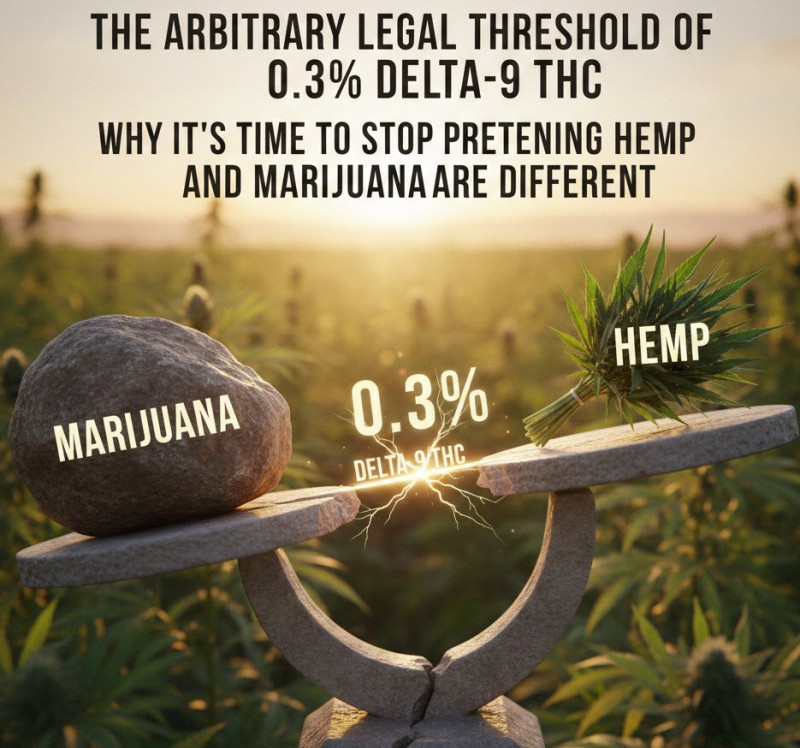
Hemp and marijuana are the same plant. Scientifically, legally, botanically—it's all Cannabis sativa L. The only difference is an arbitrary legal threshold of 0.3% delta-9 THC content. Below that line? Legal hemp. Above it? Schedule I controlled substance, sitting right next to heroin.
This isn't science. This is bureaucratic insanity masquerading as drug policy.
And there's a growing movement that's had enough of this nonsense. It's called the One Plant Alliance, and their message is simple, direct, and long overdue: It's one plant. Treat it like one plant.
The Arbitrary Line: How 0.3% THC Became Drug Policy
Let's start with the fundamentals, because understanding how we got here is crucial to understanding why the current system is broken beyond repair.
Hemp and marijuana are both Cannabis sativa L. They're not different species. They're not even different varieties in any meaningful biological sense. The only legal distinction between them is the concentration of delta-9 THC—and that distinction is based on a number (0.3%) that was essentially pulled out of thin air by a Canadian scientist in 1976 who was trying to differentiate fiber crops from drug crops for agricultural purposes.
That's right. The legal threshold that determines whether you're a farmer or a felon was never based on pharmacology, toxicology, or public health research. It was a botanical classification tool that got codified into law.
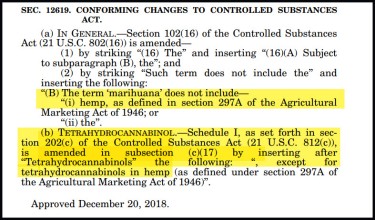
Fast forward to the 2018 Farm Bill, which legalized hemp by defining it as cannabis containing less than 0.3% delta-9 THC on a dry weight basis. This created the hemp industry as we know it today—but it also created a legal fiction that hemp and marijuana are fundamentally different substances.
They're not. A hemp plant and a marijuana plant share 99.9% genetic similarity. The cannabinoid profiles can be nearly identical depending on the strain. The terpenes, flavonoids, and other compounds are the same. The therapeutic effects overlap significantly.
The only difference is a number on a lab report.
And now, that arbitrary distinction is being used to justify two completely different regulatory frameworks, two completely different legal regimes, and two completely different sets of consequences for people who grow, sell, or consume the exact same plant.
This is madness.
One Plant Alliance: A Movement Rooted in Science and Common Sense
Enter the One Plant Alliance (OPA), a coalition of farmers, businesses, researchers, advocates, and consumers who recognize that the hemp/marijuana distinction is not just scientifically nonsensical—it's actively harmful to the cannabis reform movement.
Founded by a diverse group of stakeholders from across the cannabis spectrum, the OPA operates on a simple philosophical foundation:
Cannabis is one plant. It should be governed by one set of rules. And those rules should be based on science, not prohibition-era propaganda.
The OPA brings together hemp farmers who've seen their crops destroyed because a lab test came back at 0.31% THC instead of 0.29%. It includes marijuana cultivators who've been criminalized for growing a plant that's chemically identical to the "legal" hemp their neighbor grows. It includes researchers frustrated by the artificial barriers that prevent comprehensive cannabis science. And it includes patients and consumers who just want safe, legal access to a plant that's been used medicinally for thousands of years.
The founding principle of the OPA is unity. For too long, the cannabis movement has been fragmented—hemp vs. marijuana, medical vs. recreational, flower vs. concentrates, state-legal vs. federal prohibition. This fragmentation has allowed opponents of reform to pick us off one by one, playing different stakeholder groups against each other.
The OPA says: Enough.
It's one plant. One movement. One goal: Remove cannabis from the Controlled Substances Act entirely.
Why Cannabis Doesn't Belong on the CSA: The Medical Evidence
Let's talk about why cannabis—whether you call it hemp or marijuana—has absolutely no business being on the Controlled Substances Act in the first place.
The CSA places drugs into five schedules based on three criteria:
-
Potential for abuse
-
Accepted medical use
-
Safety under medical supervision
Cannabis is currently Schedule I, which the government claims means it has:
-
High potential for abuse
-
No accepted medical use
-
Lack of accepted safety for use under medical supervision
Let's demolish these claims one by one.
1. Potential for Abuse: Laughably Low Compared to Legal Substances
The addiction rate for cannabis is approximately 9%—meaning about 9% of users develop some form of dependency. Compare that to:
-
Alcohol: 15-20% addiction rate
-
Tobacco: 32% addiction rate
-
Opioids: 8-12% addiction rate (for prescription use; much higher for illicit use)
So cannabis has a lower addiction potential than alcohol (which is legal, advertised, and sold on every street corner) and tobacco (also legal, despite killing 480,000 Americans annually).
Moreover, cannabis withdrawal—for the small percentage who experience it—involves mild symptoms like irritability, sleep disturbance, and decreased appetite. Alcohol withdrawal can kill you. Opioid withdrawal is medically dangerous. Benzodiazepine withdrawal can cause seizures.
Cannabis withdrawal is... slightly uncomfortable for a few days.
If "potential for abuse" is the metric, cannabis should be descheduled entirely, while alcohol and tobacco should be Schedule I.
2. Accepted Medical Use: Overwhelming Evidence
The claim that cannabis has "no accepted medical use" is not just wrong—it's a deliberate lie.
As of 2026, there are over 20,000 published studies on cannabis and its therapeutic applications. The evidence base includes rigorous clinical trials, peer-reviewed research, and real-world patient data spanning decades.
Cannabis has demonstrated efficacy for:
-
Chronic pain (the #1 reason patients use medical cannabis)
-
Epilepsy and seizure disorders (FDA even approved Epidiolex, a cannabis-derived medication)
-
Nausea and appetite stimulation (especially for cancer and HIV/AIDS patients)
-
PTSD and anxiety disorders
-
Multiple sclerosis and muscle spasticity
-
Glaucoma
-
Inflammatory bowel diseases (Crohn's, ulcerative colitis)
-
Parkinson's disease
-
Alzheimer's disease (emerging research on neuroprotection)
This isn't anecdotal. This is peer-reviewed science.
Additionally, 38 U.S. states have legalized medical cannabis programs, with millions of registered patients using it under doctor supervision. If that doesn't constitute "accepted medical use," then the definition is meaningless.
3. Safety Under Medical Supervision: One of the Safest Substances Known
Here's a fun fact: Nobody has ever died from a cannabis overdose.
I don't mean "very few people." I mean zero. In the entire recorded history of human cannabis use—thousands of years—there is not a single documented case of a fatal overdose from cannabis consumption.
The LD50 (lethal dose for 50% of test subjects) for THC is so astronomically high that you'd need to consume approximately 1,500 pounds of cannabis in 15 minutes to approach a lethal dose. That's not physically possible.
Compare that to:
-
Alcohol: Thousands of overdose deaths annually
-
Opioids: 80,000+ overdose deaths annually
-
Aspirin: Can be fatal at high doses
-
Tylenol: Leading cause of acute liver failure
Cannabis is safer than over-the-counter pain medication. It's safer than caffeine (which has a known lethal dose and causes cardiovascular events). It's certainly safer than the alcohol that Americans drink 2.25 billion cups of annually—wait, wrong addictive drug. That's coffee. You get the point.
By every objective safety metric, cannabis is one of the safest psychoactive substances humans consume.
So let's review: Low abuse potential. Accepted medical use. Exceptionally safe. These are the opposite of the criteria for Schedule I classification.
Cannabis doesn't belong on Schedule III. It doesn't belong on Schedule V. It doesn't belong on the Controlled Substances Act at all.
The One Plant Philosophy: Science Over Politics
This is where the One Plant Alliance's philosophy becomes crucial. By insisting on the scientific reality that hemp and marijuana are the same plant, the OPA forces the conversation back to evidence-based policy.
You can't simultaneously argue that:
-
Hemp is safe, non-intoxicating, and should be legal (2018 Farm Bill position)
-
Marijuana is dangerous, highly addictive, and deserves Schedule I classification (DEA position)
When they're the same plant.
The OPA's position is that if hemp is safe enough to be completely legal—sold in gas stations, unregulated, accessible to adults with no prescription—then marijuana should be equally legal. And if marijuana is dangerous enough to remain criminalized, then hemp should be equally prohibited.
You can't have it both ways. The science doesn't support the distinction.
What the current system actually represents is not science-based drug policy but rather political expediency and corporate interest protection. Hemp was legalized because agricultural states wanted a new cash crop and the CBD market exploded. Marijuana remains illegal because Big Pharma, Big Alcohol, and the prison industrial complex profit from prohibition.
The One Plant Alliance is calling bullshit on this entire framework.
Why Now? The Moment for Unity
So why is the One Plant Alliance gaining traction now, in 2026?
Because the contradictions in our current system have become unsustainable.
Trump signed a spending bill in December 2025 that would ban hemp-derived THC products—essentially re-criminalizing a market that the 2018 Farm Bill legalized. Meanwhile, he issued an executive order to reschedule marijuana to Schedule III, which would benefit pharmaceutical companies while maintaining federal prohibition for everyone else.
Hemp farmers are watching their industry get destroyed by regulatory whiplash. Marijuana businesses in legal states are still being crushed by 280E taxation and federal banking restrictions. Patients are caught in the middle, facing a patchwork of state laws that determine whether their medicine is legal or criminal based on which side of an arbitrary state line they're on.
The fragmented approach isn't working.
The OPA argues that the only path forward is unity. Hemp farmers and marijuana cultivators need to stand together. Medical patients and recreational users need to recognize they're fighting the same battle. State-legal businesses and federal reformers need to align their advocacy.
Because as long as we accept the false distinction between hemp and marijuana, we're playing by prohibition's rules. We're accepting the premise that the government has the legitimate authority to criminalize different "types" of the same plant based on arbitrary THC percentages.
The OPA rejects that premise entirely.
It's Time to Grow Up, America
Here's the uncomfortable truth: America's cannabis policy is infantile.
We're a nation that prides itself on scientific innovation, yet our drug laws are based on 1930s propaganda films and racist fearmongering. We claim to believe in personal freedom and limited government, yet we criminalize adults for consuming a plant that's safer than alcohol. We say we support evidence-based medicine, yet we ignore 20,000+ studies demonstrating cannabis's therapeutic value.
It's time to grow up.
The One Plant Alliance represents the maturation of the cannabis reform movement. It's a recognition that incremental half-measures—Schedule III rescheduling, restrictive medical programs, conflicting state laws—aren't good enough anymore.
We don't need better prohibition. We need no prohibition.
We don't need marijuana rescheduled to Schedule III. We need cannabis removed from the CSA entirely.
We don't need to keep pretending that hemp and marijuana are different. We need to acknowledge the scientific reality that it's one plant and govern it accordingly.
The Sticky Bottom Line
The One Plant Alliance isn't just another advocacy group. It's a philosophical reframing of the entire cannabis legalization debate.
By insisting on the scientific fact that hemp and marijuana are the same species, the OPA forces opponents of reform to defend the indefensible: that an arbitrary THC percentage justifies treating identical plants as if one is medicine and the other is equivalent to heroin.
By centering the conversation on evidence rather than politics, the OPA dismantles the core justifications for cannabis prohibition: low abuse potential, accepted medical use, and exceptional safety profile all argue for complete descheduling.
And by calling for unity across the fragmented cannabis movement, the OPA creates a coalition powerful enough to challenge the entrenched interests—Big Pharma, Big Alcohol, the prison industrial complex—that profit from prohibition.
The hemp/marijuana distinction is a legal fiction. The Schedule I classification is a scientific absurdity. The Controlled Substances Act is a 50-year-old failed experiment that's destroyed millions of lives while accomplishing nothing except enriching corporations and empowering authoritarian government overreach.
It's time to end it.
One plant. One movement. One goal: Complete descheduling.
Join the One Plant Alliance. Support the fight for evidence-based drug policy. And let's finally drag American cannabis law out of the prohibitionist dark ages and into the 21st century.
Because frankly, it's embarrassing that we're still having this conversation in 2026.
Grow up, America. It's just a plant.
0.3% THC BY DRY WEIGHT, READ ON...