
A note before we start: this one is not particularly about cannabis. It is about the world reshaping itself around a technology that nobody fully understands yet, and it closes with a specific message to the stoner community. Stick with me.
The debate about AI has a generational fault line running straight through the middle of it, and it is more interesting than most of the arguments on either side. Talk to someone in their mid-thirties or older who has actually integrated AI tools into their work - the writer using Claude to draft, the consultant using it to synthesize research, the forty-two-year-old entrepreneur who has an AI assistant handling half of what used to require three hires - and you will generally find a pragmatic enthusiasm. These people remember what friction looked like. They spent careers navigating the gap between what they wanted to create and the infrastructure required to build it. AI collapsed that gap, and they are not apologizing for using it.
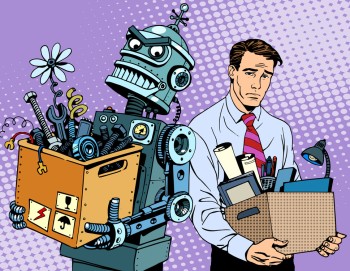
Talk to a twenty-year-old artist, illustrator, musician, or writer and you may get a very different response. Not just skepticism but genuine moral hostility. They will tell you AI stole from artists. They will tell you it is destroying creative industries. They will tell you it is an environmental catastrophe. They will tell you that devaluing art is devaluing humanity. These arguments come from a real place, and some of them have real merit. But sifting through them, the through-line is not really about data scraping or water consumption. It is about identity. And that is a conversation worth having honestly.
Argument One: AI Stole From Artists
This one requires precision because it gets sloppily argued in both directions. Here is what actually happened, technically speaking:
Companies crawled publicly available content on the internet - images, text, audio - and fed it into training pipelines. During training, a model does not store that content the way a hard drive stores a file. It processes the data through a neural network, adjusting billions of numerical weights across millions of iterations until the statistical relationships between concepts, styles, words, and visual patterns are encoded as mathematics. What emerges is a probabilistic engine: given an input, it calculates the most statistically coherent output based on the geometric proximity of concepts in the mathematical space it learned from. When you ask it to generate something, it is not retrieving a stored image or sentence. It is constructing a new output by navigating a mathematical landscape built from patterns extracted from the training data.
For the neanderthal translation, here is how an AI might explain it to itself:
"Me see many pictures. Me not keep pictures. Me learn: fire = orange + hot + flickery. Dog = four legs + fluffy + bark. You say draw dog near fire. Me not find picture of dog near fire. Me smush dog-shape and fire-shape together in me head. New picture come out. Not your picture. Me picture, made from understanding all pictures."
Is this theft? The legal answer is increasingly: complicated. Lawsuits were filed, some cases settled, the companies paid out in certain instances, and the courts are still working through what copyright means when a model learns from a work rather than copying it. The moral argument that artists did not consent to their work being used as training data is legitimate and worth taking seriously. But the legal and technological reality is that the model is not holding your illustration hostage - it extracted a statistical pattern from it and moved on. Whether that pattern counts as intellectual property is a genuinely unsettled question, not a decided one.
What muddies it further: every human artist who ever lived learned by looking at other people's work. Style is not copyrightable. Influence is not theft. The line between inspiration and appropriation has always been contested, long before any algorithm entered the picture. AI compressed a process that humans do over years of study into a training run - which is uncomfortable, but does not cleanly map onto the word theft.
Argument Two: The Environmental Cost
This one has teeth, but it gets swung around selectively in ways that do not hold up to scrutiny. Yes, AI data centers consume significant energy. Yes, they use water for cooling. These are real costs. The environmental impact of training a large language model is not trivial, and the rapid scaling of inference infrastructure globally represents a genuine and growing energy demand.
The caveats matter, though. Water used in cooling systems is largely recaptured - the figure commonly cited in environmental critiques conflates water consumption with water use, which are different things. Energy consumption is a real problem, but it is an engineering and policy problem, not an inherent feature of the technology. Solar, wind, and nuclear can power data centers. Some already do. The question is whether we will make the companies responsible for building that infrastructure rather than dumping the cost onto public utilities and taxpayers.
My position: any AI company operating at the scale of Anthropic, Google, Microsoft, or OpenAI should be legally required to contribute to the energy infrastructure their operations depend on. Desalination plants run at roughly a billion dollars per facility - that is within reach for organizations valued in the hundreds of billions. Dedicated renewable generation capacity, built alongside the grid rather than simply drawing from it, should be a condition of operating at this scale. The technology's benefits do not excuse the externalities. But the externalities are fixable. That is a different argument than saying the technology is inherently catastrophic.
Meanwhile, the same critics rarely apply equivalent scrutiny to cryptocurrency mining, server farms running social media platforms, or the supply chain of the smartphones they used to post the critique. This is not whataboutism - it is a request for consistent standards.
The Real Argument: Identity Under Threat
Strip away the legal arguments and the environmental arguments and what you find underneath, in most cases, is an existential one. A person who spent years developing a skill - illustration, songwriting, prose, graphic design - built their identity around that skill. That skill represented their value, their differentiator, their reason for being in the room. AI did not just produce a competing product. It called into question whether the skill itself still confers the status it used to.
"Art is going to be devalued" is the argument you hear most often. It will not be. Human art will not be devalued - it will be repositioned. The degree of AI involvement in a work will become a spectrum, a context, a part of the conversation around the piece rather than a disqualifying fact. Hand-painted portraiture did not die when photography was invented. It became rarer, more intentional, more valuable in certain contexts. The market for live music did not collapse when recorded music made it unnecessary to attend a performance to hear a song. It transformed. The experience became the product.
"How can I compete?" is the wrong question. The right question is: where can you go that the algorithm cannot follow? A musician who plays bars in their city, who builds a room full of people who show up because of who they are rather than what they produce, who streams themselves writing a song on a Tuesday afternoon and lets people watch the humanity of the process - that person is not competing with AI. They are doing something AI structurally cannot do: be present, be specific, be a person with a history.
AI amplifies. It does not replace the decision about what to amplify. The artists who will suffer most are those who were producing commodity work - stock illustrations, generic copy, algorithmic content designed to feed a platform rather than communicate something. That work was always disposable. The people who built real audiences around genuine creative identity are not in the same market. Use the tools. Point them at what makes you irreplaceable.
The One Real Fear: Who Owns This Thing
I have spent more time arguing in favor of AI in this piece than against it, so let me be direct about where my genuine concern sits: ownership.
These models were built from the total recorded output of human civilization. Every poem, every scientific paper, every forum post, every piece of music that ever made it onto the internet contributed to what these systems became. The training data is, in the most literal sense, the collective intellectual inheritance of our species. And it was processed, packaged, and put behind API paywalls by a handful of companies whose founders and investors will capture the majority of the value created.
I suspect a significant portion of the hostility toward AI from young artists would not exist if these tools had been released as public infrastructure - open source, freely available, governed as a commons rather than a commercial product. If the thing built from all of humanity's work belonged to all of humanity, the moral equation looks completely different. The anger is not really at the technology. It is at the structure around the technology: brilliant tools held by billionaires who are, historically speaking, not the most trustworthy stewards of things that affect everyone.
That concern is legitimate and worth fighting for in the policy space. Open-source models exist and matter - Llama, Mistral, and others represent a real alternative to the closed-model paradigm. Supporting that ecosystem, advocating for AI governance that treats these tools as public goods, pushing back on monopolistic capture - these are worthwhile battles. The answer is not to reject the technology. It is to fight for who controls it.
What This Has to Do With Cannabis Users
Here is the part I promised.
The cannabis community has historically been full of creative people, entrepreneurs, tinkerers, and people who are comfortable thinking outside the frameworks that everyone else takes for granted. That is partly cultural, partly chemical, and largely the result of having spent years operating in spaces where the mainstream rules did not apply. That disposition is an asset right now.
We are in the earliest phase of a technological shift that genuinely lowers the barrier of entry for building things. A decade ago, launching a product meant either a substantial capital investment or years of acquiring technical skills. Today, a person with a clear idea and the ability to communicate it can build a functional prototype, a brand identity, a marketing strategy, a legal framework, a customer outreach system, and a distribution plan using tools that cost less per month than a decent quarter ounce. The gap between having an idea and having a thing is smaller than it has ever been in the history of commerce.
If you have been sitting on an idea for a cannabis accessory, a strain-specific lifestyle brand, a cannabis-infused food product, a grow box design, an educational platform, a community around a particular consumption style, a shirt company, a podcast, a seed bank, a terpene education kit, a harm reduction tool - whatever it is - the infrastructure to build it now exists and is accessible without a computer science degree or a venture capital check.
Use AI to write the copy. Use it to prototype the logo. Use it to draft the business plan, write the terms of service, outline the content calendar, generate the market analysis. Use it to learn what you do not know - as a tutor, a research assistant, a sounding board. The technology is genuinely good at reducing the distance between where you are and where you need to be. The vision, the voice, the relationship with the audience, the specific knowledge that comes from actually being a cannabis user in 2026 - that part is yours. No model has it.
The cannabis industry is still young enough that brand equity is not locked up. The cultural space is still being defined. The regulatory landscape is still shifting, which means new categories open constantly and established players have not had decades to calcify their positions. This is precisely the kind of environment where a person with a genuine point of view and the discipline to build consistently can carve out something real.
We Are in the Infancy of This
The tools we have now are primitive compared to what is coming. The current models are impressive, but they are the 1994 internet - functional, transformative, and a pale shadow of what the infrastructure will look like in ten years. The people who build fluency with these tools during the infancy period, who develop intuitions about what works and what does not, who fail publicly and iterate and figure out what AI is actually good for versus what it only seems good for - these people will have a structural advantage as the technology matures.
The debate about whether to use AI is essentially the debate about whether to use the internet in 1997. Some people had principled objections. Some of those objections were even valid. But the technology was coming regardless, and the people who engaged early enough to understand it built things that the people waiting for a consensus never did.
The question is not whether AI is good or bad. It is, like most powerful things, both, depending entirely on who is holding it and what they decide to do with it. It is extractive in the hands of people who use it to replace human labor without sharing the productivity gains. It is generative in the hands of people who use it to build things they could not have built otherwise. The cannabis community has always understood intuitively that a tool's morality lives in the application. The same plant that helps a veteran sleep and calms a child with epilepsy is the same plant that prosecutors used for fifty years to justify filling prisons. The molecule does not change. The context does.
So here is the pitch, simple as it gets: build your IP. Build it now. Build it weird, build it niche, build it with whatever genuine knowledge and perspective you have accumulated from living inside this culture. Use every tool available to close the gap between the idea and the thing. This is the age of ideas, and the barrier of entry has never been lower. The people who will look back on this period and wonder why they did not act are the ones still waiting for the debate to resolve.
The debate is not going to resolve. The technology is going to keep moving. Get on or get left.
CANNABIS AND AI, READ ON..