

Cannabis is everywhere these days.
In state-legal towns, you’ll see and smell pot almost everywhere. But that wasn’t the case just over a decade ago. The fight to legalize cannabis has been a long, uphill struggle that hasn’t stopped. Of course, we’ve made significant progress in the United States, where a majority of states have already legalized weed for medical or recreational use, or both.
We also have a growing body of research pointing to the therapeutic applications of cannabis in a multitude of medical practices and conditions: mental health, chronic pain, epilepsy and seizures, pediatrics, pallative care, and so much more. The American public can even self-medicate with weed for a huge range of ailments!
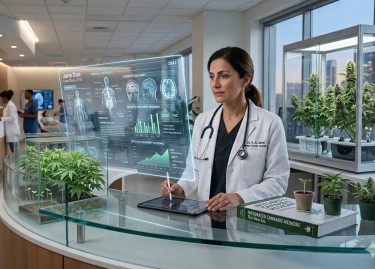
One day in the future, we - and our grandchildren - might even ask how we ever practiced medicine without cannabis.
Why Cannabis Works So Well With Modern Medicine
Of course, Big Pharma has been critical for developing medications that have saved countless lives.
But Big Pharma hasn’t been able to solve everything. Whether that’s by choice or not, it left a void that was filled by cannabis. In addition, existing medications produced by pharmaceutical corporations can indeed work, though many of them are still imperfect.
For example, opioids do work for chronic pain, but there is a massive risk of addiction and overdose, which has led to countless lives claimed by the Opioid Epidemic. Yet, cannabis has been shown to work very well for chronic pain while also reducing opioid use among some patients.
Cannabidiol-based drugs have also been safe and effective for treating epilepsy.
Numerous anti-anxiety drugs on the market carry several unwanted side effects or addiction risks. But cannabis in many forms has been shown to be effective for treating anxiety.
Cannabis has also been shown to mitigate the spread of cancer cells, and studies have also shown that cannabis users have a lower risk of developing certain cancers. When it comes to cancer treatment, cannabis can help reduce the side effects of chemotherapy, contributing to better outcomes and helping patients improve their quality of life while undergoing treatment.
In many cases, cannabis replaces medications for patients. However, it can also work well alongside conventional treatment, helping patients live better lives while getting the treatment that they need.
Why is that?
Most pharmaceutical drugs are designed to work in one pathway in the body, focusing on one target or symptom.
On the other hand, cannabis is different because it’s so much more versatile. The primary compounds, namely THC and CBD, interact with the human endocannabinoid system, which is responsible for regulating so many functions in the body, including but not limited to pain, mood, inflammation, appetite, sleep, and immune response to name a few. That’s why cannabis is so broad-spectrum and thus diverse in its therapeutic benefits.
So when a patient medicates with weed, it often has far-reaching benefits from the symptom they are trying to treat. That’s why it is no surprise most patients report multi-symptom relief when using cannabis.
Cannabis Is Safer
The Possible Future Of Cannabis In Medicine
We’re only getting started.
There are still some major roadblocks we have to overcome, such as the federal rescheduling of cannabis, and further education of physicians and doctors in cannabinoid therapeutics. Right now, many nurses and doctors still don’t feel confident enough to discuss cannabis with patients because of the lack of training. After all, cannabis wasn’t taught in school.
“Medical marijuana has gained increased public and political support in the United States. With many states now easing restrictions on cannabinoid access for medical purposes, healthcare professionals will need to adapt. Namely, they need to be trained and educated so that they can more confidently and more safely counsel their patients,” explains Pino, a licensed pharmacist in New York, and lead author of a study that discovered most healthcare providers still don’t have the experience necessary to discuss medical marijuana use with their patients.
The only thing truly that can help with these hurdles is rescheduling, which we can only hope will happen soon.
That, and time, can help us see a brighter future where:
-
Healthcare providers have adequate training and education in cannabis medicine
-
Cannabis is recommended alongside conventional treatments, instead of alternatively
-
Patients are closely guided
-
Dosing has become standardized across multiple different consumption methods
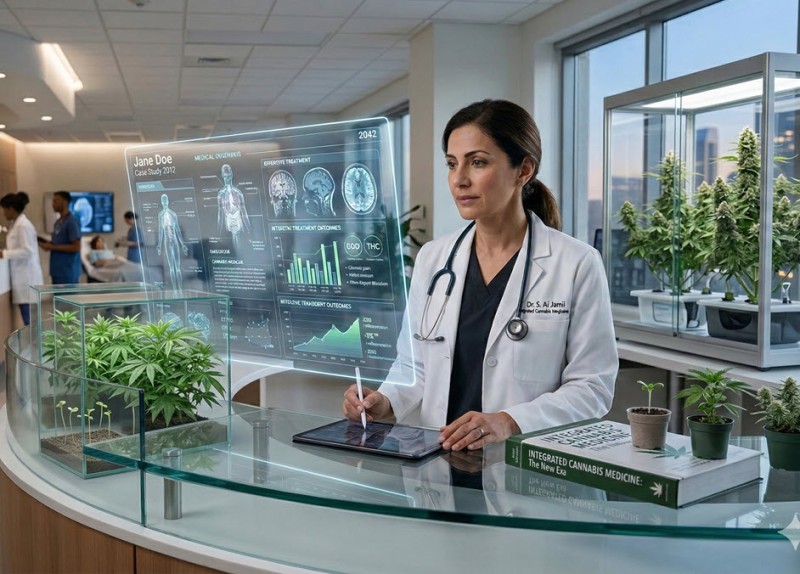
When that time comes, cannabis won’t need to replace modern mediicne because it would then complement it.
As research continues to expand and cannabis education eventually catches on, cannabis will eventually be seen as a standard tool in a doctor’s toolkit. The stigma will also fade, and it will truly be seen as medicine, and not a drug.
Conclusion
If you carefully look at the history of medicine, you’ll see that it has always evolved in ways that were thought inevitable, in hindsight.
In the beginning, doctors never even washed their hands, and anesthesia was considered controversial. People were skeptical about antibiotics.
Most breakthroughs were met with doubt because they greatly challenged what we knew as familiar back then.
Right now, cannabis is in that same spot.
There is already growing evidence, better access, and increasing patient demand. Yet, it’s still federally illegal and seen as an outlier of medicine instead of a tool that’s been fully integrated with it.
But hang tight: there will come a time when future generations of medical practitioners will be given adequate training in cannabinoid therapeutics from day one. Cannabis will be prescribed, monitored, and dosed with the same confidence as antibiotics.
And people will look back at this time in history when there was stigma, hesitation, and fear surrounding its use. One day, they will wonder how we ever practiced medicine while leaving out something so critical and important.
CANNABIS AS A MEDICINE, READ ON...