
Stoners Died Less from Covid According to Report
When the world screeched to a halt in early 2020, many of us found ourselves locked down, stressed out, and reaching for comfort wherever we could find it. For a growing number of people, that comfort came in the form of a joint, bong, or edible. As the pandemic wore on, cannabis sales skyrocketed, with dispensaries reporting record-breaking numbers month after month. It seemed that in the face of global uncertainty, many were turning to our leafy green friend for solace.
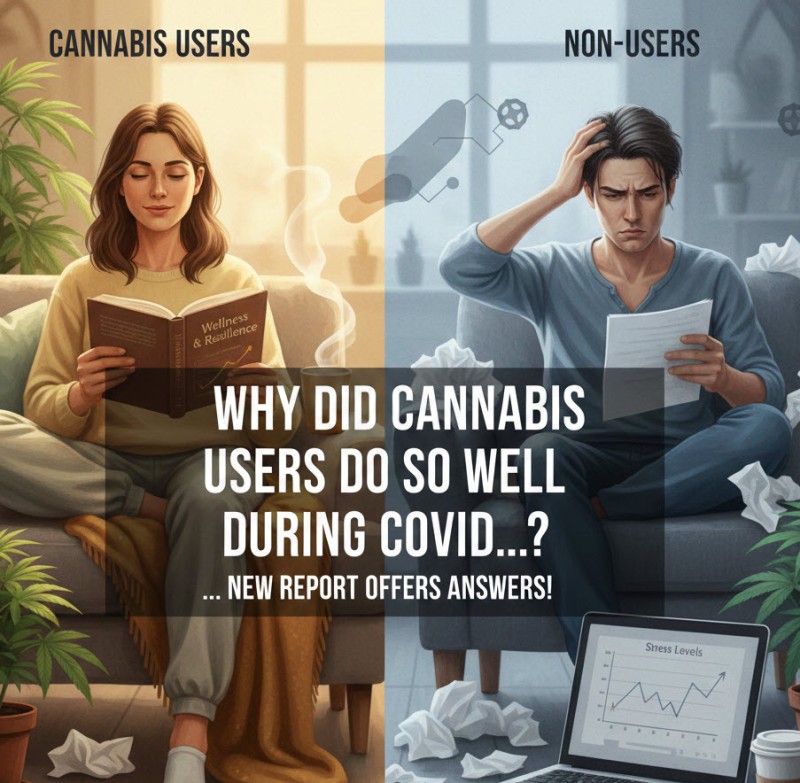
But while we were all busy stockpiling toilet paper and learning to bake sourdough, something unexpected was happening in hospitals across the country. As Covid-19 tore through communities, leaving devastation in its wake, researchers began to notice an intriguing trend: cannabis users seemed to be faring better than their non-toking counterparts.
Now, let's be clear - almost everyone got a touch of the 'rona at some point, whether they were coughing up a lung or blissfully unaware they were even infected. But when it came to severe cases and, tragically, deaths, stoners appeared to have an edge. A recent study published in the journal Cannabis and Cannabinoid Research has shed light on this phenomenon, suggesting that cannabis users had lower rates of severe Covid-19 infections and were less likely to face the worst outcomes of the virus.
In this article, we're going to roll up our sleeves (and maybe a little something else) to unpack these findings. We'll explore the data, dive into the possible reasons behind this unexpected correlation, and try to make sense of it all. Could it be that all those quarantine smoke sessions were doing more than just making Tiger King more entertaining?
Let's find out.
What Were the Findings of the Study?
The study, conducted by researchers at Northwell Health in New York, dug deep into the data from the National Inpatient Sample Database, which tracks hospital admissions across the country. They divided patients admitted for COVID-19 into two groups: cannabis users and non-users. To ensure a fair comparison, they matched these groups based on factors like age, race, gender, and other health conditions.
The results were, quite frankly, mind-blowing. As the researchers put it, "Cannabis users had better outcomes and mortality compared with non-users." But it wasn't just a slight difference – the numbers were significant across the board.
"On initial analysis, cannabis users had significantly lower rates of severe COVID-19 infection, intubation, ARDS [acute respiratory distress syndrome], acute respiratory failure, severe sepsis with multiorgan failure, mortality, and shorter length of hospital stay," the study reported. And these findings held up even after the researchers accounted for other factors.
But why? What could explain this seemingly protective effect of cannabis? The researchers have a theory: "The beneficial effect of cannabis use may be attributed to its immunomodulatory effects." In other words, cannabis might be helping to regulate the immune system's response to the virus, potentially preventing the dreaded "cytokine storm" that has been associated with severe COVID-19 cases.
This isn't the only study to suggest a link between cannabis and better COVID-19 outcomes. A Canadian study found that "cannabinoids have been shown to prevent viral entry, mitigate oxidative stress, and alleviate the associated cytokine storm" in early COVID-19 infections. The same study also noted that cannabinoids showed promise in treating long COVID symptoms, including "depression, anxiety, post-traumatic stress injury, insomnia, pain, and decreased appetite."
Even more intriguing, a 2022 laboratory study from Oregon State University found that certain cannabinoids could potentially prevent COVID-19 from entering human cells in the first place. While this was under lab conditions and didn't involve actual smoking, it adds to the growing body of evidence suggesting cannabis might have a role to play in fighting this pandemic.
Given all this evidence, it's mind-boggling that some people still question whether cannabis is medicine. We're looking at multiple studies, from different research teams, all pointing to the potential benefits of cannabis in the face of one of the most significant health crises of our time. Yet, cannabis remains a Schedule I drug at the federal level, officially considered to have "no currently accepted medical use."
This disconnect between scientific evidence and policy is stark. While researchers are uncovering potential life-saving properties of cannabis, patients in many parts of the country still face legal repercussions for using it. The COVID-19 pandemic has highlighted many flaws in our healthcare system, but perhaps none so glaring as our continued prohibition of a plant that could be helping to save lives.
As we continue to navigate the ongoing challenges of COVID-19 and prepare for future health crises, it's clear that we need a more rational, evidence-based approach to cannabis. The data is speaking loud and clear – it's time for our policies to catch up with the science. After all, in a world where stoners are showing better outcomes against a global pandemic, can we really afford to keep ignoring the potential of this plant?
The Endocannabinoid System
The endocannabinoid system (ECS) is a complex cell-signaling network that plays a crucial role in maintaining balance throughout our bodies. Discovered in the early 1990s, the ECS is involved in regulating a wide range of functions, including mood, sleep, appetite, pain sensation, immune response, and more.
What's particularly interesting is how the ECS changes as we age. Up until about age 25, our bodies produce an abundance of endocannabinoids - naturally occurring compounds similar to those found in cannabis. This overproduction serves to build and fine-tune the ECS. However, once the system matures, there's a significant drop in endocannabinoid production.
This decline can have far-reaching effects. With fewer endocannabinoids, our bodies may struggle to maintain optimal balance. Recovery time from injuries or illnesses may increase, immune regulation could become less efficient, and overall health might suffer.
Here's where cannabis comes in. The plant's cannabinoids, like THC and CBD, can interact with our ECS in ways that mimic our body's own endocannabinoids. For those over 25 experiencing endocannabinoid deficiency, cannabis could potentially help replenish the system.
Now, this doesn't necessarily mean everyone should start smoking weed. There are many ways to support your ECS. Consuming raw cannabis leaves or using tinctures can provide beneficial cannabinoids without the psychoactive effects. These methods could help maintain a healthy ECS, potentially improving overall wellness and resilience against diseases like COVID-19.
The Sticky Bottom Line
As we've blazed through the data and research, one thing is becoming increasingly clear: cannabis may be more than just a way to chill out or ease pain. The findings suggesting that cannabis users fared better against COVID-19 are compelling, to say the least. While we can't definitively say that lighting up will protect you from severe viral infections, the evidence pointing in that direction is getting harder to ignore.
At the heart of this potential benefit lies our endocannabinoid system (ECS). This intricate network, responsible for maintaining balance throughout our bodies, seems to play a crucial role in how we respond to threats like COVID-19. The fact that cannabis can interact with this system in ways that potentially boost our resilience against diseases is nothing short of revolutionary.
For far too long, we've been denied access to this powerful plant due to outdated laws and misguided fears. The Controlled Substances Act, which still classifies cannabis as a Schedule I drug with "no accepted medical use," flies in the face of mounting scientific evidence. It's high time we follow the science and remove cannabis from the CSA altogether.
This isn't just about the right to get high - it's about our fundamental human right to health and medicine. The ability to grow a plant that could potentially save lives during a pandemic shouldn't be criminalized. It should be celebrated and studied further.
As we emerge from the haze of prohibition, we're beginning to see cannabis for what it truly is: a complex, potentially life-saving plant that works in harmony with our own bodies. Whether you choose to smoke it, eat it raw, or use it in tincture form, cannabis has the potential to support our endocannabinoid system and, by extension, our overall health.
The sticky bottom line is this: while more research is always needed, the evidence suggesting cannabis's protective effects against severe COVID-19 is too significant to ignore. It's time to embrace the potential of this plant, to dig deeper into its mysteries, and to fight for our right to access it freely. After all, in a world where a humble herb might help us weather a global pandemic, keeping it illegal isn't just foolish - it's a violation of our basic right to health and wellbeing. Let's turn over a new leaf and give cannabis the legal and scientific attention it deserves.
CANNABIS DURING COVID, READ ON...